The 2021 Publick Occurrences Awards were presented on October 21, 2021. This award recognizes the very best work that New England newspapers produce each year— whether it’s individual or team stories, series, spot-news coverage, columns, or photojournalism that ran in print and/or online.
The award was established in 1990 to recognize individual and team merit at New England newspapers to mark the 300th anniversary of the founding of Publick Occurrences, the first newspaper published in America. Four days after it appeared in Boston in 1690, Publick Occurrences was suppressed by the royal governor.
2021 Publick Occurences Winners
The Salem News, Salem, Mass: Varian Cleanup
Gloucester Daily Times, Gloucester, MA: Mayor a toxic leader.
Telegram and Gazette, Worcester, Mass.: Police Records Lawsuit
Worcester Magazine, Worcester, MA: A Refugee’s Journey
Burlington Free Press, Burlington, VT: A ski resort, a dream and greed
The Herald News, Fall River, MA: Jasiel Correia Trial Coverage
The Patriot Ledger, Quincy, MA: Guilfoil PR series
The Patriot Ledger, Quincy, MA: Narcan: a shot at life
The Day, New London, CT: Pandemic deaths leave an unfillable void
The Day, New London, CT: Looking for the Todt Family (podcast)
Republican American, Waterbury, CT: Focus On…
Keene Sentinel, Keene, NH: Pandemic Parenting
Seven Days, Burlington, VT: It’s in the building
CT Mirror, Connecticut: Vaccine Rollout
Martha’s Vineyard Times, Vineyard Haven, MA: Voices on Racism
CT Health I-Team: Lead Poisoning Epidemic
At the New England Newspaper Conference on October 21 and 22, we will present the 2021 Publick Occurences, Top Individual, and New England Newspaper of the Year Awards. Listed below is the schedule of when the awards will be given out during the two-day conference.
On October 21, immediately following the Editorial Roundtable, which begins at 11:00 am EDT, will be the presentation of the annual Publick Occurrences Awards, recognizing the finest work that New England newspapers produce each year in individual or team stories, series, spot-news coverage, columns or photojournalism that ran in print and/or online.
On October 22, immediately following the Keynote session, which begins at 11:00 am EDT will be the presentation of the top individual awards listed below and the New England Newspaper of the Year Awards.
We invite you to join us in listening to well-known experts in the media industry and honoring these exceptional publications and journalists.
New England First Amendment Award: New Hampshire Union Leader
AP Sevellon Brown New England Journalist of the Year: Michael Cousineau, New Hampshire Union Leader
Allan B. Rogers Editorial Award: Eagle-Tribune
Bob Wallack Community Journalism Award: James D. Haggerty III, Daily Times Chronicle
New England Newspaper of the Year Finalists
Weekday up to 10,000
Patriot Ledger
Gloucester Daily Times
Keene Sentinel
Weekday circ 10,000-20,000
Record-Journal
The Day
Berkshire Eagle
Weekday circ 20,000+
Republican-American
The Republican
Providence Journal
Sunday up to 25,000
Berkshire Eagle
Eagle-Tribune
The Day
Sunday 25,000+
Providence Journal
Telegram & Gazette
The Republican
Weekly under 5,000
Vermont Standard
Milton Times
Mount Desert Islander
Provincetown Independent
Weekly 5,000+
Ellsworth American
Martha’s Vineyard Times
Inquirer and Mirror
Seven Days
Specialty Publications
Providence Business News
New Boston Beacon
Chris Zoeller has worked in the newspaper industry for over 23 years, and as a part of The Post and Courier for the past 16 years. As the Chief Marketing and Opportunity Officer, she oversees marketing and the evolving role it plays in growing audience and revenue. Chris also leads the event division where The Post and Courier produces smaller scale B2B and B2C events around content pillars, large expos and recently a new Bicycle Across South Carolina event and Steeplechase of Charleston. She uses her past experience and creative mind to see beyond what’s in front of her to create the best results for her team, both based on finances and marketability. In Chris’ free time you’ll probably find her snapping an instagram pic at the newest restaurant in town, while spending quality time with her family and friends.
The New England Newspaper Conference is one of the most prestigious newspaper events of the year. The program features top experts and sessions that address relevant and timely topics in the newspaper industry.
This year the New England Newspaper Conference will be held virtually on October 21 and 22, 2021.
Individual tickets are $39 for NENPA members and $55 for non-members. A group rate for NENPA members of $195 is available for five or more people to attend.
Thursday, October 21, 10:00 – 11:00 am EDT
Revenue Roundtable The panel discussion with publishers, advertising directors, and editors will share helpful practices, ideas, and innovative approaches to building revenue, audience, and trust in news organizations. Learn more
Thursday, October 21, 11:00 am – 12:30 pm EDT Editors Roundtable: The future of news (without a newsroom) Sponsored by New England Society of News Editors
Join us for a candid discussion on how editors are running their newsroom – when the newsroom is empty. What lessons and positive changes have they experienced, and how do you work with new reporters, remotely. The panel discussion will focus on the future of news, without a newsroom. What does this look like and what does it mean for the next generation of journalists? Learn more
Publick Occurrences Awards Immediately following the panel will be the presentation of the annual Publick Occurrences Awards, recognizing the finest work that New England newspapers produce each year in individual or team stories, series, spot news coverage, columns or photojournalism that ran in print and/or online.
Friday, October 22, 11:00 am – 12:30 pm EDT Conference Keynote Emily Ramshaw is the co-founder and CEO of The 19th* news organization, an independent, nonprofit newsroom that has gained national recognition within its first year. Ramshaw will talk about innovative ways (and successes) to develop audience, partnerships, and a mix of funding models to provide long-term sustainability. She will also discuss their free to consume and free to republish program that newspapers can take advantage of. Maria Archangelo, Chief Revenue Officer of Open Campus and former New England news leader, will lead the discussion. Learn more
Awards Program Immediately following the session will be the presentation of the annual Allan B. Rogers Editorial Award, New England First Amendment Award, AP Sevellon Brown NE Journalist of the Year, Bob Wallack Community Journalism Award, and the New England Newspaper of the Year Awards.
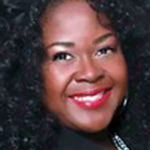
Tanisha Leonard is the president of RTM360°, a cultural marketing firm that creates unique communications programs geared towards the African American community. In addition to the day-to-day management of RTM360° Tanisha is a key member of the executive team for RTM360’s parent company, Real Times Media, driving business growth via the development of custom marketing programs and partnership opportunities related to its six flagship brands— Atlanta Tribune: The Magazine, the Atlanta Daily World, Who’s Who In Black, the Chicago Defender, the Michigan Chronicle, and the New Pittsburgh Courier. She also serves on the board of directors of the Local Media Foundation.
Tanisha has a wide array of experience in managing marketing, strategic planning, and creative development processes as well as extensive experience in event production, corporate communications and media relations.
Prior to joining RTM360° and Real Times Media, Tanisha was the director of communications for the nation’s number one video network at the gas pump, Gas Station TV. Previous to that role, she was marketing manager for third-party logistics provider, NLM where she developed and implemented marketing strategies for the $300 million expedited freight manager. Before joining NLM, she held positions of increasing responsibility at several large promotions, PR and advertising agencies.
Tanisha holds a bachelor’s degree in advertising from Michigan State University in East Lansing, Mich.
Dave Nordman is executive editor of the Telegram & Gazette, MetroWest Daily News, Milford Daily News, Gardner News, Worcester Magazine, baystateparent and Worcester Living.
Charlie McKenna is from Los Angeles, CA and currently serves as The Beacon’s Editor-in-Chief, overseeing all of the paper’s print and digital content in addition to daily operations. He has contributed to The Beacon since the Fall 2019 semester and previously served as a Content Managing Editor, the Deputy Express Editor, and the SGA correspondent. McKenna’s work has appeared in The Boston Globe and in his limited free time, he can be found listening to Steely Dan.
The 158,400 square-foot printing plant used by The Providence Journal was put up for sale by parent company Gannett Co., as part of a leaseback package that would allow the newspaper to continue using the facility for at least 10 years.
The 204 Kinsley Ave. Providence Journal production facility was recently listed for sale by New York-based real estate company BellCornerstone with an $8 million asking price.
As part of the offer, Gannett requires a lease to continue using the printing plant to produce the Providence Journal and its other newspapers, with an annual leaseback rent of $633,600 over the course of 10 years, with Gannett, provided the right to opt-out halfway through the deal. Annual operating costs for the building, according to marketing materials from BellCornerstone, were $1.69 million last year, including more than $1 million for utilities, $178,759 in repairs, and $331,621 in property taxes.
Michelle K. Rea – Executive Director, New York Press Association/ New York Press Service
When it comes to saving local newspapers, the solutions won’t be found in web metrics, ad rates, or shrinking news holes. The solution, seemingly simple yet terrifying complicated, is for newspapers to reconnect with the people they’re supposed to be serving.
That’s the purpose of The Relevance Project, a national effort intended to make local journalism so relevant to people’s lives that papers will once again become an essential purchase. The Newspaper Association Managers, a coalition of trade associations serving daily and weekly newspapers and news websites in North America, is coordinating the project, which was launched during National Newspaper Week last year.
The focus on local newspapers was prompted in part by frustration that industry leaders were too focused on the major players – the papers run by corporations and big chains. That approach overlooks the more than 8,600 local newspapers covering the parades, the school board meetings, and the soccer games of small-town America and Canada.
The problems those papers face mirror those of the bigger players: Declining revenues and rising costs that sometimes force closings. But for independent local papers with shoestring budgets, the financial burdens fall proportionately harder: Cutting a position from a four-person newsroom, for example, is a lot more difficult than cutting one from a newsroom of 40.
Newspaper association managers across the United States and Canada think the public is paying so much attention to media companies such as The New York Times, The Washington Post, and Sinclair [Broadcasting] that they’re forgetting that there are vital, committed newspapers in their local communities. As a result, small papers with few resources have been left to fend for themselves as the ground shifts under them.
The Relevance Project grew out of that frustration, with the Newspaper Association Managers collectively retaining rebranding expert Andy Cunningham of the Cunningham Collective to help diagnose problems and develop solutions.
Working with papers from around the country, Cunningham’s research took stock of all the industry’s warts, from public mistrust to falling page counts, rising subscription costs and poorly functioning websites. From the newspaper association managers’ perspective, the results were a much-needed slap in the face – newspapers weren’t doing the right things by their readers.
The Relevance Project is working to reassert newspapers’ relevance to their communities by building on the credibility they already have. It aims to remind people that newspapers serve as a trusted community forum and as a resource. A newspaper’s strength and future rely on its local community; fortifying that relationship will fortify the paper.
To do that, the project is coordinating efforts and supplying resources for newspapers across the continent working to find new ways of building reader trust and community engagement. The key to the project’s success will be its focus on concrete tools that even papers with limited resources can adopt.
The project’s superpower is the thousands of local newspapers who may choose to participate. With potentially 8,600 local daily and weekly newspapers participating, there’s a huge opportunity to reinvent the community forum, to re-engage communities to collectively address issues and to make a substantial impact both for the readers and the newspapers.


 Chris Zoeller has worked in the newspaper industry for over 23 years, and as a part of The Post and Courier for the past 16 years. As the Chief Marketing and Opportunity Officer, she oversees marketing and the evolving role it plays in growing audience and revenue. Chris also leads the event division where The Post and Courier produces smaller scale B2B and B2C events around content pillars, large expos and recently a new Bicycle Across South Carolina event and Steeplechase of Charleston. She uses her past experience and creative mind to see beyond what’s in front of her to create the best results for her team, both based on finances and marketability. In Chris’ free time you’ll probably find her snapping an instagram pic at the newest restaurant in town, while spending quality time with her family and friends.
 Tanisha Leonard is the president of RTM360°, a cultural marketing firm that creates unique communications programs geared towards the African American community. In addition to the day-to-day management of RTM360° Tanisha is a key member of the executive team for RTM360’s parent company, Real Times Media, driving business growth via the development of custom marketing programs and partnership opportunities related to its six flagship brands— Atlanta Tribune: The Magazine, the Atlanta Daily World, Who’s Who In Black, the Chicago Defender, the Michigan Chronicle, and the New Pittsburgh Courier. She also serves on the board of directors of the Local Media Foundation.
 Dave Nordman is executive editor of the Telegram & Gazette, MetroWest Daily News, Milford Daily News, Gardner News, Worcester Magazine, baystateparent and Worcester Living.
 Charlie McKenna is from Los Angeles, CA and currently serves as The Beacon’s Editor-in-Chief, overseeing all of the paper’s print and digital content in addition to daily operations. He has contributed to The Beacon since the Fall 2019 semester and previously served as a Content Managing Editor, the Deputy Express Editor, and the SGA correspondent. McKenna’s work has appeared in The Boston Globe and in his limited free time, he can be found listening to Steely Dan.