
 Emily Ramshaw is the co-founder and CEO of The 19th, a nonprofit, nonpartisan newsroom reporting at the intersection of women, politics, and policy. She was previously editor-in-chief of The Texas Tribune, an award-winning nonpartisan digital news startup that now boasts the largest statehouse reporting bureau in the country and the nation’s most successful business model for local news. A Washington, D.C., native, Emily started her career at The Dallas Morning News. She is the youngest member of the board of the Pulitzer Prize.
Emily Ramshaw
Catherine McGloin
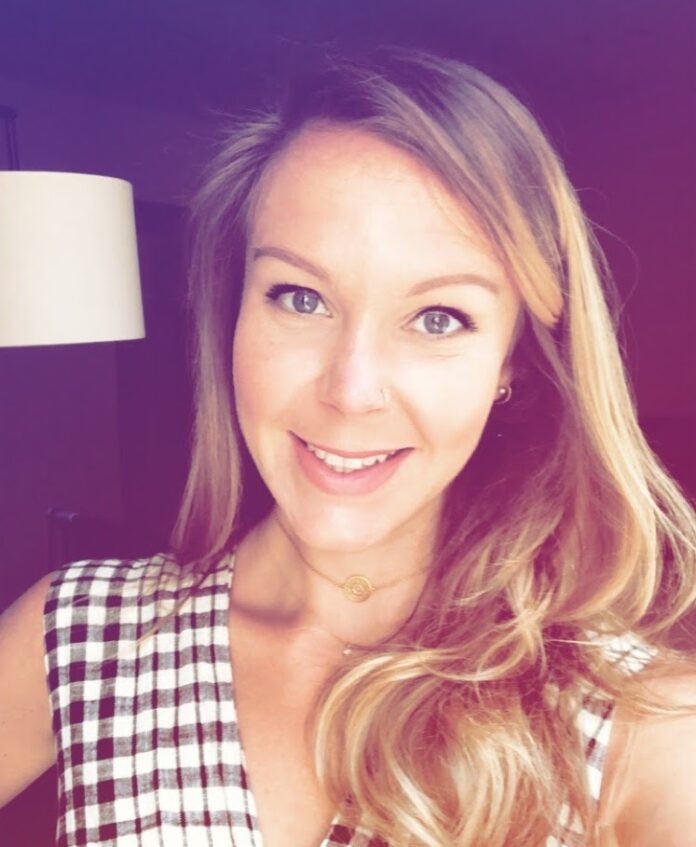
 Catherine is a freelance journalist, Poynter Media Fellow and former editor of the Scope. While her reporting focuses on issues such as education, housing and health care, Catherine’s main focus is mentoring local publications on audience engagement and trust-building. She is particularly interested in reaching communities often overlooked by traditional news outlets, through a variety of digital and offline techniques. She has a master’s degree from Northeastern University and is on the boards of both SPJ New England and Journalism & Women Symposium.
Chris Baker
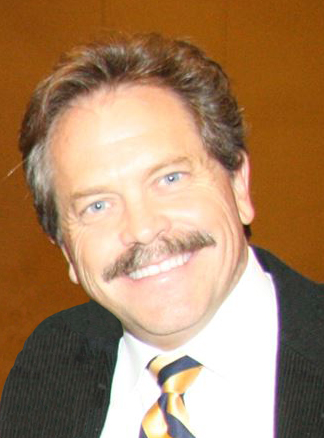
 Chris Baker has been the publisher of The Taos News since 2000. Baker and his team in Taos publish over 25 niche magazines and guides. Niche revenue is the paper’s most significant revenue stream, grossing over $1 million annually. The 9,000 circulation weekly churns out high-quality fiber and cyber niche products from illustrated maps to sophisticated glossy magazines. He was awarded the Distinguished Alumni Award from New Mexico State University in 2013 for employing over 30 college interns from NMSU. Baker was inducted into the New Mexico Press Association Hall of Fame in 2018 and was president of the NMPA in 2004. Baker lives in Taos, New Mexico with his wife Lisa and son Aidan.
Maria Archangelo
 Maria Archangelo is the chief revenue officer of Open Campus. An experienced nonprofit news leader and team builder, Maria previously was vice president of partnerships at Chalkbeat. She’s a long-time leader of high-performing revenue, fundraising, sales, and membership teams. Before Chalkbeat, Maria was executive director for the Philadelphia Public School Notebook, a nonprofit news organization, and previously held leadership roles at other media groups, including the Stowe Reporter/Waterbury Record and the Rutland Herald/Times Argus, both in Vermont and at The Baltimore Sun Media Group. She’s a graduate of Temple University and lives in Philadelphia. Email | @MariaArchangelo
Al Getler joins The Weeks Group as VP of Business Development

The Weeks Group, the industry’s #1 ad revenue-generating firm, is proud to announce the recent addition of industry veteran and NENPA Board of Directors member Al Getler as Vice President of Business Development.
“We are pleased to have Al on our team with his deep experience and passion for newspapers,” said Everton Weeks, founding partner of the group. “Al has that deep passion for this industry that is common across our entire team. He brings years of product and revenue development knowledge to our newspaper partners.”
“We welcome Al to our team at The Weeks Group and with him his record of high performance, results-driven revenue programs, ” said Bryce Cockerham, VP of Market Strategy.
Getler, most recently the president and publisher of the Burlington Free Press, a Gannett newspaper, has over three decades of experience across a wide span of locations and positions. He has served as publisher at award-winning newspapers in Massachusetts, New Hampshire, Ohio, and Vermont. He began his career at The Record and North Jersey Media. In addition to award-winning newspapers, Getler and his teams have created magazines, websites, apps, podcasts, and video features.
“The newspaper industry has been my home for a long time. I am so happy to be joining Everton and The Weeks Group with their care for the future of the industry and for their people-first philosophy,” said Getler.
Based in Vermont, Getler with be working with newspapers to bring revenue growth opportunities provided by The Weeks Group.
“Working alongside Everton is an honor, “said Getler. “He is a respected executive that has worked in and knows newspapers firsthand. He is a true professional.”
2020 NHPA Excellence in Journalism Contest Winners
On September 23, 2021, the New Hampshire Press Association live-streamed on Facebook their 2020 Excellence in Journalism awards from the Nackey Loeb School of Communications in Manchester, NH.
Mike Mortensen and Mike Marland received the 2021 New Hampshire Press Association’s Lifetime Achievement Award.
Journalist of the year was awarded to Carol Robidoux, Manchester Ink Link. The judges commented, “What more can a journalist do than tell a story and bring it to life? Carol gives the reader plenty of facts and figures, but, more importantly, she also introduces the people that data represents.”
The New Hampshire Union Leader received first place in general excellence for daily newspapers. The judges commented, “I thought the Union Leader had it all, strong reporting/writing, judicious use of photos, a clean design, and practical information that I’m sure readers find invaluable.”
Complete List of 2020 NHPA Excellence in Journalism Contest Winners with Judges’ Comments
The Keene Sentinel Selected For API Local News Ideas-to-Action Fund

The American Press Institute announced on September 15 that 10 local news organizations including The Keene Sentinel, located in Keene, NH, will receive funding through the Local News Ideas-to-Action Fund.
The selected projects reflect a deep commitment from journalists and their organizations toward understanding and responding to the information and access gaps around issues of housing, transportation, public health, and more, in the service of local residents.
The projects were selected for a range of criteria, including potential insights for other journalists and the news organizations’ own potential to build on the work after the end of the project.
The Keene Sentinel will identify and share resources for people on the “homelessness spectrum” as part of a reporting project exploring the history, causes, and potential solutions to housing challenges in the state. The Sentinel will leverage community partnerships and text messaging to reach audiences experiencing homelessness.
The ‘blue shirt’ won. Is that the best we can do?

Local names and faces are the lifeblood of community newspaper content.
There’s no better way to spotlight your readers than through photos. After all, “a picture is worth a thousand words” – right? I rephrase. A picture can be worth a thousand words.
The most interesting story will go unread if it has a nondescript headline.
The best photos will have little meaning without adequate explanation. Read: Identify the people in photos.
“Nameless” photos always have bothered me. When I sat behind the editor’s desk, photographers and reporters knew better than to submit photos without identification.
The unfortunate practice is becoming more widespread, an observation passed along by Fred Noer of Burlington, Wis., who had a long career working for publications. In some instances, he notes, photos are absent any cutlines.
Identifying individuals satisfies everyone, he correctly notes – “those in the photo, their families and friends who recognize the people photographed, and the publication for having preserved its credibility.”
He adds: “If a reader does not know the people in a photo, how is he or she supposed to find out? The publication is obligated to provide that information – for the readers as well as for the people in the photos.”
His email prompted me to scan some newspapers. Sad to say, the disheartening examples were numerous.
- A full-page photo spread carried highlights from a prep sports season. The school was recognizable by jerseys, but the players remained anonymous.
- Mom and dad were identified in a family photo, but their kids were nameless.
- One individual held a sign, the focal point in a protest. No name.
- Eight board directors remained faceless as they broke ground for a new initiative.
- Seventeen individuals were shown in a group photo. The names were listed with no attempt to identify – for example, first row, second row, left to right.
- Twenty fair photos were splashed across two pages. The closest to any identification was a cutline saying the “blue shirt won” in a competition.
There admittedly are circumstances where it simply isn’t possible to identify subjects in otherwise compelling photos worthy of publication. A photographer captures an accident scene but is kept at bay by law enforcement from getting names.
Privacy rules also can be a challenge. I remember when the local schools started requiring permission slips from parents authorizing photos of their children to be published. That could prove difficult to meet deadlines with spot news, but we usually navigated the process for a feature story and photo.
Noer has taken the time to drop notes to newspapers, expressing his exasperation when people are not identified. He says the editors agree and improve their practices – but then often fall into bad habits. Noer aptly states that photographing people for publication carries a reporting function, too. You should record their names so they are available if photos are used.
Editors, ask yourselves: Would you publish a story identifying someone simply as a woman or man? It pains me that I’ve seen increasing examples of such lazy reporting. I recall one meeting where individuals came to the podium to speak on a contentious issue. The report stated two people spoke and carried extensive quotes – without any attempt, or instinct, to identify them.
Noer states the obvious: “Readers are more likely to share articles and talk about them if the readers know the persons in the photos. And, of course, people are excited to see their names in a publication.”
And don’t forget, a picture, in a sense, can be worth a thousand dollars as newspapers regularly promote photo reprints and galleries. Revenue opportunities certainly are minimized without identities.
I remain a booster of community newspapers. You are in the best position to be a living history of your towns. Community newspapers indeed are challenged in a fractured media landscape. You must stay relevant to readers and advertisers. That raises the stakes for adhering to the tenets of sound journalism: Identify individuals in stories and photos alike.
E&P Publisher of the Year Nominations Close Sept. 24
Each year, E&P looks to honor a news publisher who has risen above the rest and accomplished what seems like the impossible, outmaneuvering the competition and outthinking the future while maintaining profitability.
We then recognize this leader on the cover of our November issue of Editor and Publisher Magazine.
Nominate someone now who you feel deserves to be our 2021 “Publisher of the Year” and they will be featured on the cover of our November issue.
Hurry! Nominations close at midnight (EDT) on Friday, September 24th, 2021
NEFAC Announces Journalism Fellows for New England First Amendment Institute
Now in its 11th year, the institute provides support and training for New England journalists to give them the tools they need to become more accomplished investigative reporters, well-versed in the freedom of information laws that govern today’s difficult reporting landscape.
The institute — provided at no cost to those who attend — is Oct. 31 through Nov. 6 and features many of the country’s elite reporters, editors and media attorneys.
Learn more about the program
NEFAI 2021 Fellows
CONNECTICUT
Verónica Del Valle
Hearst Connecticut
Currie Engel
Hearst Connecticut
Alex Putterman
Hartford Courant
Elizabeth Regan
The Day
MAINE
Lynda Clancy
Penobscot Bay Pilot
MASSACHUSETTS
Dugan Arnett
The Boston Globe
Greta Jochem
The Berkshire Eagle
Anastasia Lennon
New Bedford Light
Alex Newman
Patch
Emma Platoff
The Boston Globe
Tiana Woodard
The Boston Globe
NEW HAMPSHIRE
Julia Furukawa
N.H. Public Radio
Amanda Gokee
New Hampshire Bulletin
Cassidy Jensen
The Concord Monitor
Jordan Phelan
Eagle Times
Jack Rooney
Keene Sentinel
RHODE ISLAND
Jeremy Bernfeld
The Public’s Radio
Lauren Clem
The Valley Breeze
Sarah Guernelli
WPRI-Providence
Rachel Nunes
Patch
Amy Russo
Providence Journal
VERMONT
Dom Amato
WCAX-Burlington
Jack Lyons
VT Digger
REGIONAL
Maya Ergas Shwayder
New England Public Media
Kyle Stucker
Gannett New England