Roger Straub was lying in bed at his cottage in Moodus, his mind racing at 3 a.m., fretting over what to name the character of his soon-to-be-released cartoon creation. He had gotten as far as the first name: “Mac.” But what about a last name?
And then it hit him; the Native American name for his area was Machimoodus, meaning “place of bad noises” in reference to the mysterious little earthquakes and accompanying booms that periodically occur there.
“By jove, that’s it! Mac O’Moodus!”
Straub, now 66, delights in recalling that magic moment in 1999, which came about after Leland Morgan, owner of The Trumpeter newspaper of East Haddam, said: “Rog, I have an idea. Can you create a comic for my paper?”
Straub already had a character. He had come up with the concept of a peaceful, childlike, red-bearded innocent in 1976 while studying for his B.A. at the University of Bridgeport. The unnamed character had sat up in the attic of Straub’s mother’s home for more than 20 years. Then Morgan got things rolling.
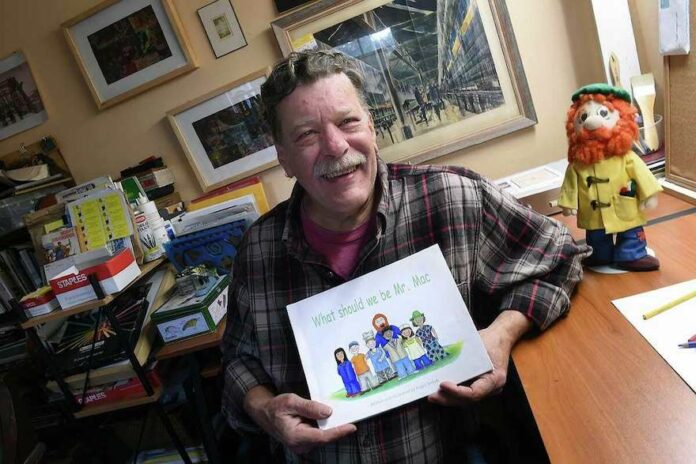
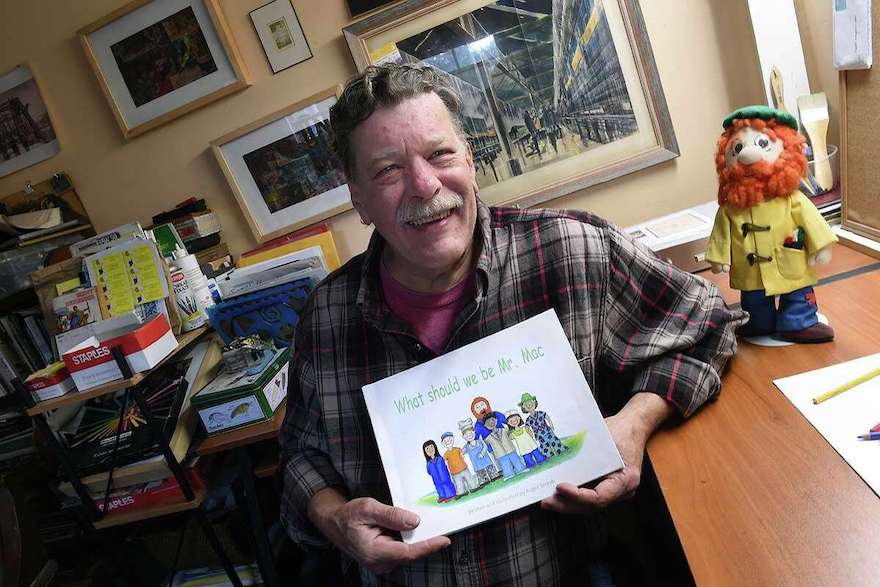
Ever since then, O’Moodus and Straub have been entertaining readers of select newspapers in rural Connecticut as well as people who have latched onto Straub’s two self-published books of cartoons. You can also go to his website, redshedstudios.com. The red shed sits next to his “granny’s” (Bertha Delehanty) cottage in Moodus, which was handed down to him.
These days, Straub does most of his cartooning at a large Victorian house in Higganum, where he has a second-floor studio. He shares his home with his wife, Michelle, an interior designer, and their dog, Alex, and cats, Kit Carson and Ziggy Stardust.
After greeting me outside his house, Straub harkens back with obvious affection to his “granny” and his idyllic times visiting her as a child in the cottage on the Moodus Reservoir. She was a naturalist and often took him blueberry and mushroom picking and crabbing. Her love of nature was seamlessly passed on to him.
Straub leads me up to a barn and fence that borders his property. This is Sycamore Farm. Two llamas and several goats walk toward Straub as he approaches the fence. “Whenever I need inspiration for my critters in my cartoon, I come here,” he says. “This farm has llamas, horses, pigs, goats, chickens, everything!”
“Hey, Snickers! Hey, La Luna!” he calls out to the llamas. He feeds them some leaves. “I’m gonna put these guys on Hawaiian shirts,” he says. “I’ll call them ‘Bahama llamas.’ ”
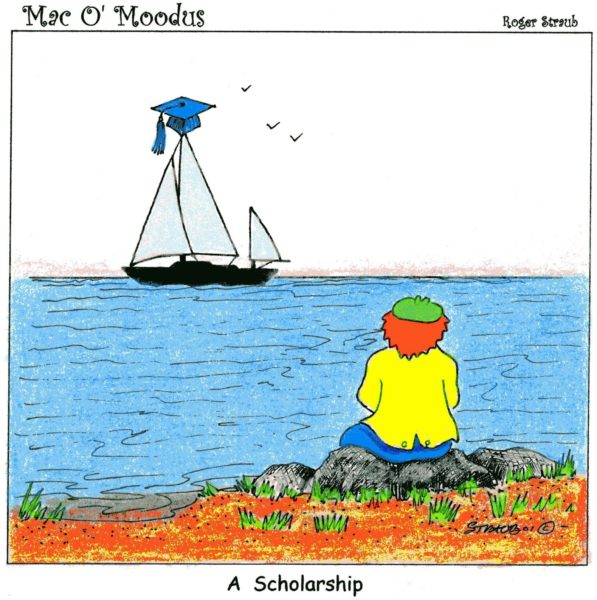
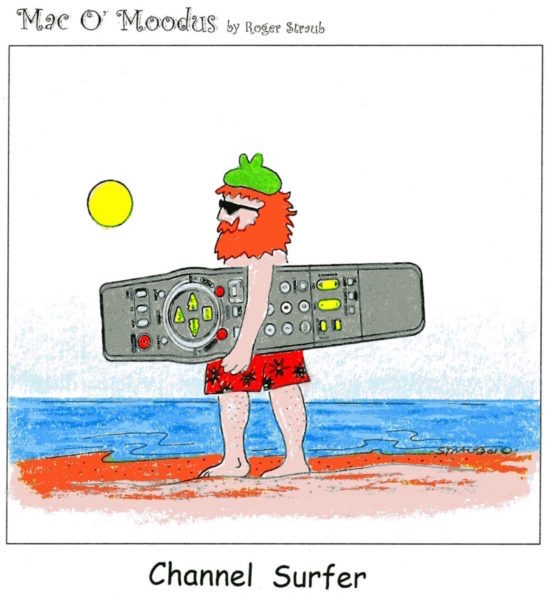
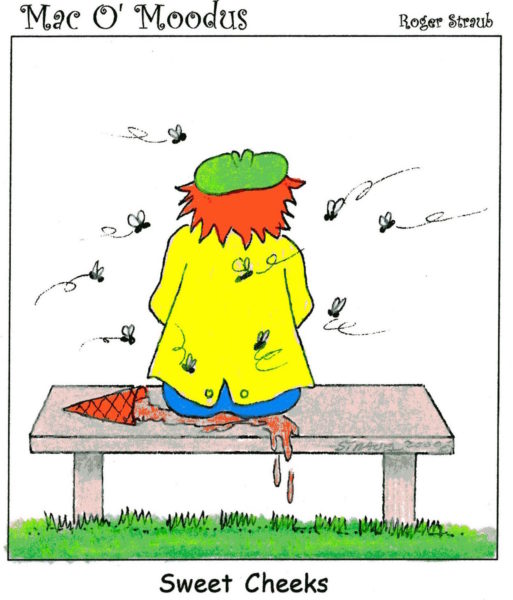
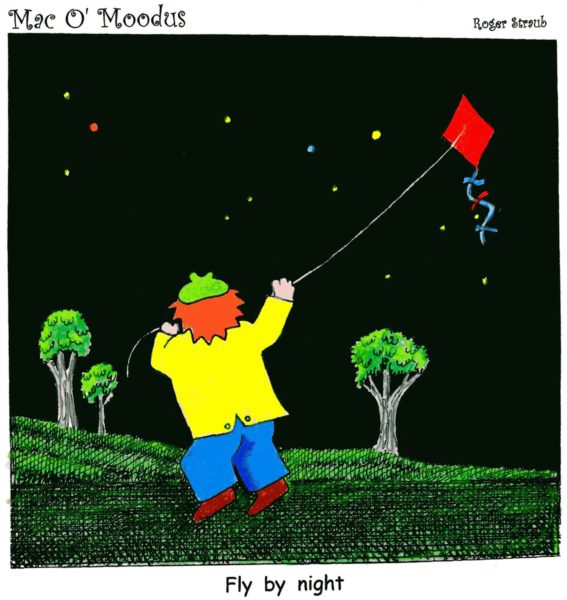
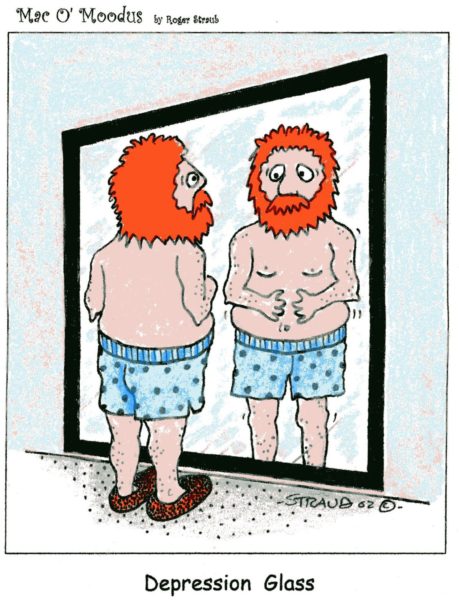
As we sit down at a patio near the farm, Straub pulls out some sheets of paper on which he jotted notes about Mac O’Moodus. This is how Straub describes him: “Innocent, peaceful, funny, inquisitive, creative, even-tempered, wordsmith, childlike, musical, succinct (he does not speak), animal friendly, determined, presents the world as he would like it to be, naturalist, messenger, charming, American icon, loner, adorable.” Below that, Straub wrote: “A cartoon with messages; example of the golden rule; non-threatening with powerful messages. Mac lives in a red shed alone. He doesn’t need much. He speaks for things that don’t have a voice.”
“Mac’s not political,” Straub says. “But he’s strong on the environment, strong on animal rights. I’m very big on pride of country, which I think with COVID is so important. Mac’s patriotic. He loves America.”
“Mac’s a loner, an observer,” Straub adds. When I point out to Straub that he is very much like his creation, he smiles and says: “I am Mac. There’s no doubt. Mac’s warm and fuzzy, like me. All the issues Mac deals with are the issues I care about: the environment, animal kindness and kindness to other humans.”
“Mac is very childlike and I am too. My thought process is childlike. It’s good to be childlike. I think that’s a precious quality.”
“You’ll never find a cartoon of mine that’s in your face,” he notes. “It’s wholesome. It’s the Leave it to Beaver of cartoons.”
Straub brings me into his house and up to his studio. “This is where I do Mac. I use Prismacolor pencils. I like them because they’re blendable; you can create shadows.”
His cartoons, single panels without thought balloons, always start with words — a phrase that occurs to Straub or that he overhears. Those words will go at the bottom of the cartoon. Straub loves double entendres. “Horse fly” shows Mac riding a winged horse. “Lemon drops” depicts Mac with an umbrella shielding him from a rainfall of lemons. In “Cat fishing,” Mac is fishing in a boat alongside a black cat. In “Lame duck,” he assists a duck on crutches.
“A friend of mine told me, ‘You’re outstanding in your field,’ ” Straub says. “So I did a cartoon of Mac standing in a corn field with a scarecrow.”
He sits down at his drawing board, which has pencils, pens and markers at the ready. “I get an idea, then I sketch it on a pad. I ink it. I color it with a Prismacolor pencil. And then I hand it off to my friend and producer, Jean Paul Maheu, who puts it on my website.”
Straub spent 20 years teaching art in elementary schools in New London, Cheshire and Wallingford. He says it was “a relief” to get out of the classroom and instead spend his time in the studio. He still has a day job, working for a property developer. Straub needs that job because, he freely admits, “I’ve never made any money from cartooning. It’s a hobby.”
Twenty years ago Mac O’Moodus regularly appeared in 30 small Connecticut newspapers. Most of them are gone now. Straub’s cartoons are limited to readers of the East Haddam News and the Haddam-Killingworth News.
But he’s using his website in a bid to cheer people up. “COVID was really bugging me, so I was thinking: ‘How can I help?’ I decided to put my alphabet book on the red shed site for free, for the children. (“H is for heroes who work in our town,” etc.)
In a time of lockdown and cutbacks, Straub is wondering whether he’ll ever make any money from Mac O’Moodus. “If I could turn a dime out of making this comic and have it be my livelihood, I’d be over the moon.”
This article was written by Randall Beach and appears in the December 2020 issue of Connecticut Magazine.

 The Joan Shorenstein Fellowship Program is designed to bring journalists, scholars, politicians and policymakers to the Shorenstein Center for a semester to work on a project with a tangible output, and engage with students, faculty, other fellows, and the broader Harvard Kennedy School community. Applications for the Spring 2023 semester are now open through September 7.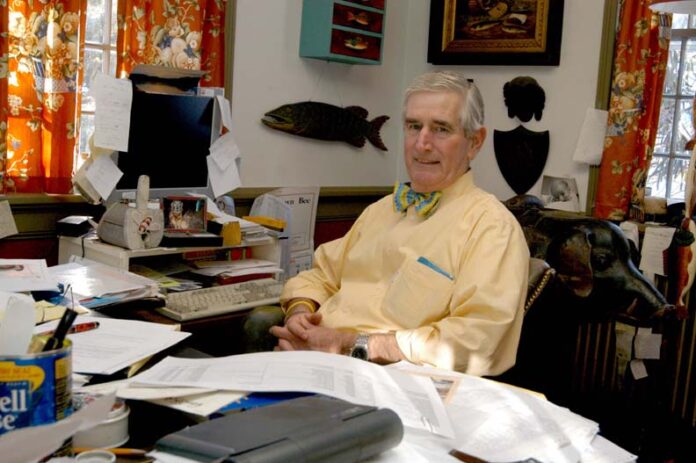


 The Providence Journal has announced two major appointments.
 The American Press Institute is launching a small grants initiative to help newsrooms improve and deepen their relationships with their communities in this year’s elections.

 Local Media Association has named the nine news organizations that will participate in its Advanced Fundraising Lab, launching in September. These nine newsrooms have distinguished themselves by their combination of prior success at fundraising and their track record of journalism on behalf of the communities they serve.