Page 47

API Launches Election Coverage & Community Listening Fund Grant Program

The American Press Institute is launching a small grants initiative to help newsrooms improve and deepen their relationships with their communities in this year’s elections.

The grants will be awarded as part of API’s Election Coverage & Community Listening Fund, a program aimed at empowering news organizations to implement community listening in their elections coverage between now and November 2022. We hope these efforts yield important lessons for 2023 and 2024 that can be shared through journalism networks and conversations facilitated by API.

News organizations that have ideas for ways to forge stronger community relationships through deep listening and engaged reporting may apply for these grants of $1,500 to $5,000 per newsroom through August 17, 2022.

As part of the program, API will also award up to 20 free one-year licenses for Source Matters, an API tool that tracks and improves the diversity of your news stories. Some recipients may receive both a grant and a free Source Matters license.

“Participating in our representative democracy requires access to accurate information about our communities, their problems and possible solutions,” said Michael Bolden, CEO and executive director of API. “With important elections on the horizon, we see an immediate need to help local news organizations think about coverage in ways that help their communities make informed election decisions through improved coverage for 2022 and beyond.”

Applications are due by 5 pm ET on Wednesday, August 17, 2022. Funding decisions will be made by Wednesday, August 24, 2022, with applicants notified shortly thereafter.

All U.S. local news organizations, either nonprofit or commercial, are eligible to apply. We welcome applications from news organizations of any size, including daily or weekly newspapers, public or commercial radio, TV, digital-only news sites, or other non-traditional news and information formats, and those serving urban, suburban or rural populations, including specific ethnic, racial or religious demographics. We will also consider applications from individuals leading or launching their own news organization or who are working with an established news organization. API will designate at least 30 percent of grant funds for ethnic media organizations.

Learn more about the program on the API website

Apply for a grant on the API website

Share:

2022 New England Newspaper Awards

It’s time to submit your entries! Deadline extended until August 11!

The New England Newspaper Awards recognize the region’s best work each year. These top awards, presented at the fall conference, include:

New England Newspapers of the Year
Publick Occurrences Awards
Allan B. Rogers Editorial Award
New England First Amendment Award
Bob Wallack Community Journalism Award
AP Sevellon Brown Journalist of the Year

Below, you will find everything you need to submit your work. This year, this is no need to mail anything – everything will be submitted through the links! There are links to download the entry form and guidelines, links to upload all of your entries, and helpful information about how to name each uploaded file. We will send you an invoice when the submission period ends.

If you have any questions, please contact Linda Conway at l.conway@nenpa.com.

Important things to remember:
– all entries should fall within the contest year dates: June 1, 2021, to May 31, 2022.
deadline: all entries should be uploaded by Thursday, August 11, 2022
– please follow the instructions below on naming your files with the distinguishing info requested.

STEP 1

Download the entry form. Fill it out electronically and save it including your newspaper name and “EntryForm” example: EntryForm_LocalPost.pdf.

STEP 2

Upload your completed entry form. The form information will be used to create a bill. You will receive a separate email about this with options to pay.

STEP 3

UPLOAD ALL SUPPORTING FILES FOR YOUR ENTRIES

Newspaper of the Year Submissions

File naming: Please include your newspaper name, NOY and date. example: LocalPost_NOY_09152021.pdf

Additional Newspaper Excellence Submissions

File naming: Include your newspaper name, PO, and headline. example: LocalPost_PO_AwardsAnnounced.pdf

File naming: example: LocalPost_Cover_PO_AwardsAnnounced.pdf

File naming: Include your newspaper name, FA, and head-line. example: LocalPost_FA_OpenMeeting.pdf

File naming: example: LocalPost_Cover_FA_OpenMeeting.pdf

File naming: Include your newspaper name, ABR and head-line. example: LocalPost_ABR_BrokenSystem.pdf

File naming: example: LocalPost_Cover_ABR_BrokenSystem.pdf

File naming: Include nominee name and JOY example: Smith_JOY.pdf

File naming: example: Smith_JOY_Support.pdf

File naming: Include nominee name and BW example: Smith_BW.pdf

File naming: Include nominee name and BW example: Smith_BW.pdf

Share:

Cartoonist Roger Straub’s creations offer something bright in a gloomy time

Roger Straub was lying in bed at his cottage in Moodus, his mind racing at 3 a.m., fretting over what to name the character of his soon-to-be-released cartoon creation. He had gotten as far as the first name: “Mac.” But what about a last name?

And then it hit him; the Native American name for his area was Machimoodus, meaning “place of bad noises” in reference to the mysterious little earthquakes and accompanying booms that periodically occur there.

“By jove, that’s it! Mac O’Moodus!”

Straub, now 66, delights in recalling that magic moment in 1999, which came about after Leland Morgan, owner of The Trumpeter newspaper of East Haddam, said: “Rog, I have an idea. Can you create a comic for my paper?”

Straub already had a character. He had come up with the concept of a peaceful, childlike, red-bearded innocent in 1976 while studying for his B.A. at the University of Bridgeport. The unnamed character had sat up in the attic of Straub’s mother’s home for more than 20 years. Then Morgan got things rolling.

Ever since then, O’Moodus and Straub have been entertaining readers of select newspapers in rural Connecticut as well as people who have latched onto Straub’s two self-published books of cartoons. You can also go to his website, redshedstudios.com. The red shed sits next to his “granny’s” (Bertha Delehanty) cottage in Moodus, which was handed down to him.

These days, Straub does most of his cartooning at a large Victorian house in Higganum, where he has a second-floor studio. He shares his home with his wife, Michelle, an interior designer, and their dog, Alex, and cats, Kit Carson and Ziggy Stardust.

After greeting me outside his house, Straub harkens back with obvious affection to his “granny” and his idyllic times visiting her as a child in the cottage on the Moodus Reservoir. She was a naturalist and often took him blueberry and mushroom picking and crabbing. Her love of nature was seamlessly passed on to him.

Straub leads me up to a barn and fence that borders his property. This is Sycamore Farm. Two llamas and several goats walk toward Straub as he approaches the fence. “Whenever I need inspiration for my critters in my cartoon, I come here,” he says. “This farm has llamas, horses, pigs, goats, chickens, everything!”

“Hey, Snickers! Hey, La Luna!” he calls out to the llamas. He feeds them some leaves. “I’m gonna put these guys on Hawaiian shirts,” he says. “I’ll call them ‘Bahama llamas.’ ”

As we sit down at a patio near the farm, Straub pulls out some sheets of paper on which he jotted notes about Mac O’Moodus. This is how Straub describes him: “Innocent, peaceful, funny, inquisitive, creative, even-tempered, wordsmith, childlike, musical, succinct (he does not speak), animal friendly, determined, presents the world as he would like it to be, naturalist, messenger, charming, American icon, loner, adorable.” Below that, Straub wrote: “A cartoon with messages; example of the golden rule; non-threatening with powerful messages. Mac lives in a red shed alone. He doesn’t need much. He speaks for things that don’t have a voice.”

“Mac’s not political,” Straub says. “But he’s strong on the environment, strong on animal rights. I’m very big on pride of country, which I think with COVID is so important. Mac’s patriotic. He loves America.”

“Mac’s a loner, an observer,” Straub adds. When I point out to Straub that he is very much like his creation, he smiles and says: “I am Mac. There’s no doubt. Mac’s warm and fuzzy, like me. All the issues Mac deals with are the issues I care about: the environment, animal kindness and kindness to other humans.”

“Mac is very childlike and I am too. My thought process is childlike. It’s good to be childlike. I think that’s a precious quality.”

“You’ll never find a cartoon of mine that’s in your face,” he notes. “It’s wholesome. It’s the Leave it to Beaver of cartoons.”

Straub brings me into his house and up to his studio. “This is where I do Mac. I use Prismacolor pencils. I like them because they’re blendable; you can create shadows.”

His cartoons, single panels without thought balloons, always start with words — a phrase that occurs to Straub or that he overhears. Those words will go at the bottom of the cartoon. Straub loves double entendres. “Horse fly” shows Mac riding a winged horse. “Lemon drops” depicts Mac with an umbrella shielding him from a rainfall of lemons. In “Cat fishing,” Mac is fishing in a boat alongside a black cat. In “Lame duck,” he assists a duck on crutches.

“A friend of mine told me, ‘You’re outstanding in your field,’ ” Straub says. “So I did a cartoon of Mac standing in a corn field with a scarecrow.”

He sits down at his drawing board, which has pencils, pens and markers at the ready. “I get an idea, then I sketch it on a pad. I ink it. I color it with a Prismacolor pencil. And then I hand it off to my friend and producer, Jean Paul Maheu, who puts it on my website.”

Straub spent 20 years teaching art in elementary schools in New London, Cheshire and Wallingford. He says it was “a relief” to get out of the classroom and instead spend his time in the studio. He still has a day job, working for a property developer. Straub needs that job because, he freely admits, “I’ve never made any money from cartooning. It’s a hobby.”

Twenty years ago Mac O’Moodus regularly appeared in 30 small Connecticut newspapers. Most of them are gone now. Straub’s cartoons are limited to readers of the East Haddam News and the Haddam-Killingworth News.

But he’s using his website in a bid to cheer people up. “COVID was really bugging me, so I was thinking: ‘How can I help?’ I decided to put my alphabet book on the red shed site for free, for the children. (“H is for heroes who work in our town,” etc.)

In a time of lockdown and cutbacks, Straub is wondering whether he’ll ever make any money from Mac O’Moodus. “If I could turn a dime out of making this comic and have it be my livelihood, I’d be over the moon.”

This article was written by Randall Beach and appears in the December 2020 issue of Connecticut Magazine.

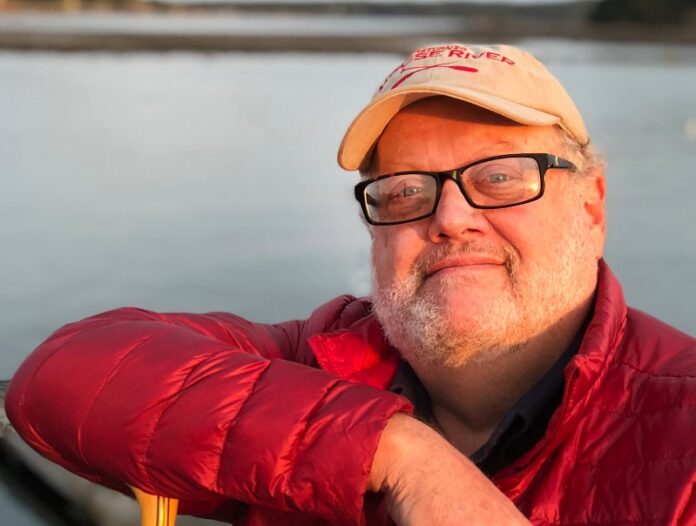
Cartoonist Roger Straub, under the watchful eye of a Mac O’Moodus doll, in the studio at his Higganum home with a mockup of his latest book featuring the character. Photo credit Arnold Gold

For more information on running the Mac O’Moodus cartoons, visit Red Shed Studios.

Share:

Applications for 12th Annual New England First Amendment Institute Now Available

The New England First Amendment Coalition will host its 12th annual New England First Amendment Institute from Oct. 23 to Oct. 25 at Northeastern University.

The previous two institutes were held online due to COVID-19 concerns.

“We’re excited to be back at Northeastern this year welcoming a new class of journalism fellows,” said Justin Silverman, executive director of NEFAC. “We have an excellent curriculum planned for those selected to attend the program.”

The deadline to apply is August 12, 2022, and application materials can be obtained here.

NEFAC provides the tuition-free investigative journalism institute each year for 25 working journalists within the region. It includes workshops and presentations featuring some of the country’s most elite investigative reporters, editors, and media attorneys. About 300 journalists from about 100 local news organizations have benefited from the New England First Amendment Institute since it began in 2011.

Read more at the NEFAC website

Share:

Record-Journal selected for LMA Advanced Fundraising Lab

Local Media Association has named the nine news organizations that will participate in its Advanced Fundraising Lab, launching in September. These nine newsrooms have distinguished themselves by their combination of prior success at fundraising and their track record of journalism on behalf of the communities they serve.

  • The Atlanta Journal-Constitution
  • Miami Herald
  • Record-Journal (Meriden, Connecticut)
  • The Post and Courier (Charleston, South Carolina)
  • The Seattle Times
  • Tampa Bay Times
  • The Texas Tribune
  • The Bureau of Investigative Journalism (U.K.)
  • The Times-Picayune | The Advocate (Louisiana)

The advanced lab will build on the lessons and success of 36 newsrooms that completed the LMA Lab for Journalism Funding, raising collectively more than $10 million since September 2020 to fund local journalism projects. LMA published a free 42-page industry report, Pathways to Philanthropy, to capture and share these learnings. The Lab for Journalism Funding and the new Advanced Fundraising Lab is free to participating publishers thanks to continued support from Google News Initiative.

Read more on the Local Media Association website

Share:

A key question: What’s next?

John Foust Advertising
John Foust has conducted training programs for thousands of newspaper advertising professionals. Many ad departments are using his training videos to save time and get quick results from in-house training. E-mail for information: john@johnfoust.com.

Gregory talked to me about a lesson he learned in his early days of selling advertising. “In one of my first presentations, the prospect rejected my ideas for a new campaign. Back at the office, my ad manager must have noticed the stunned look on my face. When I told her what happened she didn’t want to know the gruesome details. She just asked, ‘Okay, so what’s next?’ 

 “That turned out to be great advice. I sat there and gave myself a good talking-to. Nothing could change the fact that my sales presentation had fallen flat. But what I could change was my approach to that reality. Instead of giving up on that new business prospect, I dove back into my notes, reflected on our conversation during my presentation, and developed another campaign proposal. The new ideas were accepted, and I’m happy to say that company became a consistent advertiser. 

“What I learned is that it’s important to look ahead,” Gregory said. “Think beyond what is happening right now and be ready to change directions.” 

Gregory’s story reminds me of an old Bob Hope line in a movie I saw on TV: “All I’ve gotta do now is figure out what I’m gonna do now.” If we look beyond the double-talk of that gag, we’ll see some real truth. Our biggest challenge is often figuring out what to do next. 

In fact, I believe one of the most important business questions we can ask is, “What’s next?” These two little words represent a deliberate focus on the future. This is especially true in a profession like marketing, which demands constant evaluation and adjustment. Considering the current situation as a new starting point, what’s the next step? If we expect to make any progress at all, there should always be another step. 

Let’s say you make a big sale. I heartily recommend that you celebrate your success and share the glory with your teammates. But after the high fives at the goal line, it’s not a good idea to camp out for a long time in the end zone. Things will not stay like that forever. The game goes on. There’s a next step. 

What if consumers don’t respond to the current offer being made in an advertiser’s ads? Do you keep running the offer again and again, hoping that something will change on its own? Or do you analyze the plan and make some adjustments? 

If you’re a manager who notices that morale in your department is sagging, what can you do to make things better? (Please don’t say, “team building activity.”) Do you hope the situation will go away “when the economy improves?” Or do you take the initiative with a little inter-department research to get to know your team as individuals? Let them help you determine the next step. 

It’s not complicated. It’s simply a matter of evaluating the current situation and asking yourself, “What’s next?” Keep answering that question and you’re on your way.

(c) Copyright 2022 by John Foust. All rights reserved.

Share:

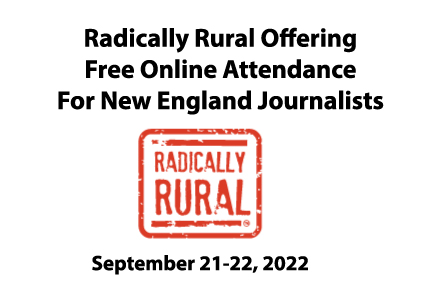
Discounts on Radically Rural Community Journalism Program For NENPA Members

Discounts to Radically Rural’s Community Journalism program in Keene, N.H., are available as a NENPA membership benefit. This year’s programming focuses on the challenges journalists face covering splintered communities and the issues that divide us.

NENPA members can register to attend Radically Rural for $129 in person – a savings of $30; or $49 online, a savings of $20. Use the promo code NENPA for a member-only discount or contact Terrence L. Williams, Keene Sentinel President & COO, at twilliams@keenesentinel.com.

Sept. 21 I 1:30 p.m. – 3:00 p.m.
Covering the Divide: An exploration of how news organizations can better serve communities that are split over politics, the pandemic, guns, policing, voting, abortion, and more.
ModeratorJim Iovino is Ogden Newspaper’s Visiting Professor of Media Innovation at West Virginia University. He runs the Reed College of Media’s NewStart Newspaper Ownership Initiative, a program that focuses on recruiting, training, and supporting the next generation of community newspaper owners and publishers.
PanelistsTony Baranowski, manager of special projects, The Gazette, Cedar Rapids, Iowa, and Sara Konrad Baranowski, editor, the Iowa Falls Times Citizen, Iowa. Peter Huoppi, director, multimedia, The Day, New London, CT, and co-producer of the documentary, “Those People.”

Sept. 21 I 3:30 p.m. – 5:00 p.m.
Better Judgment: How innovative newsrooms are changing their coverage of cops, courts, climate, and other intersections of justice to provide fairer, more equitable news reporting.
Moderator – Cierra Hinton, publisher, Scalawag. Hinton has an undying love and passion for the complicated South, which she brings to Scalawag where she oversees operations and planning. According to its mission, through journalism and storytelling, Scalawag works in solidarity with oppressed communities in the South to disrupt and shift the narratives that keep power and wealth in the hands of the few.
Panelists – Paul Cuno-Booth, freelance journalist and reporter on several alternative justice projects in New Hampshire. Molly Born, West Virginia multimedia producer and educator, now documenting West Virginia’s history and future. 

Sept. 22 I 2:00 p.m.  – 3:30 p.m.
Crazy Good – 50 ideas to make you a better journalist
Presenter: Jeremy Caplan, director of teaching and learning at City University of New York Newmark Graduate School of Journalism. Caplan teaches classes, workshops, and webinars on entrepreneurial and digital journalism. He is a former Ford Fellow in Entrepreneurial Journalism at the Poynter Institute, a Wiegers Fellow at Columbia Business School, where he earned his MBA, and Knight-Bagehot Fellow at Columbia Journalism School, where he earned a master’s degree in journalism.

Radically Rural is a partnership between The Keene Sentinel and the Hannah Grimes Center for Entrepreneurship. The summit features tracks in community journalism, arts and culture, lands and community, downtowns, clean energy, healthcare and entrepreneurship. For more information on the Radically Rural summit and to purchase tickets, visit the event’s website at www.radicallyrural.org.

Share:

Journalism Education Foundation of New England Announces 2022 Scholarship Recipients

WOBURN, MA – The Journalism Education Foundation of New England, a division of the New England Newspaper & Press Association, has announced the recipients of their 2022 journalism scholarships.

This year, scholarships will be awarded to six students. Four collegiate students will each receive $2,000, and two high school students will each receive $1,000.

Congratulations to:
Katherine Hapgood, Boston (MA) University
Magnolia McComish, Franklin Pierce University, Rindge, NH
Isabella Paredes Mendoza, St. Michael’s College, Colchester, VT
Nicholas Miller, Brown University, Providence, RI
Andrew Roberts, Algonquin Regional High School, Northborough, MA
Katie Simons, Staples High School, Westport, CT

We asked the students how the scholarship will help them while studying journalism, and this is what they had to say:

Isabella Paredes Mendoza

“I am deeply thankful to the Journalism Education Foundation of New England and the New England Newspaper and Press Association for this thoughtful support, and for investing in my future as a journalist. As someone eager to learn, this scholarship will help me continue pursuing my education, expand my knowledge and gain enriching experiences. In this way, I will become the best journalist I can be, contributing to our communities.”

Katherine Hapgood

“This scholarship is a tremendous help financially and professionally. Knowing that the industry I hope to one day have a career in supports me is extremely encouraging and a good sign that I am on the right path. The brunt of my journalistic work has gone uncompensated, and this scholarship is a huge help as I hope to attend law school in the near future.”

Magnolia Mccomish

“I would like to thank you and JEFNE’s scholarship committee for selecting me to receive this scholarship. Your belief in my future as a journalist means so much and motivates me to keep improving and strive to be a better journalist. Receiving this scholarship for the completion of my degree also takes a huge financial burden off my shoulders. Scholarships and organizations like JEFNE give me both the courage and financial safety net to shoot higher and take on bigger challenges in my journalistic career. Your investment towards my future is an honor that validates the efforts I have put towards my education.”

Nicholas Miller

“I came to college uncertain of my career goals, knowing only that I loved to write. But reporting for my journalism classes and campus publications has opened my eyes to the enjoyment I find in journalism, and in particular, the excitement I feel while speaking with an incredible variety of people and while learning in depth about a range of topics. The Journalism Education Foundation of New England scholarship will help to alleviate the financial pressures of college, enabling me to focus on the skills I will need in my future journalism career and on the stories I find joy and satisfaction in pursuing.”

Andrew Roberts

“I am honored to receive this prestigious award. I feel this scholarship will help me to pursue the sports journalism career I have dreamed of.”

Katie Simons

“I am overjoyed to be a recipient of the JEFNE scholarship. Since I began taking journalism classes my freshman year I knew that I wanted my future to be in reporting. This fall I am attending the University of Southern California (USC) to study journalism at their Annenberg School for Communication and Journalism. This scholarship will help support my studies at Annenberg and will help set me on the path I’ve hoped to pursue since my freshman year.”

Share:

NEFAC Launches Mentorship Program

The New England First Amendment Coalition recently launched a new mentorship program for journalists working in the region.

The program — NEFAC Mentors — helps reporters, editors and producers looking for guidance in a variety of professional areas by matching them with a veteran journalist with relevant expertise.

The program is funded in part by the Rhode Island Foundation and will be open exclusively to those working for Rhode Island newsrooms for the next six months. Beginning in 2023, all New England journalists will be eligible to apply.

“While we have provided informal mentorships in the past, this new program will help us better serve the specific needs of journalists throughout the region,” said Justin Silverman, NEFAC’s executive director. “We have a growing list of mentors from all backgrounds and different types of newsrooms available to help.”

Read more on the NEFAC website

Share: