Page 84

Member News Related to Coronavirus

Main Page | Webinars & Live Events | Member News | Resources | Essential Services

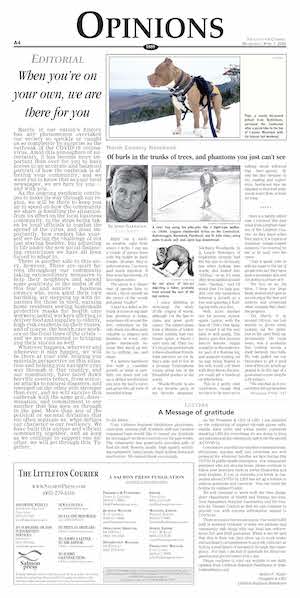
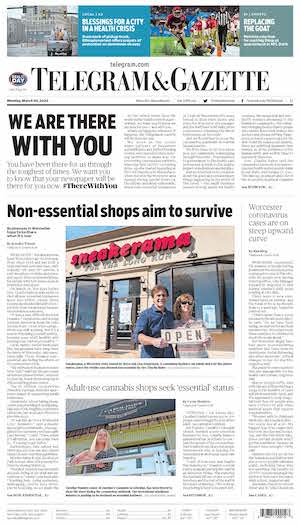
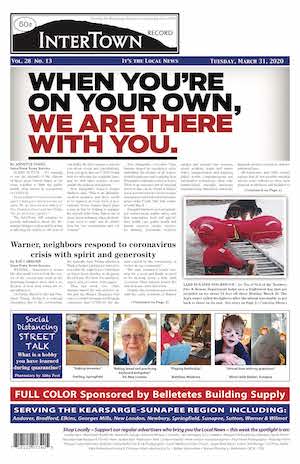
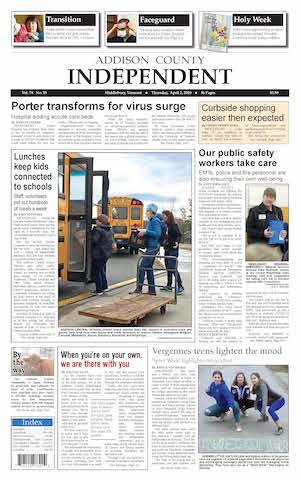
Newspapers across New England are reacting to the COVID-19 pandemic in a variety of ways – from new product launches to changes in print schedules. Send us news about what your organization is doing so we can share ideas to help sustain all of us.

New England Association of Circulation Executives – Ideas & Best Practices for a COVID-19 World

America’s Newspapers offers free marketing campaign to newspapers promoting subscriptions — in print or digital

Next Round of FJP Grant Applications Opens April 13

24 New England Newsrooms Receive FJP Grants To Support Coronavirus Coverage

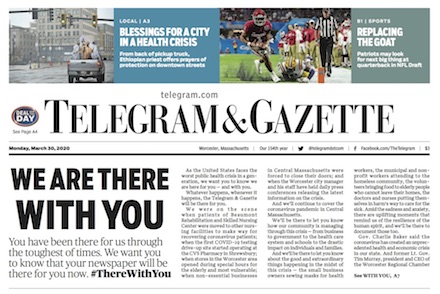
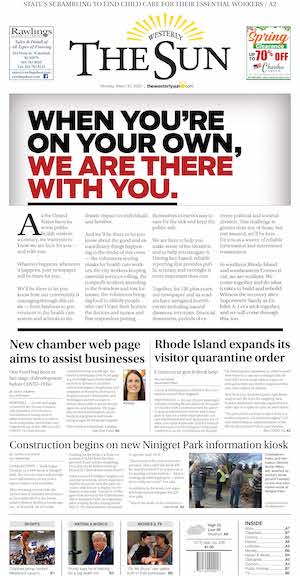
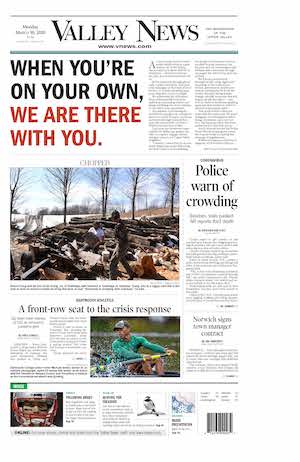
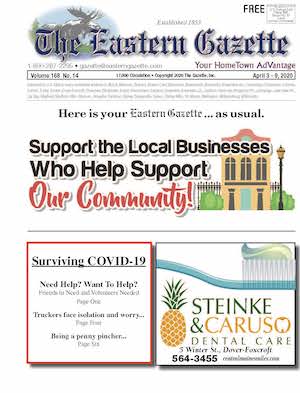
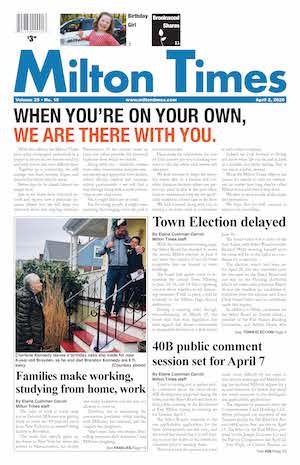
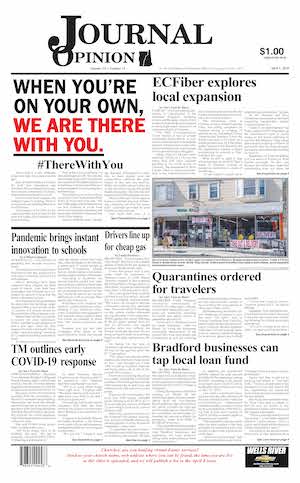
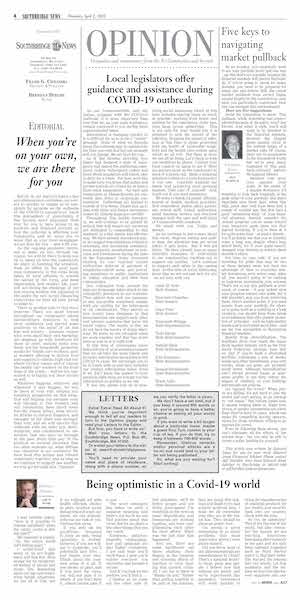
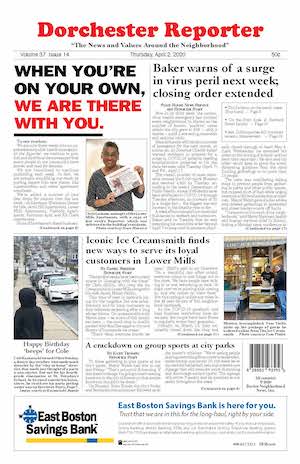
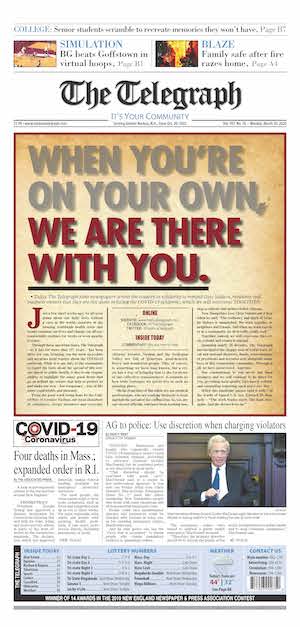
#ThereWithYou COVID-19 Campaign

Can New England News Media Attend ‘Virtual’ Court Hearings?

Metro offering free COVID-19 print section to all newspapers

Legacy is here to help with emergency obit updates, remote funeral participation and more

NEWS MEDIA ALLIANCE – Guide to The CARES Act

US Chamber coronavirus loan guide to help small businesses

Prince Lobel Offers Pro Bono Access Hotline For New England Media

Facebook Invests Additional $100 Million to Support News Industry During the Coronavirus Crisis

COVID-19: SBA Economic Injury Disaster Loan Program

PBN shifts to digital weekly edition amid COVID-19 threat

Seven Days launches Good To-Go Vermont: A Directory of Takeout Options During the Coronavirus Era 

Gannett New England and LOCALiQ announce customer assistance program featuring a free multimedia advertising offer for local businesses

Gannett launches national website to sell gift cards to help local small businesses hit hard by coronavirus crisis

The Newsroom at the Center of a Pandemic

Zero incidents of COVID-19 transmission from print surfaces

Americans who primarily get news through social media are least likely to follow COVID-19 coverage, most likely to report seeing made-up news

Keeping local news sources afloat needs to be part of the governmental and philanthropic response to the pandemic

Share:

Coronavirus Webinars and Live Events

Main Page | Webinars & Live Events | Member News | Resources | Essential Services

Listed below are upcoming webinars and live events to help both your editorial and business departments. If you are aware of additional resources not listed here, please let us know so we can add them

Jan
15
Thu
NEFAC 30 Minute Skills – Health Care Reporting 101
Jan 15 @ 12:00 pm – 12:30 pm
Join NEFAC 30 Minute Skills for the first of two introductory lessons on health care reporting, led by journalist Felice J. Freyer, formerly of The Boston Globe and Providence Journal. Freyer will explain why a foundation of health care knowledge is important for all reporters, regardless of their beats. During her class, she’ll share:
  • Helpful resources for those new to this coverage area.
  • An overview of the U.S. health care system.
  • Best practices for journalists reporting on health care issues.
Speaker: Felice J. Freyer – Freyer has been a health care reporter for most of her career. As a freelance journalist and in long stints as a staff writer at the Boston Globe and the Providence Journal, she covered all aspects of health care and medicine.
Jan
16
Fri
Following the Money in Midterms – Resources for Local Journalists
Jan 16 @ 12:00 pm – 1:00 pm

The most consequential midterm election stories — who is organizing, how money and messaging are taking shape, and which issues are reshaping voter priorities — are already unfolding, long before the first votes are cast.

Join the National Press Club Journalism Institute and OpenSecrets for a free webinar that will prepare journalists to cover the midterms with financial data top of mind. This interactive session, on Friday, Jan. 16 at noon ET, will focus on OpenSecrets’ campaign finance tools that can support your local and regional political reporting in 2026 and beyond.

OpenSecrets launched in 2021 following a merger between the National Institute on Money in Politics and the Center for Responsive Politics, which expanded users’ access to a vast collection of campaign finance data on state and local races, as well as lobbying data.

During this one-hour, virtual session, participants will learn:
– How to find, download, and incorporate public data into their elections-focused storytelling on deadline;
– How to explore Open Secrets’ “Get Local!” donations tracker and other reliable tools; and
– Strategies to strengthen their midterms coverage in 2026 through accountability journalism.

In the spirit of transparency, this session is also open to interested members of the public.

Jan
21
Wed
Uncorking the Secret Sauce to the Strategy Behind The Globe’s High Retention Rates
Jan 21 @ 11:00 am – 12:00 pm
Uncorking the Secret Sauce to the Strategy Behind The Globe’s High Retention Rates

NEACE is kicking off the year with a FREE webinar on January 21st from 11 a.m. to noon. The webinar will feature two leaders from The Boston Globe diving into one of the hottest topics in our industry: Digital Retention — Balancing Subscriptions and Revenue.

Why the Recipe Matters – The Stakes for Local Print and Digital Retention:
· The Base of the Stair-Step Strategy
· The Recipe for Offers: Stair-Step Stop-Save
· Agent Execution: The Chef in the Kitchen
· The Supporting Ingredients: Culture, Training, and QA

Presented by:
Mark Tibbetts / Director of Customer Service at Boston Globe Media
Auni Small / Training Coordinator for Customer Service at Boston Globe Media

Email that actually works in 2026
Jan 21 @ 12:00 pm – 1:00 pm

Inbox competition is fiercer than ever — yet email remains one of the only channels publishers and brands truly own.

Register for this live webinar, where E&P brings together industry experts to break down what’s actually working in email marketing today. No theory. No hype. Just practical strategies being used right now to build trust, grow audiences, and generate measurable results.

You’ll hear how newsletters and one-to-one email programs are evolving beyond “blasts” into high-value products — and how lean teams are pulling this off without adding complexity. Whether you’re running a newsroom, selling sponsorships, or managing campaigns for local advertisers, this session will show you how email can become a reliable growth engine instead of a constant scramble.

Register to learn how to:

Reenergize your newsletters into high-performing products readers look forward to
Grow and monetize engaged audiences without spamming or burning out your list
Leverage automation and personalization to scale email while keeping the human touch
Prove value to advertisers and clients with metrics that matter in today’s privacy-changed landscape

Jan
22
Thu
AI, Intellectual Property and the Emerging Legal Landscape
Jan 22 @ 12:00 pm – 1:00 pm

o help journalists better understand and report on the developing legal issues of AI and IP, join the National Press Foundation and a panel of experts for a wide-ranging discussion around the stakes, impact and potential solutions. Experts in technology and innovation, as well as law and economics, join journalists in this free online briefing 12-1 p.m. ET on Thursday, January 22, 2026.

Register for this free webinar for a variety ways to participate:

– Tune in live to submit questions to the panelists during the Q&A.
– Send questions for the experts in advance to anne@nationalpress.org.
– Receive the recording after the event.

This event is sponsored by The Copyright Alliance and NSG Next Solutions Group. The National Press Foundation is solely responsible for its content.

Jan
23
Fri
How to Pitch High-Profile, National Media
Jan 23 @ 12:00 pm – 1:15 pm
How to Pitch High-Profile, National Media

Dream big about your next story pitch, and join us for this free webinar featuring section editors for top outlets, including KFF Health News, the Cut, and New York Magazine! These editors are looking for impactful stories and sharp reporting from all over the country, and this is your chance to learn how to wow them. Get inside information about rates and contract terms, and make a connection.

Speakers:
Genevieve Smith, features editor for The Cut/New York Magazine
Kytja Weir, national editor for KFF Health News

Moderator:
Jamila Bey, Freelancer

Jan
27
Tue
Should publishers block AI bots from scraping their content?
Jan 27 @ 1:00 pm – 2:00 pm

Every publisher is trying to figure out, “Should we block AI bots from scraping our content? And how do we actually block them?” Website visits to ChatGPT, Claude, Google Gemini, and others have exploded, and some publishers say AI-generated answers are hurting their website traffic.

Join 30-year digital media veteran, Eric Shanfelt, as he shows you how AI actually impacts different types of publishers, how blocking AI bots impacts your visibility and website traffic, loopholes that AI companies use to scrape your content, and how to block AI bots effectively (HINT – it’s more than robots.txt).

Speaker info:
Eric Shanfelt
Founding Partner, Nearview Media
eric@nearviewmedia.com

Jan
29
Thu
Covering Policies that Restrict DEI
Jan 29 @ 1:00 pm – 2:00 pm

For months now, colleges and universities across the country have been quietly — and sometimes abruptly — dismantling diversity, equity, and inclusion infrastructure as a result of mounting state and federal policies and actions. Scholarships connected to race or ethnicity are being eliminated. DEI offices are being renamed or shut down. Boards are pressuring campuses to remove racial equity policies. Student support programs designed for marginalized students are being scaled back or cut altogether.

Experts emphasize that colleges are, at times, overcomplying with these new restrictions. Others worry about the impact on students and college communities. What is the general flow of state policy? What strategies can reporters use to track and understand federal measures that restrict DEI? How are higher education officials responding? Who should reporters talk to about the purpose of DEI and its impact on schools and students?

Join the Education Writers Association’s webinar on Thursday, Jan. 29 at 1 p.m. Eastern as many state legislative sessions begin. Get helpful context, background information, resources and story ideas on the DEI landscape in higher education.

Hear from a policy analyst, civil rights lawyer and journalist who can provide attendees with insights into policies and legislation from the state house to the White House.

Reporters can expect to walk away with tools to stay ahead of the story and avoid missing critical developments happening in legislative halls, federal agencies, college campuses and classrooms.

Speakers
– Arthur Coleman, founding partner, EducationCounsel LLC
– Heidi Tseu, assistant vice president of national engagement, American Council on Education
– Brooklyn Draisey, higher education reporter, Iowa Capital Dispatch (moderator)

Previously Aired

Previously aired Editor & Publisher Reports Podcasts

America’s Newspapers Previously Aired Webinars – Download recordings, PowerPoints and key takeaways:

Small Business Impacts and Resources from the CARES Act – Register
This free webinar presented by NENPA University and Online Media Campus was recorded on April 3. It provides an overview of the impacts and resources available to small businesses from the three phased congressional relief packages in response to the COVID-19 pandemic. A NENPA member code is required to register for the recording at no cost. Members that are interested in receiving the access code for this webinar should email c.panek@nenpa.com.

Audio interview with infectious disease experts from The New England Journal of Medicine – conducted on March 25, 2020, the editors discuss transmission of SARS-CoV-2 and how to prevent it, particularly in at-risk health care workers.

Covering Coronavirus: Expert Tips for Journalists & Communicators – National Press Club

Get the Story on the Coronavirus Crisis – Center for Health Journalism

Share:

Coronavirus Essential Services

Main Page | Webinars & Live Events | Member News | Resources | Essential Services

News organizations are essential businesses, especially in times of crisis. Below are links to executive orders specifically listing news as essential, as well as joint letters reminding governors to specify news employees as exempt if they place restrictions in their respective states.

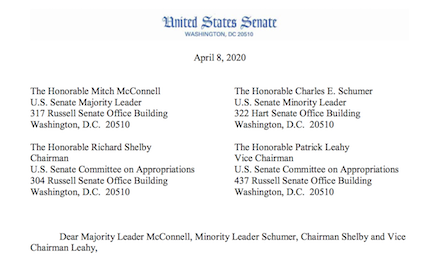
New England Senators Seek Local Media Funding in Covid-19 Stimulus

MA COVID-19 Essential Services Full List

Joint Letter to President Trump: Help Sustain Local News – by News Media Alliance and America’s Newspapers.

Letter for Massachusetts news organization employees (essential personnel)

CT Executive Order 7H – Restrictions on Workplaces for Non-Essential Business

Letter to Governor of Maine from NENPA, New England First Amendment Coalition, Maine Press Association and Society of Professional Journalists – New England

Letter to Governor of New Hampshire from NENPA, New England First Amendment Coalition, The Keene SentinelNackey S. Loeb School of Communication and Society of Professional Journalists – New England

Letter to Governor of Rhode Island from NENPA, New England First Amendment Coalition, Rhode Island Press Association and Society of Professional Journalists – New England

Reporters Committee for Freedom of the Press – Press freedom and government transparency during COVID-19

DHS Guidance on the Essential Critical Infrastructure Workforce

Share:

Coronavirus Resources and Training

Main Page | Webinars & Live Events | Member News | Resources | Essential Services

Resources and training opportunities for news organizations are crucial right now. The links below will direct you to important guidelines, best practices and training for journalists.

New England SBA Offices and Free Counselors

US Senate Committee on Small Business & Entrepreneurship Report – The Small Business Owner’s Guide to the CARES Act

World Health Organisation and industry experts confirm newspapers remain safe to handle

SBA Coronavirus (COVID-19): Small Business Guidance & Loan Resources

COVID-19 Safety Practices in the Newspaper Industry

Pulitzer Center Announces New Grant for Innovative Coronavirus Reporting Collaborations

America’s Newspapers and E&P Launch Coronavirus Information Site for News Industry

Poynter announces free News University courses to help journalism educators and students

OSHA Guidance on Preparing Workplaces for COVID-19

U.S. Department of State Travel Advisories

Centers for Disease Control & Prevention COVID-19 global cases map

Coronavirus COVID-19 Global Cases by the Center for Systems Science and Engineering at Johns Hopkins University

World Health Organization Novel Coronavirus Situation dashboard

WHO Coronavirus disease daily situation reports

Poynter Coronavirus Fact Checking Alliance

CDC’s Resources for Businesses and Employers

Background and sources for your reporting – Association of Health Care Journalists

Core Topic: Infectious Diseases – Association of Health Care Journalists

Resources for Reporters – First Draft

Tips for Journalists Covering COVID-19 – Global Investigative Journalism Network

Coronavirus, Flu and Miscellaneous Medical/Health Sites – Journalist’s Toolbox

List of questions reporters should be asking about coronavirus compiled by Propublica’s Caroline Chen, who lived through SARS and reported on Ebola

List of coronavirus experts on Twitter curated by Bara Vaida, the Association of Health Care Journalists’ core topic leader on infectious diseases

Covering COVID-19: Poynter Institute’s daily coronavirus briefing for journalists

Committee to Protect Journalists Safety Advisory: Covering the coronavirus outbreak

Free icons for coronavirus awareness

Share:

New England Media Keeping Public Informed During COVID-19 Crisis

COVID-19 Main Page | Webinars & Live Events | Member News | Resources | Essential Services

We are trying to gather as much information as we can on how our members are keeping their readers and visitors informed during the COVID-19 crisis. These are some of the resources we saw today with links to the sections and articles. If you have a resource section on coronavirus that you would like us to list here, send the information to t.cleary@nenpa.com.

Seven Days is developing Good To-Go Vermont as a new resource to help you find out what your favorite eateries are serving up via takeout, delivery or curbside pickup.

Boston.com has a page they are continually updating – Live updates: The latest news on the coronavirus outbreak in New England

Hartford Courant has a resource guide – Coronavirus crisis resources in Connecticut: From food to legal aid and housing

Karen Andreas, regional publisher of The Salem News and North of Boston Media Group ran a letter to readers “From the Publisher” reassuring readers, “that your hometown journalists at The Salem News are hard at work to provide you with reliable, timely information during this time of crisis.” Andreas goes on to say, “as a public service during this crisis, non-subscribers also have access to our website’s breaking news developments regarding the COVID-19.”

Concord Monitor has put together a special section on their website which is updated daily with many resources on how the state of NH is dealing with the coronavirus.

Portland Press Herald has also put together a special section on their website that is outside their paywall and available to anyone looking for information on how Maine is dealing with the coronavirus.

The Providence Journal is making their coronavirus coverage free according to a statement on their website, “To our readers: We are providing vital coronavirus content for free online as a public service during the outbreak. Please support local journalism by subscribing to The Providence Journal.”

Share:

White House, media team up for virus public service campaign

Associated Press | March 19, 2020

The White House said Wednesday it’s joining with major media companies, digital platforms and the Ad Council to share “accurate and timely information directly to the American people” about social distancing, hygiene and mental health.

The announcements, known as PSAs, will direct people to coronavirus.gov, which a centralized source of updated information on the crisis, according to a White House statement.

Media outlets are donating air time, with all content coordinated through the Centers for Disease Control and Prevention and the Department of Health and Human Services.
Read more

Share:

Most Americans Think Media Is Doing Fairly Well Covering COVID-19 Outbreak

Amy Mitchell & J. Baxter Oliphant | Pew Research Center | March 18, 2020

The COVID-19 pandemic has caught Americans’ rapt attention. Roughly half of U.S. adults (51%) are following news about it very closely, with another 38% following it fairly closely, according to a new Pew Research Center Election News Pathways survey conducted from March 10-16, 2020. During this period, the number of confirmed cases in the United States increased from about 650 to over 3,000the World Health Organization declared the COVID-19 outbreak a pandemic, President Donald Trump announced a ban on travel to the U.S. from European countries and many universities announced closures or remote classes.

Americans give the news media fairly high marks for their coverage of COVID-19, though most think their reporting has at least somewhat exaggerated the risks.
Read more

Share:

COVID-19: Getting good information as virus crisis unfolds

Gene Policinski First Amendment
Gene Policinski is president and chief operating officer of the Freedom Forum Institute. He can be reached at 
gpolicinski@freedomforum.org, or follow him on Twitter at @genefac.

Let’s add one more list to the various check-offs from the Centers for Disease Control and Prevention (CDC), employers and others on how to deal with COVID-19: Tools and tips for getting good information about dealing with the virus from sources you trust.

In times of crisis, from natural disasters to 9/11 and more, a free press has consistently delivered the goods, saving lives and asking the necessary and often inevitable challenging questions of the public officials on whom we depend for safety and security.

Put aside for now the blather about “fake news” — so politicized as to have no real meaning any longer. Discount President Trump’s claim that it’s the news media that’s leading the world’s stock markets into “yo-yo Dow” days. And pay less attention to the cable TV punditry and focus on the news reports from reporters with sources who appear by name in print, online or on TV. 

The virus and its threat to our health is real. The market is down — and up and down — regardless of what’s causing it. Look for facts. Don’t be too accepting of information from any source, particularly on social media. Blog posts, tweets and public forums provide valued means of sharing individual information and experiences, as well as provide real-time data of how well government services are performing.

In the first such major crisis in which social media tools were more widely available, during 2005’s Hurricane Katrina, the then-fledgling online efforts by the web alternative to New Orleans’ Times-Picayune newspaper provided essential information on what was happening “now.” Even police and Coast Guard rescuers said they had monitored NOLA.com, at times sending in teams to help those posting that they were in danger. NOLA.com later won a Pulitzer Prize for its efforts.

While some are upset that what they are hearing from the administration and what they are reading or viewing seem to differ, a free press response to that situation is: “So what’s new?” Nearly 100 years ago, President Herbert Hoover’s administration first responded to the 1929 stock market crash by calling it a market reset or passing adjustment — or at worst, part of a passing recession that would soon be over. Understandable perhaps as an effort to stave off worse news. But it’s Variety’s headline a day after “Black Tuesday” — the huge, one-day drop in the Dow — that let Americans know what really happened: “Wall Street Lays an Egg!”

From the Vietnam War — with its infamous “credibility gap” between what journalists saw in combat and what military leaders were saying, to what we now know about out-of-proportion government surveillance programs across decades of our nation’s history, it’s a free press that over time gives us the facts we need.

My colleague Barbara McCormack, who oversees the Freedom Forum’s Newseum Education initiative, has this advice on turning to a free press for information and avoiding disinformation: “Break out of your content bubble and make sure you’re engaging with diverse ideas. That includes ideas you disagree with. With a nearly infinite supply of information at our fingertips, it can be all too easy to start gravitating to sources that reinforce our beliefs and make us feel validated, but the less likely we are to spot propaganda that is trying to exploit our beliefs and biases.”

Her advice: Break out of your media rut. Try this: Create a list of five news sources to consult on a regular basis — not necessarily every day, but every week or so.

The CDC has its basic instructions on hand washing. Here’s something similar for getting good information you can use about COVID-19:

  1. Identify two general news sources you already look at on a regular basis and usually agree with;
  2. Find two general news sources you don’t usually agree with;
  3. Find one source that covers news from a specific perspective, such as the views of a particular demographic, religious group or profession;
  4. Read and listen to each of them.

McCormack’s advice: “It’s OK for your sources to display a bias in their coverage, but make sure that all five are real, fact-based news and opinion organizations. If you’re not sure, you can use a resource like the Freedom Forum’s Newstrition® or the website AllSides evaluate your sources. Check them on a regular basis to help you see the world in all its complexity, not just from a single vantage point.”

The Philadelphia Inquirer, The Seattle Times, the San Francisco Chronicle, the Tampa Bay Times and others have removed paywalls for information about the virus crisis, or placed critical information outside their pay sites. USA TODAY, The Washington Post, The New York Times, CNN and the broadcast networks and many other major news outlets are offering COVID-19  newsletters and medical tips on a daily basis.

A part of responding to any crisis is having enough good information on which to make decisions — whether you are making those for yourself or others. And in such times, throughout our nation’s history, a free press — if we care to use it — has been there on our behalf to obtain and report the facts we need.

For more information: https://newseumed.org/fact-finder-guide.

Share:

Newest New England Hall Of Fame Inductees All Pioneering Community Journalists

John Voket | NENPA eBulletin | March 11, 2020

The gathering was intimate but sentiments filled the room as three new inductees were welcomed into the New England Newspaper Hall Of Fame February 7. The gathering, always a highlight of NENPA’s Annual Convention, took place at Boston’s Renaissance Waterfront Hotel.

Each year, a panel of NENPA Executive Board members and Executive Director Linda Conway review nomination packages to honor the most outstanding newspaper professionals from the association’s six-state region.

More than 100 individuals have been singled out over the past 50 years, and in 2020, the Hall of Fame celebrated John Dennis Harrigan, Julia Wells, and Carol J. Young. Each inductee and were joined by family and colleagues past and present.

In their lengthy nomination of Harrigan, co-nominators Joseph W. McQuaid of the New Hampshire Union Leader and Sunday News, and Nancy West, publisher of InDepthNH.org extolled his “more than a half-century illustrious career as a statewide reporter, outdoor writer and North Country newspaper owner.”

Harrigan is well known to readers at the New Hampshire Sunday News, and his column, “Woods, Water & Wildlife,” was still running long after he left the paper’s employ, continuing the column for a 37-year run. As publisher of the Coos County Democrat, he founded the weekly direct-mail tabloid, the Northern Beacon.

“Harrigan’s columns, editorials, and feature writing have regularly presented a view of New Hampshire nature and wildlife to a statewide, often suburban readership that would otherwise be lacking in that perspective,” they wrote.

“His informed, respectful, and often humorous columns have introduced and educated generations of readers to New Hampshire’s outdoor vistas and wildlife,” they continued. “Sometimes, he just rants, and even when he is deeply pissed off, his words are a joy to read.”

In welcoming his nominee to the Hall of Fame podium February 7, McQuaid further related, “newspapering is in his blood,” adding that three of Harrigan’s four children, like his father before him, are in the newspaper business.

“John could, and did, write everything,” McQuaid, a former colleague observed. “He could write outdoor features, he could cover a riot — which he did for us — he could go to Fenway Park and take pictures, he was extraordinary.”

McQuaid’s voice broke as he momentarily mentioned the tragic 1997 shooting at his News & Sentinel that took the life of “his editor and his best gal.” He went on to praise Harrigan saying, “he put out the paper that night…for his town, and his family, and his friends.”

As the Hall of Fame attendees brought him to the podium with warm applause, Harrigan remarked how wonderful it was to come to Boston “to hobnob with people who are passionate about what we do.”

He reminisced about walking away from a lumberyard job over half a century earlier and wandering up and down the Main Street in Nashua, New Hampshire, ending up taking a job at the Telegraph.

“That was the beginning – 1968, and the rest of it has been one hell of a toboggan ride,” he said. “I’ve gotten some great stories out of it, and met some wonderful people. But we still need gatekeepers,” he added, referring to professional journalists, whether they are working in print or on the web.

‘Fearless reporter, skillful editor’

In her nomination letter Vineyard Gazette Publisher Jane Seagrave related that Wells devoted her entire professional career to covering her Island community.

After moving to Martha’s Vineyard fresh out of Wells College, she joined the New Bedford Standard Times’ two-person bureau in 1973, then worked for the Cape Cod Times when that newspaper eclipsed the Standard Times as the Vineyard’s preferred mainland paper. In 1984, she joined the Vineyard Gazette, where she served as senior reporter for many years before being named editor in 2004.

“A fearless reporter, graceful writer and skillful editor, Julia is also a demanding leader who holds herself as much as her staff to the highest standards. Night or day, when news breaks on the Vineyard, you can be sure that Julia will be directing coverage and, if circumstances require, making the phone calls, taking the pictures, filing the story online and teasing it on social media,” Seagrave continued.

“A guardian of the public’s right to know and a mentor to many young journalists, Julia Wells is a shining example of a consummate news professional,” Seagrave added.

Welcoming her friend and colleague to the podium February 7, Seagrave noted that “everyone at the Vineyard Gazette understands that what we’re trying to do is something more than just cover the news on Martha’s Vineyard. And the keeper of that flame for the last several decades is Julie Wells. In many ways Julie is the Vineyard Gazette.”

Through everything from hurricanes to small community selectmen’s meetings, Seagrave said her colleague willingly covered “roiling debates and disputes that went to the heart of what Martha’s Vineyard is.

“She was and is a student of the island’s history, she knows the most arcane zoning regulations, the intricacies of school finance, she can probably quote most of the Steamship Authority’s enabling legislation,” Seagrave said, “and she writes with equal authority on where wildflowers, grass sand plains, striped bass regulations, legal maneuvers, real estate transactions…and she happens to know where the best blueberries are on the island.”

As Wells took the microphone she commented that in all the years of attending NENPA and before that NEPA conferences, “I never knew what went on in that Hall of Fame – and I’m honored and humbled to represent the Gazette here tonight.”

Stating she is proud to be “an old school, fearless crusading print journalist…always working to shine a light on others.” She recognized a number of her staffers who all played roles in supporting her work, and reminded attendees that the Gazette has been maintained for decades as “a teaching paper.

“It’s a responsibility to continue that tradition and I carry it – sometimes heavily – but never alone,” adding that writing about friends and neighbors she sees every week in the grocery store provides the ultimate opportunity “to make a difference.”

“There are so many things that go into making a community newspaper, sometimes we win awards, and I’m so grateful to the Gazette – the little paper that does big things – and to the Gazette giving me the opportunity to win this award.”

An ‘inspiring leader’

Last but not least, Alan Rosenberg, executive editor of The Providence Journal, headed to the podium to talk about former colleague Carol Young, who was nominated to the Hall of Fame by the Journal’s Managing Editor, Michael McDermott.

During 45 years at the Journal, Young rose from small-town bureau reporter to statewide education reporter, and eventually to deputy executive editor – second in charge of the news department. She was a leader of the Providence Newspaper Guild during a time of labor strife, before becoming the first woman to join the Journal’s management team in 1979.

Young was a guiding force behind the newspaper’s intern program, serving as a mentor for many who would go on to careers at the Journal and at other publications around the nation. Since retirement, she has remained extremely active in her community – and in 2018 she was named one of the state’s “inspiring leaders” by Leadership Rhode Island.

Rosenberg further explained that he had heard about Young 42 years earlier when he was heading to work at the Journal, where “Carol turned out to be a lifelong mentor and a terrific friend.”

“I think that’s what makes her so rare and wonderful beyond her distinctions during her four-and-a-half decades at the Journal,” adding that Young was throughout it all “a fierce advocate for a free press.”

In 1984, Rosenberg recalled how after notorious Providence Mayor Buddy Cianci was arrested for assaulting his wife’s lover, Young contacted the outgoing mayor’s 29-year-old replacement, Joey Paolino, explaining that “he was in the big leagues now…and letting the Journal record his thoughts was part of the package – he let us in.”

Rosenberg also lauded Young’s “human touch, that also helped make her a great editor,” and mentor to dozens of up and coming interns at the Journal – reminding those at the Hall of fame dinner that Young remains vibrant and active in Rhode Island in her retirement.

As Young took the microphone, she recognized her fellow newly inducted Hall of Famers who, “all love to be in the room when the news happens.”

Young noted one colleague who mentioned that the downward spiral of the print news business started in 2010, the year she retired.

“So I thought, what – did I cause this crisis? But there absolutely is nothing funny about the decline of newspapers. It is sad, it is troubling, and it’s ultimately going to lead to people being less informed – or more likely mis-informed, and perhaps ill-equipped to be the one thing we all have to be: citizens we need to keep this democracy we have going.”

Young related the many ways that local newspapers touch and inform the many friends and neighbors in a community, and how “newspapers large and small are fulfilling their constitutionally protected role of being watch dogs of the government.”

She went on to observe how “newspapers create a community-wide foundation of shared facts, shared experiences, and shared values,” despite differing opinions in the readership, who nonetheless all used facts and information from the same newspaper.

“All during my decades in journalism, you could hear people say ‘it must be true, I read it in the Journal.’ But the loss of trust in the mainstream media haunts me – and it’s particularly unsettling because the loss of trust is occurring while newspapers are struggling to reinvent themselves and to hold onto principles they always had.”

She observed that “current assault” of the “big guys” in journalism coming from Washington, D.C. “is more vicious, and baseless. The ‘fake news’ [claim} is so baseless, it’s so deliberate, calculated, it’s so damaging, and it’s so wide spread.”

She praised the Journal for a current series featuring newspapers staffers, revealing “why they’re doing this job, something they were called to do, who these people are covering the news so maybe people will trust these people a little more.”

In discussing why keeping the First Amendment strong matters, Young said “newspapers can only fight back by not backing down, and holding their ground as community watchdogs – who “own it and correct it when we slip. That’s what newspapers do.”

In closing, Young said newspapers need to expose more about themselves, what they do, and why they do it.

“That’s what we have to somehow tell people,” Young said, “what the world would be like without us. There is strong journalism going on around here. It’s important, and it’s not fake news.”

John Voket is a contributing writer for the eBulletin and former NENPA President.

2020 Hall of Fame Dinner Photos
(Please note these photos are not hi-res. If you’re looking for a better quality photo from the event, please email info@nenpa.com)
Share:

Seven Days and Kate O’Neill Receive the 2020 Jack Barry Communications Award From Recovery Vermont

Cathy Resmer | Seven Days | February 25, 2020

Writer Kate O’Neill’s 2019 series “Hooked: Stories and Solutions From Vermont’s Opioid Crisis,” published in Seven Days, received this year’s Jack Barry Communications Award from Recovery Vermont. The award presentation took place during the nonprofit advocacy organization’s annual Recovery Day event in Montpelier on February 12.
Read more

Share: