‘Podcasts give you the voices of the participants. You feel like you’re in the same room with them, that they’re talking directly to you. There’s a powerful intimacy to that. You can hear subtle inflections in the voices that are very hard to capture in print.’
— Christopher Goffard, Staff writer,
Los Angeles Times
Speaker touts podcasting as
a new lure to good journalism
By Nadine El-Bawab Bulletin Correspondent
As digital media grow, so do the possibilities for using those digital platforms in journalism.
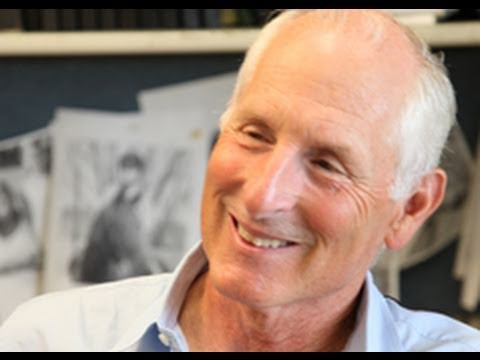
Christopher Goffard, author and staff writer for the Los Angeles Times will be the keynote speaker, on the subject of “Podcasts – Expanding journalism beyond our printed products,” Saturday morning, Feb. 24, at the New England Newspaper and Press Association winter convention.
Goffard is the host of a podcast, “Dirty John,” which has had more than 10 million downloads and was at the top of Apple podcast charts for a month. He shares a 2011 Pulitzer Prize for the Times’ coverage of a scandal involving eight officials looting more than $5.5 million from a California county’s poorest communities.
Goffard will discuss the importance of using podcasts and how they are increasingly becoming an important journalistic tool.
Goffard thinks that you can transfer to podcasting all of the basic skills you use as a journalist in any other medium.
The basic skills you have in terms of “how to find information, how to interview people, how to assemble your facts in a narrative are transferable to the podcast medium,” he said in an email interview.
His talk will be drawn from his personal experience with podcasting. Goffard learned how to transform a story into a podcast in three and a half months after having been a print reporter for 20 years.
Having spent the majority of his career telling stories in print, Goffard recognizes that every medium has its strengths and weaknesses, but he thinks that podcasts give the listener a special insight into a story.
Goffard said via email: “Podcasts give you the voices of the participants. You feel like you’re in the same room with them, that they’re talking directly to you. There’s a powerful intimacy to that. You can hear subtle inflections in the voices that are very hard to capture in print.”
“’Dirty John’ was a kind of experiment. We released the podcast along with a written version of the series. My hope is that the podcast draws people to the Times and they subscribe and become acquainted with the important work my colleagues have been doing,” Goffard said in the email interview.
“If the experiment increases news literacy even a little bit at a time when the mainstream media is under assault — if it helps people perceive the difference between a carefully sourced story and a random post on Facebook or Reddit — it’s done some good,” he said.
Goffard’s speech is scheduled for 9 a.m. on the second day of the convention, Feb. 24. The convention is being held at the Renaissance Boston Waterfront Hotel in South Boston.
He will also be part of a panel workshop at 10:30 that will give attendees valuable information on what it takes to create a quality podcast.
Every challenge is an opportunity, and I know that sounds like a cliché, but that’s where most new industries, or new companies, or new successes, come from. (It) is when someone picks a new challenge and says, “How do I do that differently than what other people are doing?” ’
— Jeff Haden, Contributing editor,
Inc. magazine
Speaker reinvented himself, wants papers to do the same
By Jess DeWitt Bulletin Staff
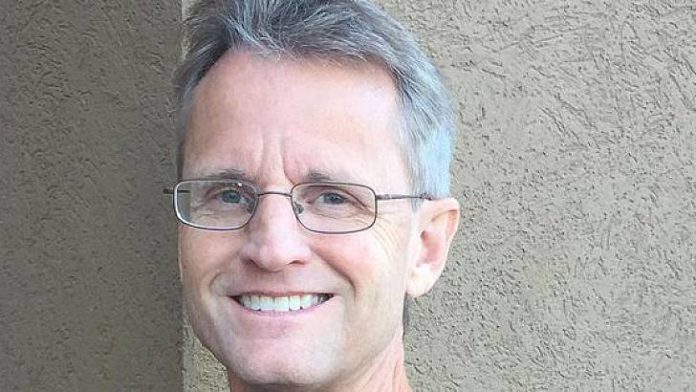
Looking at old problems in new ways is one of the keys to being innovative, according to Jeff Haden, a freelance writer and contributing editor for Inc. magazine.
Haden will be a speaker at the New England Newspaper and Press Association winter convention, which is scheduled for Friday, Feb. 23, and Saturday, Feb. 24, at the Renaissance Boston Waterfront Hotel in South Boston.
He plans to make innovation the theme of his speech, because it has helped him navigate his way through numerous industries during his career. He has written for numerous publications, including Time magazine and Business Insider. He also has a book, “The Motivation Myth,” coming out this year.
Haden has spent his career thinking innovatively and wants to express how important it is to tackle problems with that mindset.
“Every challenge is an opportunity, and I know that sounds like a cliché, but that’s where most new industries, or new companies, or new successes, come from. (It) is when someone picks a new challenge and says, ‘How do I do that differently than what other people are doing?’ ” Haden said. “So the opportunities are there, and so my goal with it is to get people (to) take a step back and say, ‘You know (that) we can do this, we can figure some of this out, we can take ourselves to new places if we want to; we just have to try.”
Haden loves newspapers, and part of the reason he is looking forward to the convention is how many people in the newspaper industry he will get to speak with.
But he said those in the newspaper industry need to think more innovatively.
That same mindset guided Haden in turning a 20-year career in the manufacturing industry into a career as a freelance writer, a field in which he had no prior experience.
Haden worked his way through college. When he graduated, he applied for jobs at manufacturing plants. He was hired by one that opened in his town as a materials handler, or as he described it, “mostly just manual labor.”
“I worked my way up and became a supervisor, then a manager, and worked in all kinds of different operational and administrative type of roles, and eventually got a job somewhere else where I ran a plant, and really liked it,” Haden said.
Despite enjoying the job of running a plant, Haden eventually began looking for something new in his career, which prompted him to “reinvent” himself.
“I wanted to write, which meant I had to start at the bottom. I had no writing skills except what I had written for work, but that’s what I wanted to do,” Haden said.
The career change would require innovative thinking on Haden’s part, and he was able to find a way into the field. He began ghostwriting for people or “writing material that other people were putting their names on,” because that was all he could get paid to do at first.
“I had this background in business, management, and leadership, all of that experience,” Haden said. “I was writing in that area and my advantage was that the people I was writing for could talk to me shorthanded. They didn’t have to teach me anything. I had been there, done that, and probably messed it up one time along the way, so I understood.”
The mindset Haden had when becoming a writer is the same mindset he said newspapers should have when trying to adapt for the future.
“I really just took the strengths I had and applied them to something different, which is I think what any smart business and what the newspaper industry should be looking at,” he said. “We (newspapers) have things we have to improve and do differently, but also, what are our strengths? What do we do really well? And how do we apply that in a new way to the environment we have so that our business model continues?”
Haden thinks that could be simpler than people realize.
“That doesn’t mean the operation side. That just means informing people, sometimes it’s entertaining people, connecting with the community, whatever those things are that the newspaper people feel that they do really well, whatever those outcomes are. So then how do we just apply those strengths to the changing environment and to the media landscape?” Haden said. “They don’t have to become something brand new. They just have to take what they’re really good at and say, ‘OK, how do we apply that to the new media landscape?’ Because good stories will always be good stories.”
Being a successful product of innovative thinking, Haden wants to encourage more people to go about their careers with that mindset.
“I am a good example of how, if you’re willing to work hard and try, lots of things are possible. If an average guy like me can do that, then imagine what people who actually have talent (and) skill can do.” Haden joked.
Haden is Inc. Magazine’s most read columnist, and is a LinkedIn Influencer.
“That is the only time in my life that I will be on the same list with Bill Gates and Richard Branson and people like that,” Haden quipped.
Haden’s success is part of what inspired him to write “The Motivation Myth.”
“My book is basically about achieving really big goals and how you find the motivation to stay the course, how you persevere, how you actually set your goals and figure out what you want to achieve,” Haden said. “So if there are things you’ve always wanted to do but haven’t, here’s a way to do so.”
Haden will present a session before his speech on how to get a book published.
His speech is scheduled for 2:15 p.m. Friday, Feb. 23. His session on the book publishing process is scheduled for 10:30 a.m.
Jeff Haden is a ghostwriter, speaker, LinkedIn Influencer, contributing editor to Inc., and the author of The Motivation Myth, a book that will be published in January by Penguin Random House. The Motivation Myth overturns the beloved (but false) idea that motivation leads to success; instead, small successes lead to constant motivation — and let you achieve your biggest goals while also having more fun.
Frank Phillips is a veteran Massachusetts political journalist, having covered Massachusetts politics and state government for the Boston Globe since 1987. He has been at the center of most every major political story, campaign, and scandal in the last nearly four decades. He has written extensively about the careers of the state’s leading political figures, including John F. Kerry, Edward M. Kennedy, Paul Tsongas, Michael Dukakis, William F. Weld, Mitt Romney, Deval Patrick and Charlie Baker. He has served as the chief of the Globe’s State House bureau since 1991.
He began his career at the Lowell Sun 48 years ago where he spent a decade covering city politics and working as an investigative reporter. He has also worked as a political reporter for the Boston Herald and the Boston Herald American.
Veteran journalist Nancy West founded the nonprofit New Hampshire Center for Public Interest Journalism, which publishes the daily online news website InDepthNH. org three years ago. (Take a minute and bookmark your phone and computer, yes, right now, and click often, please.)
West shares all original news reporting with other news outlets for free. Funding comes from grants, individuals, and advertising.
During her 30 years as a reporter/editor at the New Hampshire Union Leader, West won many awards for government and investigative reporting. West uncovered and put a halt to a secret file docketing system at the New Hampshire Supreme Court. She also exposed a secretive, broken system in New Hampshire that is supposed to make sure defendants are notified before dishonest police officers testify against them.
She received a Fund for Investigative Journalism grant to investigate the problem nationally, which revealed that most states – like New Hampshire – also protect police personnel files at the expense of defendants’ constitutional right to all of the evidence in their favor, which can — and does — cause convictions to be overturned when such failures are finally uncovered.
Since launching InDepthNH.org, West has exposed troubling conditions at the New Hampshire state prison Secure Psychiatric Unit where difficult to manage mentally ill patients from the state psychiatric hospital are locked up with criminals even though they haven’t committed a crime.
West teaches investigative journalism at the New England Center for Investigative Reporting’s summer program for high schoolers at Boston University and frequently speaks to college journalism classes — and just about anybody who will listen.
West is passionate about holding government accountable, giving voice to marginalized people, places and ideas and training the next generation of journalists.
‘The people who I have found to be the sharpest and most interesting are people who have moved around a lot … Conversely the people who have been the worst to work with are people who went to one place and stayed there. I think you take a job to learn something from that job, and as soon as you’ve learned, then it is time to move on.’
— Jason Feifer, Editor in chief,
Entrepreneur Magazine,
Irvine, Calif.
Entrepreneurial speaker advocates changing jobs and embracing change
By Jess DeWitt Bulletin Staff
In a landscape that is constantly changing, the news industry can’t rely on a single business model, according to entrepreneur Jason Feifer.
Feifer will be speaking at the upcoming New England Newspaper and Press Association winter convention. He is the editor in chief of Entrepreneur Magazine, based in Irvine, Calif., and host of the podcasts “Pessimists Archive” and “Problem Solvers.” He co-wrote a book, “Mr. Nice Guy,” with his wife that will be coming out this year.
Feifer plans to stress as the theme of his speech the importance of embracing change in the industry.
“I don’t propose to be the person who has all the answers,” Feifer said. “What I am is fortunate to have had a career in journalism which has immersed me in the challenges of this industry, and then to go and cover entrepreneurs who operate in an extremely freeing but very rigorous mindset. That has taught me to think in a particular way, and has taught me to embrace change in a way.”
Feifer has embraced change in his career in the news media that has spanned more than 15 years. Feifer said he has never stayed at a job for more than three-and-a-half years, and has worked for publications that include Boston Magazine, Men’s Health and Maxim, and others. In that time, he has learned many new skills, such as using video and social media, and podcasting.
“We are going to have to be constantly evolving, constantly changing, constantly watching and listening to people, and seeing where they are and where we can go to them,” Feifer said.
“What I see in media is largely an instinct to double down on what used to work, instead of figuring out what will work in the future, and that when a new or slightly new thing is hit upon, everyone goes all in on it,” Feifer said.
Pivoting to video is an example Feifer used to explain that concept. Pivoting to video is a mindset in the news industry that video was the way of the future, a mindset he thinks is a mistake.
“Publications like Mashable and Rolling Stone.com, that have seen video as the future and have decided to go all in on video and laid off most, if not all, of their writing staff, and have built a new team devoted entirely to video,” he said.
Feifer said the reason publications gravitated to news videos is because CPMs, or cost per thousand, on videos are high. CPMs are the price of 1,000 advertisement impressions on one webpage. If the publisher of a webpage charges a $3 CPM, then an advertiser must pay $3 for every 1,000 impressions of its advertisement on the webpage.
“The problem here is that most people are not actually watching those videos,” Feifer said. “Those viewer counts are coming from auto-play.”
Feifer said auto-play occurs when someone scrolls down on Facebook, or any other site, and a news or ad video plays automatically without sound, and often only plays for a few seconds before the viewer continues to scroll down. Even though the viewer barely watched the video, it still counts as a view. He said advertisers and news outlets are picking up on that, realizing that videos are not as effective as they originally thought, prompting them to think of new ways to reach their audience.
According to comScore, publishers that pivoted to video in the summer of 2016 saw a 60 percent drop in traffic compared to the previous year.
He mentioned a friend of his who is editor in chief of a magazine that is reaching eight million viewers a month through Snapchat, making it the magazine’s largest audience base.
“She would be a fool to think that she’s figured it out, and for the next 10 years is going to be riding Snapchat,” Feifer said. “That’s not it. It just means that it’s working now, which is great because she figured out how to move into that, but she will be dead if she relied on that for too long.”
Feifer discussed the concept of adapting to a changing industry on “Pessimists Archive,” where he recently talked about the bicycle.
“When the bicycle was introduced it was roundly mocked,” Feifer said. “It was assaulted as dangerous to morality, dangerous to community, dangerous to health, and it was also roundly attacked by people in industries that were being impacted by the bicycle.”
One of the industries being negatively affected by the bicycle was the hat industry. The more people who were buying bicycles, the fewer were buying nice hats, because they were buying bicycle caps instead. So in the early-1900s, a man in the hat industry proposed that anyone who buys a bicycle would have to buy two nice hats or, as Feifer said, “forcing people to compensate him for simply changing their consumption.”
“That guy is a newspaper that refuses to change,” Feifer said. “Because that guy is going to go out of business, and the newspaper is going to go out of business, because you can’t expect people to pause time because you don’t want to evolve. The only thing that will happen if you try to stop time is that everyone else will move, and you will stay still.”
Feifer’s positive experiences with embracing change have led him to seek out others with similar outlooks. When hiring, he is more interested in applicants with an eclectic skillset than he is in applicants with a long history at one news outlet.
“The people who I have found to be the sharpest and most interesting are people who have moved around a lot. I think that people should do that,” Feifer said. “Conversely the people who have been the worst to work with are people who went to one place and stayed there. I think you take a job to learn something from that job, and as soon as you’ve learned, then it is time to move on.”
Feifer will be the opening session speaker Friday, Feb. 23, at the New England Newspaper and Press Association winter convention. It is being held Feb.23 and 24 in the Renaissance Boston Waterfront Hotel in South Boston.
‘There is a value to good copy editing, now more than ever. If your copy is not clean, it raises doubts in the reader’s mind. ‘If they can’t spell this correctly, or if the style is inconsistent throughout a story, is their story inconsistent?’ In this highly charged political environment, you don’t want to have people questioning your facts.’
-- Charlie St. Amand,
Secretary,
New England Society of News Editors
‘There is a value to good copy editing, now more than ever. If your copy is not clean, it raises doubts in the reader’s mind. ‘If they can’t spell this correctly, or if the style is inconsistent throughout a story, is their story inconsistent?’ In this highly charged political environment, you don’t want to have people questioning your facts.’
— Charlie St. Amand, Secretary, New England Society of News Editors
2018 NENPA Winter Convention
Don’t let sloppy copy get in the way
of a good story: Be your own copy editor
By Rebekah Patton Bulletin Correspondent
With the political hype on fake news, accuracy and attention to detail might be more crucial now than they have ever been.
Yet copy editor jobs in newsrooms are dwindling and becoming an “endangered species in New England,” Charlie St. Amand, secretary of the New England Society of News Editors (NESNE), said. So the responsibility of copy editing more and more is trickling down to reporters themselves.
That’s why this year, at the New England Newspaper and Press Association winter convention, a session titled “How to be your own copy editor” will be held to share practical information and give reporters a greater awareness of their role in maintaining the credibility of their copy.
The convention is scheduled for Friday, Feb. 23, and Saturday, Feb. 24, at the Renaissance Boston Waterfront Hotel in South Boston.
St. Amand said in a telephone interview that the idea for a copy editing session surfaced at several NESNE meetings. The idea of reporters enhancing their copy editing skills is a relevant and timely one in New England. There are fewer copy editors in newsrooms because the task of page pagination, which was once done by local copy editors, has been moved in some cases to larger corporate design hubs to save money.
“They moved a lot of it (the page pagination process) to places where they can do it cheaper, so there is less at local sites,” St. Amand said. “Newsrooms have also just gotten smaller, period.”
St. Amand discussed Gatehouse Media’s corporate ownership of newspapers, and its main design hub in Austin, Texas.
“This system means that there is more room for spelling errors, not in the sense of words, but in the sense of road names and people’s names,” he said.
For example, a copy editor in Austin would not necessarily know that a Massachusetts small town’s familiar restaurant owner’s last name is Johnson not Jonson, and would not be able to correct the misspelling. Local readers might catch the error and react negatively to the story.
“Reporters will benefit from realizing the importance of fact checking and spell checking,” St. Amand said.
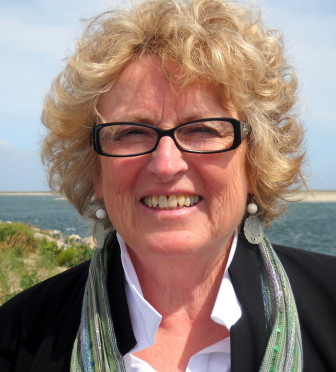
Emily Sweeney
St. Amand said the session will highlight the importance of reporters as “another line of defense along the production cycle to make sure their copy is solid,” and to feel confident in submitting clean copy to their editors.
Learning how to write a compelling headline and getting a good handle on Associated Press style are two of the ways St. Amand said reporters should develop copy editing skills to produce clean copy. Grammar and correct word use are crucial in conveying a credible message.
“I have received calls (from readers) before when a word is misspelled or misused, for example when the word ‘dispersed’ was published instead of the correct word ‘disbursed,’” St. Amand said. “Incorrect usage of words questions the consistency of the story.”
Having taught a copy editing course at Suffolk University for the past 12 years, St. Amand thinks that it is beneficial for students to have that knowledge as future reporters, and that current reporters could use copy editing techniques in their skill toolboxes, too. He said that another NESNE board member had recently hired students from prestigious schools, and was shocked at how the students weren’t aware of copy editing tasks.
The target audience of the convention includes reporters from all experience levels, especially those who have never had copy editing courses in college.
‘Writing and posting (your) own breaking news is risky, so it’s important that reporters can self-edit.’ — Charlie St. Amand
St. Amand has been a NESNE board member since October 2016, and became NESNE’s secretary a year later.
St. Amand is organizing and moderating the session. Emily Sweeney, staff reporter of The Boston Globe and a NESNE board member, is one of the panelists. Although the other panelists have not been finalized yet, NENPA is hoping to recruit editors from The Day of New London, Conn., The Sun of Lowell, Mass., and Gatehouse Media New England, the region’s largest newspaper chain.
Sweeney works in the early hours of the morning, when there might not be anyone else in the newsroom. In some instances, the immediacy of the news overrides getting a second set of eyes to read through a piece before it is published.
“Writing and posting (your) own breaking news is risky, so it’s important that reporters can self-edit,” St. Amand said.
He also mentioned how that responsibility can spread to other reporters, not just those like Sweeney, when the early morning reporters go on vacation and need to be replaced.
Publishing clean copy is essential, especially today when facts are being scrutinized so closely. Something as simple as a misspelled word or confusion about verb tense could slide by the eyes of an editor when preparing a piece for publication. When the audience reads the error, it diminishes the validity of the piece and the hard work of the reporter. A valuable story might have been written, but when it is disorganized or riddled with inconsistencies, the clarity and value are put at risk.
“There is a value to good copy editing, now more than ever,” St. Amand said. “If your copy is not clean, it raises doubts in the reader’s mind. ‘If they can’t spell this correctly, or if the style is inconsistent throughout a story, is their story inconsistent?’ In this highly charged political environment, you don’t want to have people questioning your facts.”
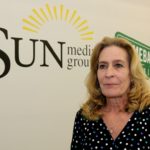
Kathy Enders has been named advertising director for Sun Media Group, part of the Record-Journal Co. of Meriden, which publishes The Westerly Sun. The appointment was announced by Shawn Palmer, senior vice president, chief revenue officer, and general manager of Sun Media Group. Click here to read the story.
CONNECTICUT
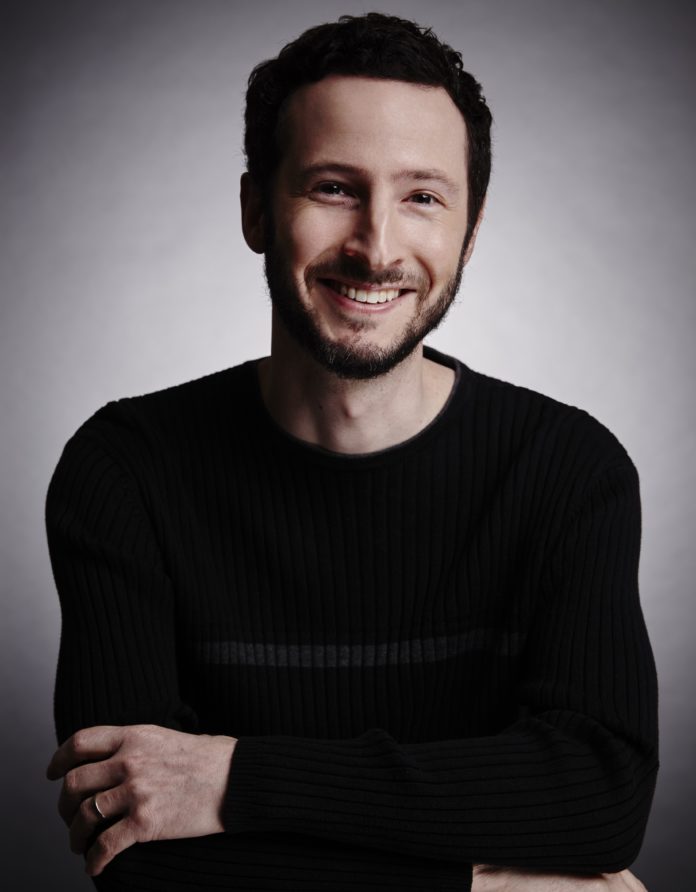
photo by Sean D. Eliot, The Day
Gary Farrugia has announced that he will retire by mid-year as publisher of The Day Publishing Company and its flagship newspaper, The Day, both based in New London. He will continue to be on the Day’s board of directors and will be a part-time consultant to D2 Media Solutions, a marketing initiative of the parent company. Philadelphia-based JM Search is overseeing a nationwide search for Farrugia’s successor, which will include in-house candidates. Farrugia became editor and publisher of the Day in 2002, succeeding Reid MacCluggage. In 2008, Farrugia dropped the title of editor to focus solely on the business part of the company. In his time at the Day, the company added news outlets, including theday.com, its online news site; Shore Publishing, which distributes seven free weeklies west of the Connecticut River; The Times Community News Group, which distributes seven free weeklies east of the Connecticut River; D2 Media Solutions, a digital marketing agency. The company also added commercial printing. The New England Newspaper and Press Association honored the Day’s daily edition as newspaper of the year six times since 2010. Farrugia is a former member of the board of directors of the New England Newspaper and Press Association and a former president of the board. Before coming to the Day, Farrugia was vice president of new business development for the Knight Ridder newspaper chain, which then owned The Philadelphia Inquirer. He began his career with small newspapers before joining the Fort Worth (Texas) Star-Telegram, where he was employed from 1981 to 1983. He next was employed with the Philadelphia Inquirer, then owned by the Knight Ridder newspaper chain. He first was assistant to executive editor Eugene Roberts. Farrugia was named suburban editor and assistant managing editor in 1991, overseeing coverage in four Pennsylvania suburbs with a total newspaper circulation of 210,000. From 1994 to 1997, Farrugia was executive editor and news director of Inquirer News Tonight. He was then general manager of Knight Ridder Video until he became Knight Ridder’s vice president of new business development in 2000.
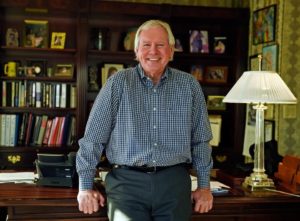
Chris Powell retired Jan. 26 as managing editor of the Journal Inquirer of Manchester after 50 years at the newspaper. Powell’s career there began after he graduated from high school in 1967 in the press and circulation departments and news department. While attending the University of Connecticut, he was a reporter and editor for the Journal Inquirer. He became managing editor in 1974. Between 1974 and 1992, he also was editorial page editor. Powell is a member of the board of directors of the Connecticut Council on Freedom of Information, and was legislative chairman of the council for many years. Powell plans after he retires to continue to write a political column that is published in the Journal Inquirer and other Connecticut newspapers.
Jeff Jacobs and Paul Doyle, both Connecticut sports journalists, have joined Hearst Connecticut Media Group — Jacobs as a columnist and Doyle as sports enterprise editor. Jacobs’ first column was scheduled to appear in Hearst Connecticut’s eight daily newspapers and various digital properties Jan. 28. Jacobs and Doyle both wrote extensively about Connecticut sports at The Hartford Courant. Jacobs has been recognized as Connecticut Sports Writer of the Year 10 times, and has been listed four times as one of the top 10 sports columnists in the country by the Associated Press Sports Editors. Jacobs was a sports columnist at the Courant for 22 years. Before that, he covered the former Hartford Whalers and the National Hockey League for nine years. Before moving to Connecticut, he wrote for newspapers in Michigan and New Jersey. He is particularly interested in local sports, covering high school and college athletics. He covered all four University of Connecticut men’s basketball championships and 10 of 11 UConn women’s championships. He’s also written about the Olympics, the World Series, and the Super Bowl. Doyle was honored as 2016’s Connecticut Sports Writer of the Year by the National Sports Media Association. Doyle began writing for the Courant in 1989, covering UConn athletics, minor league hockey, boxing, tennis, and Major League Baseball. He covered baseball in Boston for seven years. He has reported on several World Series, Stanley Cup finals, NBA finals, Super Bowls, and NCAA Final Fours. For the past 15 years, he has focused on enterprise reporting and editing. As Hearst’s sports enterprise editor, Doyle will develop stories about important issues and figures in Connecticut sports, and produce work of his own, such as investigative pieces and longer narrative features. In the Hearst Connecticut Media Group are the New Haven Register, the Connecticut Post of Bridgeport, The News-Times of Danbury, The Advocate of Stamford, The Hour of Norwalk, Greenwich Time, The Middletown Press, and The Register-Citizen of Torrington. More than a dozen weeklies and digital products are also part of Hearst Connecticut Media Group, as well as the website gametimect.com, which covers high school sports in the state.
MASSACHUSETTS
Alan English left as publisher of New England Newspapers Inc., based in Pittsfield, to become head of communications as of Jan. 3 for the Military Officers Association of America, based in Alexandria, Va. English, who has more than 30 years of newspaper experience, joined New England Newspapers in November 2016. Replacing English as publisher is Fredric Rutberg, who will remain president of New England Newspapers, its four newspapers, The Berkshire Eagle of Pittsfield, Mass., and the Bennington Banner, Brattleboro Reformer and Manchester Journal in Vermont, and its magazines and niche publications. Rutberg, a retired District Court judge, was one of four buyers who purchased New England Newspapers from Denver-based Digital First Media in May 2016. English will be publisher and editor in chief of Military Officer magazine besides his other duties as head of communications for the Military Officers Association of America. Before joining New England Newspapers, English was president and publisher of the Shreveport Times in Louisiana, and held numerous executive positions at newspapers in Arkansas, Georgia, New Jersey, New York, North Carolina and Tennessee.
The Transitions were written, at least in part, from published reports by Bulletin correspondents Sydne Garcia, Angela Gomba, Nico Hall and Mohammed Razzaque, undergraduate students at Northeastern University.
George Deforest Fowler, 68, formerly of South Hero, Vt., died Dec. 6 at Orange Regional Medical Center in Middletown, N.Y. At the time of his death Fowler and his fiancée were living in Pennsylvania while building a house near Lake Placid, N.Y.
Fowler owned and ran The Islander of South Hero for 34 years, before selling the newspaper and retiring in December 2016. Under his guidance, the Islander grew in size, circulation, advertising, and significance to the community. At the time of his retirement, the paper sold about 4,500 copies weekly in 13 towns in Vermont and New York.
Fowler was an active member of the Vermont Press Association and a former member of the New England Newspaper and Press Association.
Fowler leaves two sons, George and Jason; a fiancée, Renee Hoover; five granddaughters; two siblings.
Jean Davis Bigelow
Jean Davis Bigelow, 92, of Woods Hole, Mass., died Nov. 27 in Woods Hole.
Bigelow and two friends and colleagues, Pat Capone and Inga Tufts, established the Southborough (Mass.) Villager, now the Northborough-Southborough Villager, in the late 1970s. Jean was the founding editor and publisher. They eventually sold the newspaper.
Bigelow was secretary and later president of the Southborough Planning Board.
She leaves a son, John; a daughter, Carol; four grandchildren, Nathaniel, Benjamin, Dara and William.
Robert George Wilmers
Robert George Wilmers, 83, of New York City, died Dec. 16 at his home.
Since May 2016, he had been a co-owner of New England Newspapers Inc., based in Pittsfield, Mass., which encompasses the Brattleboro (Vt.) Reformer, the Bennington (Vt.) Banner, the Manchester (Vt.) Journal, and The Berkshire Eagle of Pittsfield, Mass.
He leaves a wife, Elisabeth; a son, Christopher; four stepchildren, Camille, Guillaume, Juliette and Charlotte; two grandsons; 11 step-grandchildren; his first wife, Gertrude.
James A. Barbato
James A. Barbato, 74, of Sterling, Mass., died Dec. 30 at Saint Vincent Hospital in Worcester, Mass., after a brief illness.
Barbato and his wife, Ann, owned the Sterling Meetinghouse News.
Besides his wife, he leaves three sons, Mark, Steven and Brian; four grandchildren; a brother; a sister.
Stephen ‘Steve’ Riley
Stephen “Steve” Riley, 90, of Meredith, N.H., died Jan. 7 at his home after a time of declining health.
After graduating from college in 1950, Riley began his more than 40-year newspaper career at the then-Brunswick (Maine) Record before moving to the Portsmouth (N.H.) Herald, where he covered York County, Maine.
He later briefly joined the former Bangor (Maine) Daily Commercial and then the Portland (Maine) Press Herald as its Bangor correspondent.
Riley spent 30 years at the Portland Press Herald and Maine Sunday Telegram of Portland, first as a feature writer for the Sunday Telegram. He eventually became managing editor of the newspapers. In the mid-1980s, he became editor at the Central Maine Morning Sentinel of Waterville, where he remained until his retirement in 1990.
Riley spent several years on the board of the New England Society of Newspaper Editors and a year as its president. He was named Maine Journalist of the Year in 1989 by the Maine Press Association. He received the Yankee Quill Award in 1994 for outstanding service to New England journalism. He also had been inducted into the Maine Press Association Hall of Fame.
Riley took part in an exchange program with Russian journalists in the 1980s, and was a member of New England Society of News Editors delegations that traveled to the Soviet Union. The society also hosted Soviet journalists in New England four times.
“My father always wanted to be a reporter,” his son, Stephen W. Riley, said in his father’s obituary in the Press Herald. “He had this innate sense of curiosity. His interest in journalism wasn’t as grandiose as making the world a better place, but more that he liked keeping people informed.”
Riley said his father was a “tough but fair editor.”
“He was not a yeller or a screamer,” his son said. “He got his point across, but he did it in a very benevolent way.
“He always took the straight-down-the-middle approach. He’d tell me that if he had people on both sides of an issue mad at him, then he was doing his job,” his son said.
Bill Nemitz, a columnist for the Press Herald and Sunday Telegram, said in the Press Herald obituary: “Steve was an old-school editor, who loved the news. Nothing excited him more than a good news story.
“It was always about the newspaper, not about him,” Nemitz said Besides his son, Riley leaves a daughter, Beth, and five grandchildren, Emily, Kelsey, Kerry, Kathleen and Patrick.
Donna W. Bailey-Thompson
Donna W. Bailey-Thompson, 87, of Springfield, Mass., died Dec. 7 in East Longmeadow (Mass.) Skilled Nursing Center.
Bailey-Thompson was city editor of the former Springfield Herald in the 1960s.
In the 1970s, she was one of three co-founders of the former Springfield Magazine, of which she was associate editor.
She had been managing editor of Lady Seymour, based in Goldsboro, N.C., a magazine focused on the wives of U.S. Air Force officers. She also had been a teaching editor of the Spanish American Union, based in Springfield, Mass., and the bilingual newspaper, La Voz/The Voice, based in North San Francisco Bay.
In the 1990s, Bailey-Thompson launched a monthly publication, Challenges, about codependency.
She wrote her first musical review in 1958, and was a music and theater critic for nearly 60 years. She received a Lifetime Achievement Award from the Massachusetts Critics Circle in 2016. She hosted “Playbill,” a weekly radio show about the arts, in the 1960s.
Bailey-Thompson wrote two books, “Before,” about her childhood, and “Stark Raving Sober,” a memoir.
She also owned a public relations business, and was a freelance writer and creative writing coach.
She leaves a daughter, Elizabeth; a son, David; five grandchildren, David, Jason, Isabelle, William and Anne Marie; eight great-grandchildren; her ex-husband, William.
JoAnn Elizabeth (Carlson) Dolan
JoAnn Elizabeth (Carlson) Dolan, 85, of Clinton, Conn., formerly of Quincy, Mass., died Jan. 4 at The Connecticut Hospice in Branford, Conn., after a brief illness.
Dolan was a reporter for the former Clinton Recorder beginning in the 1970s and later became its co-editor during a 10-year career there. She also wrote columns for the Recorder.
She also was employed briefly with The Hartford (Conn.) Courant. She wrote feature stories for the New Britain Herald; Harbor News, which covers Clinton and Old Saybrook and Westbrook, Conn.; The New York Times; and Reader’s Digest magazine.
She leaves two sons, Christopher and Scott; two daughters, Tracey and Kim; six grandchildren; a great-grandson.
Jonathan Michael Klarfeld
Jonathan Michael Klarfeld, 80, died Jan. 8 after a month in Beth Israel Deaconess Medical Center in Boston.
Klarfeld was a journalism professor at Boston University for more than 40 years. He was still teaching at the beginning of the fall semester.
“He had no patience for students and their ‘creative’ writing,” Ally Jarmanning, a former student and newswriter for “Morning Edition” at radio station WBUR-FM, an NPR affiliate in Boston, said in a Boston Globe obituary on Klarfeld. “He was solely focused on teaching us to write and report in the model of an old-school newspaperman.”
Ronni Gordon, a freelance writer and another former student, said in the Globe obituary: “I like to say he ‘scared’ good writing into me, and it worked. He was tough, but fair.”
Tom Fiedler, dean of BU’s College of Communications at BU, said in the Globe obituary: “In more ways than I can express, Jon was the institutional memory of this college and of the journalism program, to which he gave his full passion. You can be certain that he helped transform the lives of thousands and thousands of students who are now in the communication profession because of his influence. He lives on in their work and their memories.”
Before teaching at BU, Klarfeld wrote for the former Holyoke (Mass.) Transcript-Telegram, United Press International in Springfield, Mass., The Boston Globe, and the former Boston Record-American. He wrote media reviews for the Boston Herald and restaurant columns for The Boston Phoenix.
He leaves his wife, Patricia; a daughter, Victoria; a son, Alexander.
Lisa S. Chedekel
Lisa S. Chedekel, 57, of Newton, Mass., died Jan. 12 in Cambridge, Mass., after a long illness.
Chedekel began her journalism career in 1982 at the former New Haven (Conn.) Advocate. Two years later, she moved to the New Haven Register.
In 1992, Chedekel joined The Hartford (Conn.) Courant and a year later was on a team of reporters who won the Pulitzer Prize for breaking news coverage of fatal shootings at the Connecticut Lottery Corporation.
She took up political coverage in 2000. Her “Mentally Unfit, Forced to Fight” with Courant colleague Matthew Kaufmann was an investigative series that exposed the military as being in violation of its own rules by sending mentally ill soldiers to war in Iraq and Afghanistan. The series won the George Polk Award and the Selden Ring Award for Investigative Reporting and was a Pulitzer Prize finalist.
Chedekel left the Courant in 2008 and became a writer at Boston University’s School of Public Health and a journalism teacher at Northeastern University.
Chedekel was senior writer and co-founder of Connecticut Health Investigate Team
She leaves her wife, Dr. Isabel Morais, and two children, Bernard and Evelyn.
David P. MacKenzie
David P. MacKenzie, 71, of Springfield, Vt., died unexpectedly Jan. 5 at Springfield Hospital.
MacKenzie operated a small newspaper in the Burlington, Vt., area.
He also had been a technical writer at Bryant Grinder Co in Springfield.
He leaves his brother, Robert; Robert’s wife, Cheryl; several cousins.
Maureen McDonald
Maureen McDonald of New London, Conn., died Jan. 19.
McDonald was the editorial page editor at the Norwich (Conn.) Bulletin for many years.
She leaves her father, John; her husband, Kenneth; a brother; a sister.
photo courtesy of The Boston Globe
Gloria Negri
Gloria Negri, 91, formerly of Scituate, Mass., died Dec. 10 in her home in Hingham, Mass.
Negri began her newspaper career at The Jewish Advocate, based in Boston, soon after she graduated from college. Later, she reported for the Daily Hampshire Gazette of Northampton, Mass., The Standard Times of New Bedford, Mass., and the Miami Herald.
In 1959, she joined The Boston Globe and was a reporter there for 53 years until her retirement in 2012.
“All the women in the newsroom owe her a debt of gratitude,” Patricia Nealon, a friend and editor at the Globe, said in Negri’s obituary in the Globe. “She really decided that all of the news pages would be open to her. All of us who followed, followed in her footsteps.”
Negri travelled extensively worldwide to cover stories for the Globe – and at least once in a submarine.
The Globe obituary noted that, among many others, her stories involved covering the launch of Apollo 11 at Cape Kennedy before the first moon landing; reporting from South Africa as apartheid began to come to an end; being on assignment in Fenway Park the day Ted Williams hit his last home run in his last game; writing from Hyannis, Mass., about Rose Kennedy as she cried in church the day after her son John was assassinated.
Negri received a Master Reporter Award from the New England Society of News Editors.
Stephen Kurkjian, a former Globe reporter and editor, said in the Globe obituary that as Negri regaled him with anecdotes about her reporting assignments, “I realized that she had covered the history of the end of the 20th century. It was always the same Gloria – notebook out, asking questions, getting as close as she could to where history was being made, whether it was in Vietnam or across the street from the Public Garden at the Ritz.”
Globe columnist Thomas Farragher said in Negri’s obituary: “There was another side of Gloria outside the Globe newsroom – a funny and inquisitive woman who my kids got to know as they shoveled her snow, cut her grass, and sat at her kitchen table drinking root beer. She became, without exaggeration, part of my family.”
Negri leaves no immediate survivors.
Terese Carol ‘TC’ Aronoff Karmel
Terese Carol “TC” Aronoff Karmel, 78, of Storrs, Conn., died Dec. 26 of congestive heart failure.
Karmel was a writer, journalist and educator in Connecticut for nearly 50 years.
She was a reporter for The Hartford (Conn.) Courant. She covered local news in its Mansfield, Conn., bureau in the early 1970s. She later covered the Bristol Red Sox, Hartford Whalers and other Connecticut sports teams.
Later, Karmel was a columnist and features editor for The Chronicle of Willimantic, Conn., and wrote for Connecticut Magazine of New Haven, Conn.
Karmel taught sports reporting courses at the University of Connecticut, and was an adviser in the journalism department there. She covered the University of Connecticut women’s basketball team for the Meriden (Conn.) Record-Journal.
She authored “Hoop Dreams: UConn Huskies Women’s Basketball.”
Her sports reporting also involved covering horse racing in national publications, including the online Blood-Horse Daily, based in Lexington, Ky.
She leaves two children, James and Allison; four grandchildren, Caroline, Naomi, Jillian and Juliette; a brother.
Kerry Roy Mathias Kohring
Kerry Roy Mathias Kohring, 73, of Providence, R.I., died unexpectedly Dec. 3 at home.
Kohring was a copy editor for The Providence Journal and the Columbian (Mo.) Daily Tribune during his 40-year career.
In 1977, Kohring was a union member of the Providence Newspaper Guild. He engaged in contract negotiations.
After retirement in 2010, he became president of the Retired Members Council of the Providence Newspaper Guild.
He leaves his wife, Sandy; a son, Mathias; a daughter, Megan; two grandchildren; a brother.
Vivian Berthe Firato Ferguson
Vivian Berthe Firato Ferguson, 92, of Tolland, Conn., died Dec. 10 at Woodlake at Tolland Nursing and Rehabilitation Center.
Ferguson was food editor for the former Manchester (Conn.) Evening Herald, and wrote a weekly column called From Your Neighbor’s Kitchen. She later collected those pieces into four cookbooks.
Ferguson hosted a radio program on the former WINF-AM radio station in Manchester called “Vivian Ferguson’s Kitchen.”
Ferguson was elected to the Manchester Board of Directors, where she served for several years. She was also a member of the Manchester Republican Town Committee for 50 years.
She leaves a son, Thomas; two daughters, Leigh and Laurie; five grandchildren, Thomas, Marissa, Elisabeth, Brett and Alyssa; a sister.
Nancy Evelyn LaRoche
Nancy Evelyn LaRoche, 80, formerly of Wethersfield, Conn., died Dec. 5 in St. Francis Hospital in Hartford.
She was an editor in the features department of The Hartford (Conn.) Courant, and was an editor of reference books before that. She was employed at the Courant until 1995, and became a freelance editor.
She leaves several cousins and four godchildren.
Josiah Bridge
Josiah Bridge, 90, of Stamford, Conn., died Dec. 30 at home.
Before he became a high school teacher, Bridge was sports editor and a reporter, columnist, and photographer for the Southbridge (Mass.) Evening News, and he reported on local news and wrote features for The Advocate of Stamford, Conn.
Bridge was active in politics. For several years, he was on the Democratic City Committee. He was manager for the campaign to elect Democrat Paul Shapero to the Connecticut House of Representatives. He was publicity manager of Bruno Giordano’s mayoral campaign in Stamford.
Bridge was a published author. His work appeared in magazines such as the South Boston Literary Gazette and others nationwide.
He leaves four children, John, Barbara, William and James; two grandchildren, Thomas and William; a sister.
Ralph D. Paight Jr.
Ralph D. Paight, Jr., 94, of Palm City, Fla., and formerly of Stamford, Conn., died Dec. 22.
He began his newspaper career in 1951 at the Greenwich (Conn.) Time. During his 20 years there, he advanced from apprentice pressman to foreman. He then joined, for 15 years, the staff of The Advocate of Stamford.
Paight leaves two children, Donald and Donna; four grandchildren, Steve, Kelly, Chris and Kathryn; six great-grandchildren.
Clause J. Dixon Jr.
Clause J. Dixon Jr., 92, of Stamford, Conn, died Jan. 7 at Stamford Hospital.
Dixon was a reporter, columnist and feature writer for the former Connecticut Sunday Herald of Bridgeport, Conn., the Bridgeport Sunday Post, and a copy editor for the then-Bridgeport Telegram.
He was an on-air reporter for the WGCH-AM of Greenwich, Conn., and WSTC-AM of Stamford.
Dixon leaves a son, Kenneth, State Capitol reporter and columnist for Hearst Connecticut Media, based in Norwalk, Conn.; a daughter, Jean; two grandchildren, Peter and Julia; a great-grandson, Owen; two brothers.
Nancy L. (Boucher) Veilleux
Nancy L. (Boucher) Veilleux, 74, of Hooksett, N.H., died Dec. 31 in Concord (N.H.) Hospital after a long illness.
For 19 years, Nancy was a reporter and photographer for the Hooksett Banner.
She leaves her husband, Robert; four children, Wendy, Donna, Bruce and Michael; eight grandchildren; a sister.
Lewis G. Joslyn
Lewis G. Joslyn, 91, of Center Barnstead, N.H., died Dec. 12 in his home.
He was a reporter and photographer for the New Hampshire Union Leader of Manchester, N.H., the Haverhill (Mass.) Journal, and The Haverhill Gazette.
He leaves a son, Glenn, and many cousins and nephews.
Mike McGraw
Mike McGraw, 69, of Kansas City, Mo., died of cancer Jan. 6 at NorthCare Hospice in North Kansas City.
McGraw, a Pulitzer Prize-winning reporter who spent most of his career at the Kansas City Star, was earlier labor editor at The Hartford (Conn.) Courant.
He began his 45-year journalism career in 1972.
McGraw was a business and labor writer at The Des Moines (Iowa) Register.
For most of his career at the Star, where he was employed for 30 years, he was an investigative reporter and on the Star’s special projects desk beginning in 1989. He also was an editor and bureau chief at the Star. He retired from the Star in April 2014.
After his employment at the Star, he was a projects reporter for Kansas City-based KCPT television’s The Hale Center for Journalism. His other work was with NPR and Kansas City-based KCUR-FM’s Harvest Public Media, for which he covered Midwestern agriculture and agribusiness.
Even after his retirement, projects and columns of his were published in the Star.
McGraw received many honors, including a top award from Investigative Reporters and Editors, two George Polk Awards, the Robert F. Kennedy Journalism Award, and a 1992 Pulitzer Prize for national reporting for “Failing the Grade: Betrayals and Blunders at the U.S. Department of Agriculture.”
He had been a member of the Investigative Reporters and Editors board, and contributed to its Reporter’s Handbook.
McGraw taught investigative reporting at the University of Missouri and the University of Kansas, and was a Ferris professor in residence at Princeton University.
He leaves his wife, Ruth; two sons, Andy and John; four grandsons.
Lawrence G. Weiss
Lawrence G. Weiss, 97, of Boulder, Colo., died Jan. 10 in Boulder.
Before moving to Boulder, in 1954, Weiss was a reporter for the Boston Herald and a writer for The New York Times. He also was a special assistant to the U.S. secretary of labor.
From 1958 to 1975, he was an editorial writer for The Denver Post.
He taught journalism at the University of Colorado before joining the Post, and continued to teach evening honors courses there for 18 years.
After he left the Post, he became special assistant to the governor of Colorado.
From 1977 until he retired in 1985, Weiss was director of public affairs for the Colorado and Denver bar associations.
He leaves his wife, Rita; a daughter, Carolyn; a son, Jonathan; three grandchildren; eight great-grandchildren; a sister.
Saul Freilich
Saul Freilich, 90, of Wallingford, Conn., died Dec. 25 at Midstate Medical Center in Meriden, Conn.
He wrote for the New Haven (Conn.) Register and was employed after that with the then-Springfield (Mass.) Union. Freilich later wrote for the Meriden Record-Journal.
Freilich initially was a journalist in Lewistown, Mont., before joining a newspaper in Middletown, N.Y.
He leaves his wife, Naomi; a son, Jeffrey; a daughter, Franci; two brothers.
Anthony J. ‘Tony’ Matejczyk
Anthony J. “Tony” Matejczyk, 81, of Thorndike, Mass., and formerly of Framingham, Mass., died Jan. 12 at home.
Matejczyk was a Massachusetts journalist for years, for the then-Springfield Union and Boston Herald
He later was a public relations executive with Verizon Boston.
He leaves his wife, Mary Pat; three children, Anthony, Elizabeth and Michael; three grandchildren.
Lloyd E. Banquer
Lloyd E. Banquer, 86, died Dec. 6 in Fairfield, Conn..
Banquer was a reporter for The Day of New London, Conn., for eight years.
He was a senior editor in internal communication for IBM for 25 years.
He leaves two children, Douglas and Karen, and four grandchildren, Alex, Jake, Lauren and Kelsey
Shirley M. (Martin) Kimball
Shirley M. (Martin) Kimball, 91, of Shrewsbury, Mass., and Saco, Maine, died at home Jan. 9 after an illness.
She was a reporter for the Telegram & Gazette of Worcester, Mass, and later became a freelance writer of travel stories.
Kimball leaves her husband, Ralph; three sons, Kevin, Brian and Neal; three grandchildren.
Clarice Bianchi Cella ‘Mickey’ Best
Clarice Bianchi Cella “Mickey” Best, 83, died Nov. 22 at her home in Wallingford, Vt.
Best was briefly a reporter for The Barre Montpelier (Vt.) Times Argus.
She leaves her husband, Robert; an adopted daughter, Jill Burkett; a sister.
Pedro A. Espinoza
Pedro A. Espinoza, 83, of Windsor, Conn., died Dec. 18 in Windsor.
Espinoza was a reporter for El-Salvador-based La Prensa Grafica, which was the first bilingual Latin American newspaper distributed in New England.
Soon, he became co-editor of Que Pasa, which has headquarters in Winston-Salem, Raleigh and Charlotte, N.C.
While with Que Pasa for 15 years, he launched a Spanish-language radio program at Trinity College’s station, WRTC-FM in Hartford, Conn.
Espinoza leaves three children, Carlos, Janet, and Yvonne, and four grandchildren, Tasya, Leila, Yasmine and Emile.
Solace (Walker) Tobey
Solace (Walker) Tobey, 76, of Hingham, Mass., died of multiple myeloma Jan. 16 in her home.
She was a town reporter for the former Hingham Mirror, the former Hingham Mariner, and The Patriot Ledger of Quincy, Mass.
She leaves her husband, Philip; a daughter, Elizabeth; a son, Robert; a brother.
Lois J. MacDonald
Lois J. MacDonald, 86, of Quincy, Mass., died Dec. 30 at Seasons Hospice in Milton, Mass., after a brief illness
She began her career in newspaper sales and advertising with what is now the Boston Herald. She then was employed at The Boston Globe in classified advertising for many years. In 2010 she retired as a classified advertising representative with GateHouse Media New England at The Patriot Ledger of Quincy and The Enterprise of Brockton, Mass.
She leaves two children, Kristin and Andrew; three grandchildren, Penelope, Gwyneth and Piper; two siblings.
Paul Niles Flanders
Paul Niles Flanders, 48, of Worcester, Mass., and formerly of Beverly, Mass., died unexpectedly Dec. 29 at the University of Massachusetts Memorial Medical Center in Worcester.
Flanders was employed by New England’s largest newspaper chain and its successor, Community Newspaper Company and GateHouse Media, since 1992 in the Danvers, Beverly and Framingham, Mass., offices. He had various jobs there, including proofreader, advertisement builder, paginator and pre-press technician.
He leaves his mother and father, Diane and Niles; his wife, Jan; a sister, Hilary.
Edward Snowden Robinson
Edward Snowden Robinson, 69, of Boston died Jan. 16 after a lengthy illness.
He was an apprentice at Daniels Printing and later at the Boston Herald.
Robinson leaves his wife, Alice; five children, Eddie, Jerrell, Terez, Eric and Alex; two grandchildren; five great-grandchildren; two sisters; a brother.
Rosemary M. (Walsh) Cronk
Rosemary M. (Walsh) Cronk, 90, of Fairfield, Conn., died Jan. 12 in Cambridge Manor in Fairfield.
Cronk was a pasteup artist for Brooks Community Newspapers, a chain of weekly newspapers in Southwestern Connecticut.
She leaves a daughter, Karen; a son, Bruce; three grandchildren, Jaimee, Todd and Jenna; three great-grandchildren, two brothers.
Raymond Quentin Levesque
Raymond Quentin Levesque, 70, of Boscawen, N.H., died Jan. 12 at the Concord (N.H.) Hospice House after battling cancer.
Levesque was a contributing writer for the Concord Monitor.
Levesque leaves his wife, Rebecca; three children, Dan, Mark and Marie; four grandchildren; a brother; a sister.
Thanas ‘Arthur’ Laske
Thanas “Arthur” Laske, 89, of West Hartford, Conn., died Jan. 2 in Hartford (Conn.) Hospital.
Laske contributed to the publication of the former Liria, an Albanian-American newspaper in Boston.
He leaves his wife, Aliki; a son, Apostol; three grandsons.
Eleanor ‘Jane’ (Begiebing) Robare
Eleanor “Jane” (Begiebing) Robare, 90, of Stamford, Vt., died Dec. 15 at home.
Robare was a freelance journalist for the then-North Adams (Mass.) Transcript. She reported on Vermont news until 1966.
She leaves her husband, Edward; a son, Bruce; a daughter, Judith; three grandchildren; three step-grandchildren; three step-great-grandchildren.
Robert Elmer Brackley
Robert Elmer Brackley, 79, of Strong, Maine, died Nov. 29 at Franklin Memorial Hospital in Farmington, Maine.
Brackley delivered the Sun Journal of Lewiston for 25 years.
He leaves his wife, Kay; a daughter, Gayle; three sons, David, Daniel and Robert Jr.; 24 grandchildren; 22 great-grandchildren; a sister.
Joan Marie (Ardini) Cawley
Joan Marie (Ardini) Cawley, 87, of South Burlington, Vt., died Dec. 6 after a lengthy illness.
She was employed with the former Boston Herald Traveler and in customer support for Camden House Publishing, based in Rochester, N.Y., and Eating Well magazine of Charlotte, Vt. She retired in 1993.
She leaves three sons, Ed, Tom and Jon; two daughters, Lisa and Laura; nine grandchildren, Stephany, Ashley, Justin, Jordan, Matthew, Hannah, Patrick, Elise and Cole; two great-granddaughters; two sisters.
Sheila Jane Kerr (Haglund) Swenson
Sheila Jane Kerr (Haglund) Swenson, 84, of Kennebunk, Maine, died Jan. 9 in her home.
After moving in 1974 to Kennebunk, she began to edit her husband’s columns, and his books for national publishers. In 1957, before moving to Kennebunk, Swenson had been a co-author of the Gardener’s Notebook columns, syndicated in more than 200 U.S. newspapers.
With her husband, Allan, she frequently participated in his syndicated “Gardener’s Notebook” radio talk shows based in New York City.
Besides her husband, she leaves four sons, Peter, Meade, Boyd and Drew, and nine grandchildren, Parker, Katie, Alyssa, Erik, Trevor, Casen, Sam, Tony and Luca.
Charles Beebe ‘Chuck’ Dudley
Charles Beebe “Chuck” Dudley, 76, of Stowe, Vt., died Jan. 18 at The Manor in Morrisville, Vt.
Dudley wrote the Stowe Community Church’s news published in the Stowe Reporter.
He also wrote a book entitled “The Stowe I’ve Grown to Know,” a history of the families and neighborhoods of his hometown.
Dudley leaves a sister, Betty; a brother, Miles; two cousins; six nieces and nephews.
Julian M. ‘Bodie’ Bodenheimer
Julian M. “Bodie” Bodenheimer, 100, of Stamford, Conn. died Jan 3.
His cartoons were published in newspapers and other publications.
He leaves his wife, Vivian; two children, George and Susan; six grandchildren; a great-grandson.
The obituaries were written, at least in part, from published reports by Bulletin correspondents Ajoa Addae, Nadine El-Bawab, Angela Gomba, Nico Hall, Julia Hutchins, Joshua Leaston, Kaitlyn Mangelinkx, Sydne Garcia,Monica Nair, Rebekah Patton, Mohammed Razzaque, Casey Rochette, Cayley Ross and Thomas Ward, undergraduate students in the Northeastern University School of Journalism.
‘Journalists who cover disability stories must interview people with disabilities for those stories. Not caregivers, not friends or teachers, not doctors. Disabled people. They are the experts on their own lives.’
-- Wendy Lu,
Freelance journalist
‘Journalists who cover disability stories must interview people with disabilities for those stories. Not caregivers, not friends or teachers, not doctors. Disabled people. They are the experts on their own lives.’ — Wendy Lu, Freelance journalist
2018 NENPA Winter Convention
Bettering journalists’ abilities
to cover disabilities of others
By Kaitlyn Mangelinkx Bulletin Correspondent
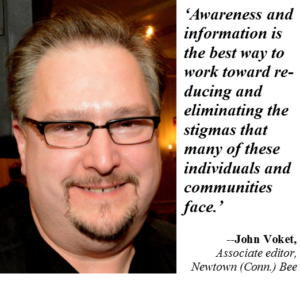
John Voket, associate editor of The Newtown (Conn.) Bee, received a mass email note last year to U.S. journalists that sparked an idea to help fellow journalists.
The note read, in part: “Fully one in five people (56 million Americans) have a disability, and the majority of people have a loved one with a disability. However, journalists and storytellers often make glaring, yet easy to avoid, errors when covering our community. Thus, I wanted to be sure you saw this important piece in the Columbia Journalism Review below. It deals with important mistakes that journalists/reporters/storytellers make when telling stories about people with disabilities.”
In September, Jennifer Laszlo Mizrahi, president of RespectAbility, a Maryland-based nonprofit focused on reducing stigmas and improving opportunities available to people with disabilities, included that paragraph in an email to journalists, promoting a piece written by Wendy Lu about common flaws in stories about people with disabilities.
Voket, who also is vice president of the New England Newspaper and Press Association board of directors, said that when he read the email, he “took this as a challenge to our industry to do a better job.”
From there, Voket and other members of the New England Newspaper and Press Association organized a panel on “Reporting on the Disability Beat.” Scheduled to be on the panel are Lu, the journalist who wrote the Columbia Journalism Review piece; Lauren Appelbaum, director of communications at RespectAbility; and David D’Arcangelo, director of the Massachusetts Office on Disability. Voket will be the panel moderator.
The panel will be presented at NENPA’s winter convention, which will take place Friday, Feb. 23, and Saturday, Feb. 24, at the Renaissance Boston Waterfront Hotel in South Boston.
Voket said he has witnessed too many instances of people with disabilities being “bullied, marginalized, or otherwise discounted as valued, contributing members of our society.” Voket said that when he began to organize the panel he “could not bear the thought of having an opportunity to help mitigate that abuse and treatment, and letting it pass by. So I asked and was given enthusiastic support in presenting this panel.”
Lu mentioned in email interview some possible cultural reasons for weaknesses in reporting on disability. For example, she said, “people still don’t consider disability to be an identity just like race, gender, religion, sexual orientation, etc. Disability is seen as something to get rid of, something negative and weak and unfortunate. We celebrate people who work and live ‘despite’ their disability, we say they are ‘overcoming’ their disability, that they’re brave for accomplishing life goals even though that’s what everyone else is doing too. Just like with sexism, we’ve been brought up to have specific ideas of what disability is and means to people who have (disabilities), without even taking the time to ask those very people how they feel, and (about) issues that matter to them.”
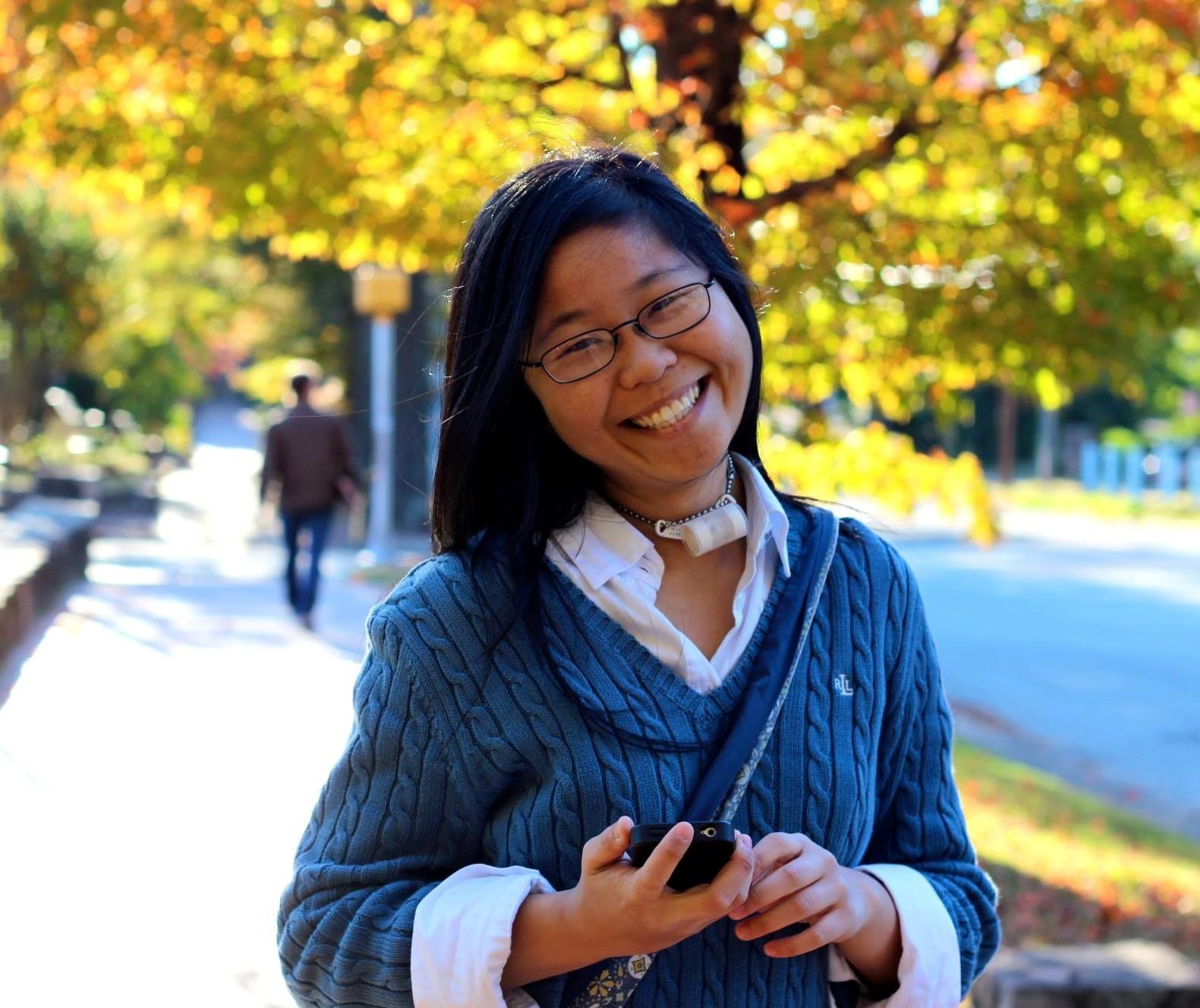
Lu said that in journalism, “people with disabilities are often an afterthought,” included only in features instead of throughout regular reporting. Lu thinks that “we need to see more coverage of disabled athletes in sports, and we need to do more reporting on accessibility in schools. There’s a ‘disability angle,’ if you will, in practically every story.”
Voket hopes that the panel discussion will improve the ways journalists interact with and report on people with disabilities by discussing common issues raised by Lu and other activists.
“Awareness and information is the best way to work toward reducing and eliminating the stigmas that many of these individuals and communities face,” Voket said.
The panelists hope to increase awareness in the journalism community, so reports on people with disabilities will be more appropriate and respectful.
In her Columbia Journalism Review report, Lu noted some examples of how journalists can go wrong, including disturbing trends in reports on people with disabilities. Her focus was “inspiration porn,” stories where disabled people are “portrayed as inspirations or heroes just because they are disabled.” Lu also notes a different, perhaps worse, category of inspiration porn, which she describes as “portraying people as inspirations or heroes for ‘helping’ people with disabilities — inspirational ‘fluff’ pieces that do nothing for actual disabled people, but instead gives non-disabled people a pat on the back.”
Lu wants to shift the focus of reporting on people with disabilities away from inspiring fluff stories and encourage writing about serious issues. Lu criticized the reporting of stories that treat normal actions as heroics when disabled people are involved, including how “every April, there are tons of news stories about kids at school who get a standing ovation for asking out a disabled kid to prom. Hundreds of kids get asked to prom every year, so what really is the news value there?”
When asked what made her write her Columbia Journalism Review report, Lu said: “I had already known for a while that I wanted to write about the pitfalls of inspiration porn and the lack of disability reporting in the media. Quite frankly, I just got tired of seeing headline after headline portraying people with disabilities in the same narrative.”
The trigger for the story came when Lu saw a story about a California mother receiving an honorary master of business administration degree after she helped her son, Marty O’Connor, who is quadriplegic, through two years of business school.
Lu took note of that story because not only did it go viral, but there were components of the story that didn’t quite fit the pure definition of inspiration porn. Lu said “there are some aspects of the story that are very clearly features of inspiration porn, but in other ways, it’s not as problematic or harmful like many other more obvious examples of inspiration porn. For one, it was the son Marty’s decision to surprise his mother with the degree; thus, the story gives Marty more agency, unlike other stories of inspiration porn where people with disabilities didn’t get asked for permission to be filmed or to go viral. At the same time, I felt like journalists were covering the exact same viral angle over and over: The fact that this mother got an honorary MBA degree for helping her son through school. No other journalist went deeper to find out, for instance, why Marty’s mom had to quit her job and move from Florida to California to assist her son. Why didn’t his school offer accessibility services like a personal aide? How can colleges be more inclusive of disabled students?
“I felt like this story would serve as the perfect example for what I wanted to convey: I’m not necessarily saying that it’s bad to cover inspirational stories about people with disabilities, if it’s done well. But we aren’t doing nearly enough to cover the big disability stories: bullying in schools, disability discrimination in the workplace, the Americans with Disabilities Act, the impact of changes to Medicaid and other health care programs on disabled communities, and much more. For every solid piece of disability reporting, there are hundreds of inspirational, fluffy feature pieces that push the same harmful disability narratives we’ve seen time and time again.”
The panel will focus on how journalists can improve, sharing resources that aim to explain and even fix the issues Lu discusses in her story. As her story mentioned, there are abundant resources available to help journalists more appropriately approach stories involving people with disabilities. Lu thinks that “inspiration porn is a defensive mechanism for people who are afraid of things they don’t understand or haven’t personally experienced. And 99 percent of journalists who write inspiration porn aren’t purposely trying to perpetuate disability stigma. I spoke to the … journalists that covered (O’Connor’s) story, and they’re really smart, thoughtful, and sharp local reporters. They had the very best intentions, but unfortunately, good intentions aren’t enough.”
The “Disability Beat” panel hopes to make journalists more cognizant of the importance of using the resources already available, so the “good intentions” Lu sees will be paired with the information needed to write critically about important issues affecting disabled people.
Voket thinks that “there is no excuse for describing or portraying a subject or their disability inappropriately in news reporting or in any other media or entertainment source for that matter,” an idea that echoes the sentiments in both Lu’s story and Mizrahi’s email note.
Lu thinks that simply increasing the visibility of disabled people in the press could help reduce inappropriate reporting.
She suggested that “journalists who cover disability stories must interview people with disabilities for those stories. Not caregivers, not friends or teachers, not doctors. Disabled people. They are the experts on their own lives.
“People also don’t realize there’s a wide range of disabilities out there. There are developmental and physical disabilities, mental illnesses, visible and invisible disabilities, congenital and acquired disabilities. Not all disabled people think alike, and not all disabled people use wheelchairs. We’re not a monolithic community. We make up 19 percent of the population, and 19 percent is a lot of people whose stories you’re missing out on,” she said.





 ng to video is an example Feifer used to explain that concept. Pivoting to video is a mindset in the news industry that video was the way of the future, a mindset he thinks is a mistake.
 she’s figured it out, and for the next 10 years is going to be riding Snapchat,” Feifer said. “That’s not it. It just means that it’s working now, which is great because she figured out how to move into that, but she will be dead if she relied on that for too long.”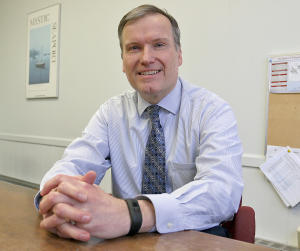
 Chris Powell retired Jan. 26 as managing editor of the Journal Inquirer of Manchester after 50 years at the newspaper. Powell’s career there began after he graduated from high school in 1967 in the press and circulation departments and news department. While attending the University of Connecticut, he was a reporter and editor for the Journal Inquirer. He became managing editor in 1974. Between 1974 and 1992, he also was editorial page editor. Powell is a member of the board of directors of the Connecticut Council on Freedom of Information, and was legislative chairman of the council for many years. Powell plans after he retires to continue to write a political column that is published in the Journal Inquirer and other Connecticut newspapers.
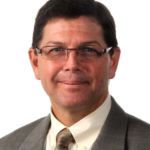 Alan English left as publisher of New England Newspapers Inc., based in Pittsfield, to become head of communications as of Jan. 3 for the Military Officers Association of America, based in Alexandria, Va. English, who has more than 30 years of newspaper experience, joined New England Newspapers in November 2016.
 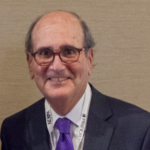 Replacing English as publisher is Fredric Rutberg, who will remain president of New England Newspapers, its four newspapers, The Berkshire Eagle of Pittsfield, Mass., and the Bennington Banner, Brattleboro Reformer and Manchester Journal in Vermont, and its magazines and niche publications. Rutberg, a retired District Court judge, was one of four buyers who purchased New England Newspapers from Denver-based Digital First Media in May 2016. English will be publisher and editor in chief of Military Officer magazine besides his other duties as head of communications for the Military Officers Association of America. Before joining New England Newspapers, English was president and publisher of the Shreveport Times in Louisiana, and held numerous executive positions at newspapers in Arkansas, Georgia, New Jersey, New York, North Carolina and Tennessee.
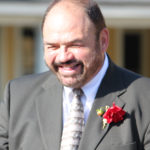 George Deforest Fowler
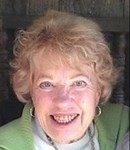 Donna W. Bailey-Thompson
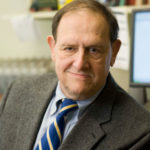 Jonathan Michael Klarfeld
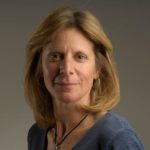 Lisa S. Chedekel
 Kerry Roy Mathias Kohring
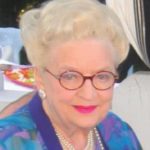 Vivian Berthe Firato Ferguson
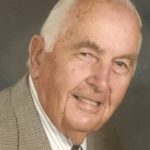 Ralph D. Paight Jr.
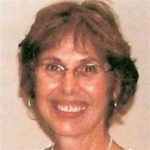 Nancy L. (Boucher) Veilleux
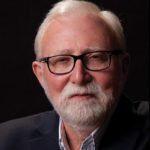 Mike McGraw
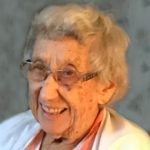 Shirley M. (Martin) Kimball
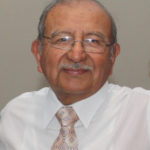 Pedro A. Espinoza
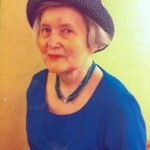 Solace (Walker) Tobey
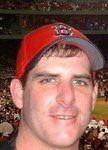 Paul Niles Flanders
  Thanas ‘Arthur’ Laske
 Eleanor ‘Jane’ (Begiebing) Robare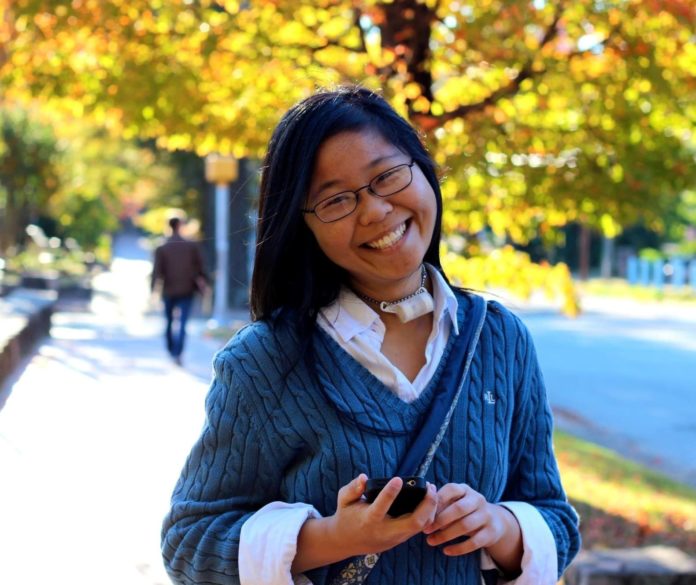
 n journalism, “people with disabilities are often an afterthought,” included only in features instead of throughout regular reporting. Lu thinks that “we need to see more coverage of disabled athletes in sports, and we need to do more reporting on accessibility in schools. There’s a ‘disability angle,’ if you will, in practically every story.”