

Kevin Slimp
Kevin Slimp is director of the Institute of Newspaper Technology.
Email questions to him at
kevin@kevinslimp.com
Kevin answers reader’s question: “Who is doing things right?”
Community Newspapers Who Do Things Right
Over the past week or so, I received an email from a publisher asking if I could send examples of community newspapers who are doing things right. His plan was to contact these publishers to learn if he could benefit from their experiences. I told him I would give it some thought and send him a list of papers and contacts, but now I can’t seem to find his message hidden in the thousands of emails that have filled my in-box in the days since his message arrived.
I could have included papers I’ve visited over the past year in Kansas, Nebraska, Arizona and other places, but I decided five was all that would fit in this space, os here is my 2018 “Doing things right” list.
The Gloucester-Mathews Gazette-Journal, Virginia
When Elsa Verbyla invited me to visit her newspaper on the shores of Eastern Virginia, I wasn’t sure what to expect. After arriving, I was most surprised by the accents of the good folks of Mathews, a town just down the road from Gloucester. But that’s another story for another day.
My second biggest surprise was meeting with the staff of the Gazette-Journal and learning first-hand how much they love their newspaper. I spent two days with the group discussing everything from sales to circulation to design. I learned about great ideas they’ve had to increase circulation and maintain readership in an area like many, where a big-city daily threatens to absorb their readers.
No worry, though. The folks of Gloucester and Mathews, I learned, love their newspaper. Like many of the most successful papers I run across, so do the staff members. As I visited with them, it was hard to find one who had been around less than 10 years.
“Oh, I’ve been here 20 years,” one told me. Another, “15 years and counting.”
With multiple sections, plenty of advertising, and no shortage of stories, it’s no wonder The Gloucester-Mathews Gazette-Journal makes my list of favorite newspapers.
Madelia Times Messenger, Minnesota
The first time Michelle Van Hee invited me to visit her paper in Madelia, I had to get out a map. In all my travels across Minnesota, I didn’t remember Madelia. Now, it’s a regular stop for me. After three trips to visit The Madelia Times Messenger, it makes my list of my favorite newspapers.
One of the best examples of the Messenger’s spirit is their leadership following a fire that destroyed much of their downtown in 2017. When I last visited her town, Michelle couldn’t wait to show me the renovation of the downtown area.
What makes Madelia’s paper special? I could create a long list, and it would begin with genuine care for the community. Everything is local. Stories are local. Advertising is local. Ownership is local.
Michelle cares about her product, and it shows. She has folks like Ed Henninger come in to work on the Messenger’s design. I’ve been there several times. The newspaper is part of her family, and she cares for it that way.
I wasn’t surprised when I looked at their website that Michelle and her staff now publish five newspapers in the area. I remember when there was only one.
The Standard Banner, Jefferson City, Tennessee
I’ve been to Jefferson City to work with the staff of The Standard Banner many times through the years, and I’m still surprised each time I visit.
When I visited just last week, I asked Dale Gentry, publisher, “How is business?”
For some reason, I wasn’t surprised with his answer.
“Business is great!” he beamed. “Especially the last two months. Things are going really well.”
Why are things “great” in Jefferson City? Just spend a day with the staff of the newspaper and you will know.
Like the paper in Gloucester, Virginia, staff doesn’t come and go at The Standard Banner. You will find folks who have been on staff for decades. I remember meeting Kim Cook, designer, when she showed up early for my first Newspaper Institute in 1997.
I didn’t count the pages, but I bet the page count of twice-weekly paper in Jefferson City rivals that of the metro 40 miles away.
The Standard Banner has been on my favorite list for a long time, and isn’t leaving any time soon.
Kanabec Group, Minnesota
When Wade Weber first invited me to visit his paper in Mora, Minnesota more than a dozen years ago, I had no idea how much I was going to grow to love the folks at his newspapers.
Since then, Wade has added a few nameplates to his collection, but each is distinctively local and it shows. Beautiful design, quality writing, beautiful printing, and local focus are the hallmarks of the papers in the Kanabec group.
In a recent trip to Cambridge, to visit with Wade’s staff there, I was reminded of the reason people get into community journalism in the first place. I saw pride in each face of the 30 or so staff members as we looked at their stories, photos and pages.
What makes their newspapers stand out? Topping the list would be the local focus and the attention to quality.
The Neepawa Banner & Press, Manitoba
My list couldn’t be complete without mentioning The Neepawa Banner & Press in Neepawa, Manitoba. Over the past few years, I’ve come to really appreciate the work Ken Waddell and his staff do in Manitoba.
I’ve never seen Ken without his brown brimmed hat and a smile on his face. His enthusiasm spreads throughout his newspaper and it shows.
I’ve met with his staff multiple times to look at their papers, discuss strategy, and plan new ventures. The newspaper has great designers, editors and writers who care about their community.
Ask Ken about his secret, and the answer is always the same. “We keep it local.”
Hardly a week goes by that I don’t hear from Ken or Kate Jackson, Banner & Press editor, with ideas to discuss.
No wonder readers love their paper.
Plenty more out there
It’s never easy comprising a list like this. There are plenty of other papers, just as worthy, that could be included, but these five should give you a good start.







 information, said Monday it is exploring the sale of its newspaper properties in 22 states.



 Mildred “Millie” Siegel, 93, of Danbury, wife of Morton Siegel, died on Wednesday, May 30, 2018 at her home.
 Pamela Holley Wood, writer, teacher, journalist, pioneer in documentary field studies and founder of Salt Inc., died May 29, 2019, at her home in Oaxaca, Mexico.
 Phebe Ann Clarke Lewis, 103, died peacefully May 5, 2018, in Manchester. She drew first breath November 2, 1914, and received her double first name and its uncommon spelling in honor of her mother’s mother, in whose Lake Forest, Illinois, home Phebe Ann was born.
 Elsie Talanian, 98, of Pelham, NH died peacefully on Tuesday, June 12, 2018 at Salemhaven.
 Gail P. Delmolino, 71, passed away on June 6, 2018, at her home, after a lengthy illness.
 Peter M. Casolino, Jr., died on June 15, 2018 at the age of 51 at St. Raphael’s Hospital, New Haven, CT following a brief illness.
 Dorothy Frazer Carpenter was born June 17, 1926 in Rockville Center, N.Y. and grew up in Long Beach, N.Y. a short walk from the white sand beach and ocean of the south shore of Long Island. She graduated from the Long Beach public schools and the University of Vermont. She was a member of several honor societies, an editor of the UVM Cynic, and did graduate work at the University of South Carolina.
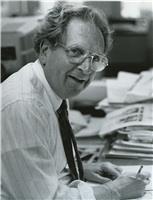 Roger Conrad Bowman, 84, of Greenfield died Thursday, June 7, 2018 at home. He was born June 28, 1933 in Derby, CT to Llewellyn H. Bowman and Mabel (Young) Bowman. He moved with his family to Mechanic Falls, ME where he graduated as valedictorian from Mechanic Falls High School. Roger received his BA in English from the University of Maine where he was an ROTC student and entered the Army following graduation. He was stationed at the Pentagon for the duration of his service.
 WINDHAM – Richard “Dick” Johnston, 83, died peacefully at Genesis in Lebanon, NH on June 3, 2018 with family around him. He was born September 8, 1934 to the late John and Genevieve Johnston of St. Johnsbury, VT.