
CONNECTICUT
Robert John Cyr
Catherine DeNunzio
Carolyn Gress
Florence Polens
MAINE
Mary Bok
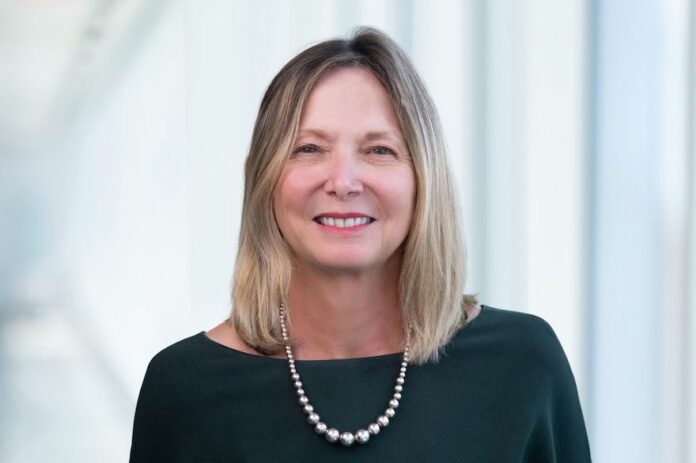

The Boston Globe announced on November 14 that Nancy Barnes would be its next editor, tapping a deeply experienced journalist who has run major metropolitan newspapers and is currently the chief news executive at NPR.
Barnes, who has strong local roots and was previously the top editor at The Houston Chronicle and Minneapolis Star Tribune, will be the 13th editor in the Globe’s 150-year history and the first woman to serve in that role.
“Nancy is renowned for her commitment to high-quality journalism, her excellent leadership skills, and her passion for innovation,” Linda Henry, chief executive officer of Boston Globe Media Partners, said in a statement. “She not only brings the leadership experience of being the top editor of two different metro newspapers, but she also transitioned to running a digital and audio newsroom that has been an industry leader in connecting with new and vast audiences.”

 Registration is now open for the 2023 Lenfest News Philanthropy Summit, a free virtual gathering focused on the transformative work of fundraising in sustaining essential journalism.
The News Philanthropy Summit will be held over two days on Tuesday, January 31 and Wednesday, February 1, 2023. It is fully virtual and open to all.
The theme of the Summit is Transformation. Through hands-on workshops, inspiring keynotes, and peer sharing, we’ll explore how we can transform the ways we sustain news organizations through philanthropic support, how to deepen relationships between development professionals and donors, how to reimagine the role of institutional funders within the journalism space, and much more.


My formula for shaping newspaper content is straightforward: Present a blend of stories that people like to read and stories they should read. Under the “should read” category, consider me an advocate of vibrant coverage of local government.
Another basic element to writing any story, whether hard news or feature: Make it interesting. Specific to public affairs reporting, make it timely and relevant.
Poll after poll underscores the value of newspapers as a government watchdog. It’s no coincidence that when local journalism declines, so does government transparency and civic engagement.
Most newsrooms routinely cover local government bodies and the decisions that affect readers’ everyday lives. I encourage broadening coverage through a three-step process:
Many newsrooms probably can relate to this course of events. Reporters pick up an agenda maybe a couple of days in advance of a meeting. They might write a couple of paragraphs as a preview, then put the materials away. Worse yet, reporters see an agenda for the first time when they show up at a meeting.
The meeting can last hours, and then reporters face the task, often that same night, of pounding out hundreds of words of copy – all too often on the premise that if something was said at the meeting, you must record it.
The copy is plucked onto your pages, often with little forethought of what news might actually transpire from the meeting and how best to display the stories. That’s just the print edition. Now throw in all the other elements in these days of multitasking – photos and video, twitter updates, immediate online postings.
I hear the pushback: “You can’t force feed readers with boring meeting reports.”
That likely will be the case if you do not plan coverage. If you report a meeting as if recording the official minutes, stories will go unread. Here’s one example of how to drive readers away. The report began:
“Following the 4:30 p.m. meeting of the Committee of the Whole, the City Council met Monday night at 5:30 p.m. at City Hall. With no public hearings, bids, petitions, or open forum scheduled for the evening, the council quickly moved through the initial items.
“The following consent agenda items were approved by the council:
“Motion approving the minutes from the April 3 Council and Committee of the Whole meetings.
“Motion approving licenses.
“Resolution amending the fee schedule to include refuse container sanitizing charges.
“Resolution closing out debt service and capital project funds and transferring the balances.
“Resolution declaring items as surplus property and authorizing their disposal.
“After passing the consent agenda and a brief overview of two, updated city ordinances, the next resolution was for the council to voice their support to the state legislature to increase the budget for the Local Government Aid (LGA) grant program.”
I doubt whether even the council members took any interest in the story, let alone the broader readership.
And we wonder why many reports often raise more questions than provide answers for readers.
I applaud those newspapers that are taking a fresh and substantive approach to coverage of public affairs, especially at the local level. In all cases, however, there likely is room for improvement.
Also, make no mistake, meaningful coverage takes work. It requires planning and it requires newsrooms to look at the continuum of coverage – not just reporting on the meetings.
At the same time, the effort will reap dividends for everyone. Citizens will be more engaged in policy-making. Elected bodies will appreciate the additional attention to and participation in their decisions. And newspapers will increase their relevancy in readers’ everyday lives.
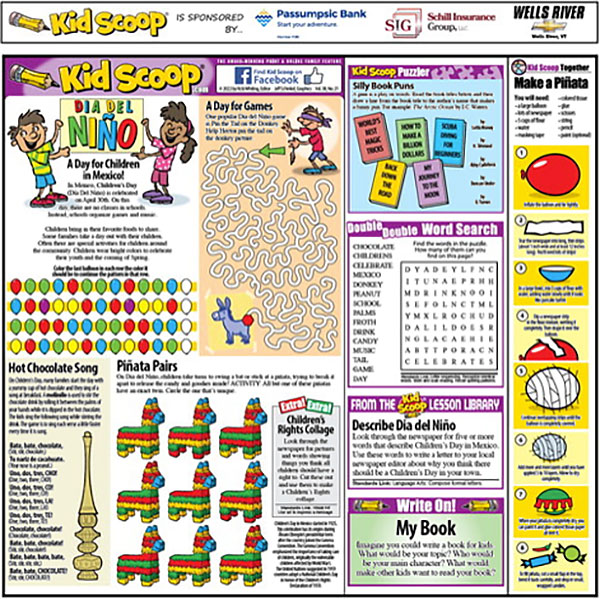
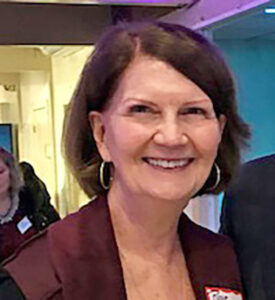
She copy-edits much of the six-day Caledonian-Record in St. Johnsbury, Vermont. She writes and produces two or three full education pages each week including Kid Scoop every Tuesday. She referees high school varsity basketball, boys and girls, and regularly skies Burke Mountain where Rosie Smith and her husband, Mark Smith, have a vacation home.
The Smith family has owned this storied newspaper, established in 1837 since Mark’s grandfather bought it in 1919. The pair have even delivered the paper themselves when drivers quit unexpectedly.
But Rosie Smith’s heart is with education and supporting local schools in the paper’s 12,000 combined print and digital circulation in the “Northeast Kingdom”—three counties in the very north of Vermont plus two counties in northwestern New Hampshire.
Three prominent local businesses support Kid Scoop on the education pages: an automobile dealership, a local bank, and an insurance company for the newspaper’s health plan. “We’ve been friends with all these people for years, and they love the relationship they have with the children and teachers,” Rosie explained. “They’ve been supporters since day one. They enjoy getting thank-you notes from teachers and children.”
During the recent Covid years, Rosie said Kid Scoop became more important. “Parents were using Kid Scoop at home, especially when the schools were doing remote learning.” One student wrote a class assignment about a moose. “It was so good I actually published it on our education pages,” Rosie said. School news comes in regularly which Rosie features on her designated education pages.
Kid Scoop is designed to engage the children in civics education through reading and discussing news about area leaders and local improvement projects.
Activities on the Kid Scoop page are created to teach reading, writing, and math skills, as well as content for geography, history, science, and literature lessons.
“I’ve loved Kid Scoop since I first saw it back in 1998. I want to keep it in our paper, always,” Rosie said.
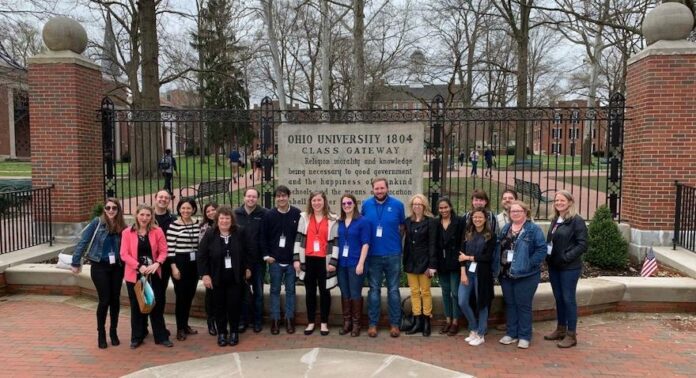
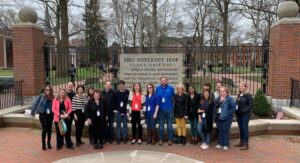
The Kiplinger Program in Public Affairs Journalism is preparing for its 2023 fellowship. This will mark a milestone 50th fellowship. The fellowship will be held at the E.W. Scripps School of Journalism at Ohio University in Athens, after more than four decades at Ohio State University.
This fellowship is titled: Covering Public Discourse and Saving Democracy. As frontline journalists in state capitols, you know better than anyone what this means. Our weeklong fellowship will address such topics as political extremism, combating disinformation, culture wars, campaigning, the voting process, social media for reporting, and much more. A large portion of the curriculum is designed by our chosen fellows.
Kiplinger will cover your training, lodging, most meals, and ground transportation. We will offer a travel stipend to help cover a portion of your airfare or mileage. You must be a working journalist with at least five years of experience. Freelancers are welcome.
You must commit for the entire week and not work remotely during the fellowship. One of the core values of our fellowship has always been that you take time to detach yourself from work for education and socialize with your colleagues here.
The deadline is late November 20, 2022.
Read more and apply at Ohio University E.W. Scripps School of Journalism
 Together, the Reporters Committee for Freedom of the Press, Microsoft Corp., the John S. and James L. Knight Foundation and Davis Wright Tremaine — four leaders in their respective fields — are teaming up to expand the Protecting Journalists Pro Bono Program (ProJourn) after a pilot phase and landscape study demonstrating the critical need for increased legal support for local journalism.
ProJourn is an innovative approach to providing journalists — small news organizations, nonprofit newsrooms, documentary filmmakers and freelancers no-cost legal help with pre-publication review and public records access.
The initiative, piloted in Washington and California in 2020 and 2021 by premier U.S. law firm Davis Wright Tremaine LLP and Microsoft, brings together teams of seasoned media attorneys and corporate in-house counsel to build the bench of legal support and meet the growing needs of local journalists.
Operated by the Reporters Committee, ProJourn will grow into a network of law firms and corporate legal departments that could handle up to 300 legal matters each year, with an estimated annual value of $3.5 million in pro bono services by the end of 2024.
 The Reporters Committee for Freedom of the Press Legal Hotline and Election Legal Guide are available for journalists covering the 2022 midterm elections who have questions about their newsgathering rights or encounter legal issues while reporting.
The free Legal Hotline will be staffed on Election Day by Reporters Committee attorneys in Washington, D.C., to help journalists nationwide who may face issues while reporting at the polls. A network of volunteer media lawyers in Arizona, Florida, Georgia, Michigan, Minnesota, New Hampshire, Nevada, Ohio, Pennsylvania, and Texas will also be on call to assist journalists.
Contact the Reporters Committee Legal Hotline at 1-800-336-4243, hotline@rcfp.org, or submit a request through our online form if you have questions about reporting on the midterm elections or run into issues while covering the elections.
Journalists can also consult the Reporters Committee’s Election Legal Guide, available in English and Spanish. The guide, which Reporters Committee attorneys updated in advance of this year’s midterms, covers exit polling, newsgathering in or near polling places, ballot selfies, and access to ballots and election records. It also includes more detailed information about election laws in battleground states.

 This Local Media Association Digital Innovation contest recognizes the best in local digital media in 16 categories such as best local website, best virtual event, best-branded content strategy, and more. It is a highly competitive contest designed to recognize both large and small media companies for their outstanding and innovative work.
The Keene Sentinel won 1st Place, in the Best Reader Revenue Strategy category. This award recognizes exceptional strategy and execution of a new consumer revenue initiative.
Judge’s notes: The Keene Sentinel came up with a creative idea to partner with local businesses and give new subscribers multiple incentives, and the retention rate has been high, even when the offers expire.