Page 140

Getler: Like Facebook and it’ll be your friend in news

By Marcella Kukulka,
Bulletin Correspondent

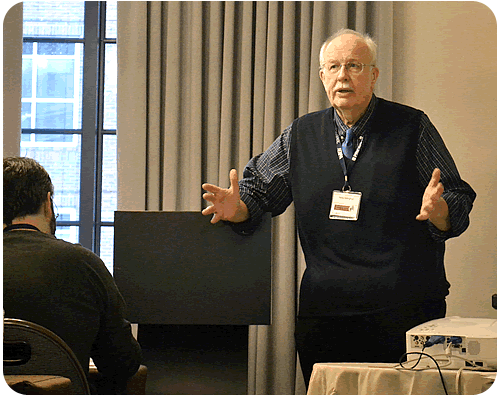
Al Getler, former publisher of The Burlington (Vt.) Free Press, shows  during a convention session Friday morning, Feb. 24, how to position a smartphone in shooting Facebook Live video.

Facebook, Journalism and Newspapers

Posted by New England Newspaper & Press Association on Friday, February 24, 2017

Al Getler brought a friend to the session he organized for the New England Newspaper and Press Association’s winter convention.

Facebook was the figurative friend Getler, former publisher of The Burlington (Vt.) Free Press, brought to the two-part session, attended by more than 60 people Friday, Feb. 24.

In the first part of the session on “Facebook, newspapers and journalism,” Getler introduced the speaker, Peter Elkins-Williams, leader of Facebook’s news partnerships. Elkins-Williams discussed the Facebook Journalism Project and its efforts to create better ties with the news industry.

In the second part of the session, Getler discussed how Facebook Live, a feature that allows users to stream video footage instantly on Facebook, can help make news coverage more efficient and interesting.

Getler’s presentation aimed at educating journalists who work mainly in print about the benefits of using social media to promote news stories and receive instant feedback.

“Facebook is your friend,” Getler said. “That is my belief, and hopefully that will be yours too.”

Getler said that if journalists want people to read their work, they need to go where people are: social media.

Getler said that by posting stories on Facebook and paying the platform to boost those stories, journalists can expose users to their publication in hopes that those users will continue to follow the publication on different platforms.

“A little boost goes a long way,” Getler said. “If you pay a bit of money for Facebook to drive your story, it can instantaneously get 80,000 likes.”

Posting Facebook Live videos can help print journalists compete with broadcast reporters without the need for heavy production equipment, bulky microphones, or multiple team members. Journalists can share “breaking news, explainers, and sports highlights” with the touch of a button on their personal phones, Getler said.

Facebook Live also offers instant analytics and metrics that can be helpful for journalists to gauge the reactions and questions an audience might have.

“You know how many shares, likes (a story attracts) … the story performance all in live time versus waiting two weeks for the numbers to come out on how many newspapers were bought,” Getler said.

Those instant analytics can be helpful for journalists to answer questions the audience might have about a story, to think of alternative facts to investigate while still at the scene, and to know how to delve deeper into a story, based on comments made immediately about your Facebook Live video.

While speaking during the session, Getler was simultaneously filming a Facebook Live video of his presentation.

He urged the audience to “take a risk in the industry,” and gave them several tips for shooting videos. The tips included cupping a hand over the microphone for sound clarity, buying a tripod to prevent “wiggly” footage, editing clips via iMovie, and experimenting with technology to become more confident in using tech tools.

“I do believe in technology a great deal,” Getler said. “We need to get over thinking that ‘risking nothing is genius’.”

SOCIAL

2017-New-England-Newspaper-Convention-logo

‘Facebook is your friend. That is my belief, and hopefully that will be yours too.’

—Al Getler, Former publisher,
Burlington (Vt.) Free Press

With this mounted smartphone, Getler shoots a Facebook Live video of his presentation.

‘If you pay a bit of money for Facebook to drive your story, it can instantaneously get 80,000 likes.’

—Al Getler

‘I do believe in technology a great deal. We need to get over thinking that “risking nothing is genius”.’

—Al Getler

Share:

Newspapers can still reverse damage done by disrupters

Bulletin photos by Kareya Saleh

By Aneri Pattani,
Bulletin Correspondent

Bulletin photo by Kareya Saleh

‘Local newspapers have as their best monopoly community news.’
   —Thales Teixeira, Marketing professor, Harvard Business School

The disruption of the newspaper industry began with the advent of the internet as a consumer technology in the 1990s. In the decades since, online news aggregators, digital advertising and social media giants have chipped away at the business model of news. But that process is not inevitable nor irreversible, according to Thales Teixeira, a professor in the marketing unit at Harvard Business School.

There is a recipe for disrupting markets, and newspapers can put that to use for themselves too, Teixeira explained in his keynote speech Friday, Feb. 24, at the New England Newspaper and Press Association’s winter convention in the Boston Long Wharf Marriott hotel.

In his speech, entitled “Responding to digital disruption,” Teixeira revealed the key to disruption, which he learned from studying startups. He calls it “decoupling.”

The traditional consumer process is like a linked chain. Consumers evaluate the different options available for some product, pick one, purchase it and use it. Teixeira likes to say the events in that chain are coupled, or bound together. Disrupters work by decoupling the chain.

Twenty years ago, a reader would buy The New York Times and receive a bundle of products — news stories, classified advertisements, restaurant reviews and more. Today, those services have been decoupled by various disrupters. Google has become a source for news stories. Craigslist provides easy access to classified ads. Yelp handles restaurant reviews.

A similar process occurred in broadcast news. Traditionally, viewers watched news shows and sat through the commercials that generated revenue for those programs. Now, viewers can use TiVo or DVR to bypass the ads, or they can turn to Netflix to stream video. The old business model for broadcast television has been decoupled.

Teixeira said disrupters are successful because they find the weak link in the coupled consumer chain and decouple it. Those companies find ways to create new value, such as WhatsApp, which provides free text messaging across borders, or to reduce hassle, such as Fresh Direct, which delivers groceries to a customer’s door.

Consumers prefer anything that can reduce monetary, time or effort costs, Teixeira said.

Incumbents in any industry can recognize that and try to prevent disruption in two ways: recoupling or rebalancing. Recoupling, which refers to maintaining the traditional consumer chain, often involves forcing contracts on customers to keep them committed to a service or lobbying the government to outlaw a separation of activities.

Teixeira recommends rebalancing instead.

Rather than waiting for the purchasing stage at the end of the consumer chain, rebalancing involves companies monetizing as many stages in the chain as they can.

Teixeira used an analogy to explain: “If you are at the beginning of a pipeline and don’t capture value until the end, then a disrupter can drill a hole in the middle and get all the oil.”

He pointed to Best Buy as an example of rebalancing at its best. Realizing that many customers were testing out products in store but then buying them online from Amazon, the company decided to find another revenue stream. It recognized that it was creating value for suppliers such as Samsung by showcasing their products in-store, so Best Buy turned to those suppliers and began charging them a display fee.

The New York Times is doing that in some ways, Teixeira said. When the newspaper realized it was creating more value for online readers than it was for online advertisers, it switched from an advertisement-based revenue model to a subscription-based one. It put up a paywall to charge readers for the value of its content. It is also trying to create additional value through new apps, blogs, crossword puzzles and more.

Local newspapers, which have been hit by disruption in the industry, can also learn from disrupters.

“Local newspapers have as their best monopoly community news,” Teixeira said.

They need to harness that monopoly to create value. Local newspapers can facilitate conversation between people and local officials about what the town wants and needs, Teixeira said.

“People will pay to have that conversation,” he said.

The key to a successful business model is recognizing the value you bring to a customer, Teixeira said.

“If you disappear from the map tomorrow, who would most miss you? Use the answer to figure out who will pay for your services,” he said.

Convention Keynote

2017-New-England-Newspaper-Convention-logo

‘If you disappear from the map tomorrow, who would most miss you? Use the answer to figure out who will pay for your services.’

—Thales Teixeira

An audience of more than 100 people listen intently to the NENPA convention’s opening session’s keynote speaker.
Share:

Facebook’s new outreach to news industry includes tools, products, curbs on fake news

By Aneri Pattani,
Bulletin Correspondent

Bulletin photos by Kareya Saleh

‘We believe more than anything that your journalism is the founding point for a healthy news ecosystem. We take our role seriously … We get that social media and Facebook, in particular, has become an increasingly important part of the business and traffic.’

—Peter Elkins-Williams
Head of news partnerships, Facebook

After an election cycle in which Facebook received considerable backlash for providing a platform for fake news, Facebook recognizes its role in the media landscape and is taking active steps to engage with journalists, according to Peter Elkins-Williams, leader of the company’s news partnerships.

The company launched the Facebook Journalism Project in January to broaden and deepen its ties with the news industry, Elkins-Williams said Friday, Feb. 24, in a session entitled “Facebook, Newspapers and Journalism” at the New England Newspaper and Press Association’s winter convention.

Through the project, Facebook plans to collaborate with news organizations to develop new products, provide training and tools for reporters to mine its site for information and events, and combat the spread of fake news by improving users’ news literacy.

“We believe more than anything that your journalism is the founding point for a healthy news ecosystem,” Elkins-Williams told an audience of more than 60 journalists and students at the Boston Long Wharf Marriott hotel. “We take our role seriously … We get that social media and Facebook, in particular, has become an increasingly important part of the business and traffic.”

Facebook is one of the world’s largest distributors of information, with millions of stories passing through the site each day, according to The New York Times. Now, the social media giant is creating online videos and resource guides to help journalists harness that power in their reporting.

The company recently acquired CrowdTangle — a tool to identify stories and measure their social-media performance — and decided to make it available free for publishers. More than 500 newspapers have begun using the service, Elkins-Williams said.

Facebook has also created a fake news reporting tool that allows users to flag posts with dubious information. Once third-party fact-checkers from various news organizations have confirmed that the story is fake, it will be labeled as such and users will be warned when they go to share it.

“We’re excited about that first step, but there’s more to be done,” Elkins-Williams said. “We’re going to keep working on the product as long as it takes, but we think it’s starting to show results.”

He also offered general tips on ways journalists can optimize Facebook for their work. He recommended focusing on video as a way to engage the 500 million people who watch video on Facebook daily. The popularity of videos has risen steeply in recent years and is expected to continue, especially with the success of Facebook Live, he said.

Elkins-Williams tried to allay fears that a rigged algorithm for Facebook’s News Feed was promoting content from some news sources over others. It is only built on relevance to the individual viewer, with the goal of informing, entertaining and showing authentic communication, he said.

“There are no tricks and games to really game that system. What does best (in the News Feed) is what’s authentic to your paper and community,” he said.

Facebook is also thinking about how to help newspapers monetize their content on social media. While it is still early in the process, the company is looking into improved advertising and display options for Instant Articles, as well as the incorporation of ads to videos and Facebook Live.

The company plans to continue exploring options to create a mutually beneficial partnership with journalists, Elkins-Williams said.

“It’s time to deepen and broaden our relationship,” he said.

SOCIAL

2017-New-England-Newspaper-Convention-logo

Al Getler's Facebook Live video of "Facebook, newspapers and journalism"

Facebook, Journalism and Newspapers

Posted by New England Newspaper & Press Association on Friday, February 24, 2017
Bulletin photo by Kareya Saleh

Facebook seeks a stronger alliance with news outfits, and is offering new products, training, tools, and steps to stop fake news, one of its executives told a convention audience.

‘There are no tricks and games to really that system. What does best (in the News Feed) is what’s authentic to your paper and community.’ 

—Peter Elkins-Williams

Share:

Recipients call for relentless pursuit, defense of the truth

By Aneri Pattani,
Bulletin Correspondent

‘Just as the First Amendment protects us, we must return the framers’ great favor and protect it. We do that by insisting on the truth, seeking it relentlessly and standing up for those who provide it.’

— Margaret Sullivan, Media columnist,
The Washington Post

‘Margaret Sullivan, media columnist for The Washington Post, strikes a humble pose as she receives a standing ovation after being presented the Stephen Hamblett First Amendment Award at the New England First Amendment Coalition’s First Amendment awards luncheon.’

With new threats to the First Amendment, journalism’s role is more important than ever, Margaret Sullivan, media columnist for The Washington Post, told those attending the seventh annual New England First Amendment Coalition awards luncheon Friday, Feb. 24, in Boston.

After accepting the Stephen Hamblett First Amendment Award — given to someone who has promoted, defended or advocated for the First Amendment throughout his or her career — Sullivan advocated for a relentless pursuit of the truth and a dogged defense of news organizations that promote it.

“Just as the First Amendment protects us, we must return the framers’ great favor and protect it,” Sullivan said. “We do that by insisting on the truth, seeking it relentlessly and standing up for those who provide it.”

A sense of urgency to fight against potential threats to the First Amendment from President Donald Trump and his administration permeated the awards luncheon, held at the Boston Long Wharf Marriott hotel during the New England Newspaper and Press Association’s 2017 winter convention.

NEFAC hosts the event to honor those who have advocated for the First Amendment and freedom of information. This year the coalition also honored the Sun Journal of Lewiston, Maine, and Donna Green, an open government advocate in New Hampshire.

Each of the award recipients expressed a fear for the future of the free press, mentioning new obstacles standing in the way of the public’s right to know at local, state and federal levels.

Sullivan detailed threats posed by Trump. He has blacklisted news organizations, including the Washington Post, deemed unflattering stories to be fake news, called reporters scum, and asserted that the press is the enemy of the people, she said.

“President Trump shows no understanding of the role of the press in our democracy,” Sullivan said. “I’ve lost some sleep over it, worried about the very survival of American democracy when one of its foundations, a free press, is already under attack.”

That’s why it is more important than ever to seek the truth and protect those who do, she said.

As a sign of hope, Sullivan pointed to a Washington Post report into national security adviser Michael Flynn’s interactions with Russian officials. The story led to Flynn’s resignation, illustrating the power of honest journalism.

Judith Meyer, the Sun Journal’s executive editor, who accepted the Michael Donoghue Freedom of Information Award on behalf of the newspaper, told a similar story of hope resulting from solid daily reporting.

In April 2016, a Sun Journal reporter went to county court to access files for a manslaughter case the paper had been following. The reporter was told that the case file didn’t exist. Confused by that, editors reached out to the court for clarification and discovered that the state’s judicial branch had made a quiet, internal decision to seal all dismissed criminal case files after 30 days.

Recognizing that as a violation of public record laws, the Sun Journal launched a campaign against the policy. After six weeks, dozens of phone calls, and more than 100 emails, they were victorious. The court ended the policy.

“The fact that the courts were able to do this without anyone knowing is frightening,” Meyer said.

But the case also offers hope for reporters willing to fight for the truth.

“Know when you’re right, and when you’re right, do not crumble,” Meyer said.

Green, a member of Right to Know New Hampshire, advocated for persistence as well. She needed it during a long battle with Timberlane Regional School District and SAU 55 over an interpretation of public records law that allowed officials to refuse to distribute records in electronic format even if they already existed as such.

Green was awarded the Antonia Orfield Citizenship Award for challenging that interpretation and winning her case in state Supreme Court.

“I worry about the future,” she said. “It seems a culture of the ends justifying the means is taking hold.”

But the dogged work of reporters is a reason to hope, she said to the audience of more than 250 people, which included journalists, lawyers, students and others.

“I won one important case. You fight every day,” she said

‘Members of the audience at the New England First Amendment Coalition awards luncheon share a lighter moment. More than 250 people attended.’

First Amendment Lunch Video

Judith-Meyer
‘Know when you’re right, and when you’re right, do not crumble.’

—Judith Meyer, Executive Editor
Sun Journal of Lewiston, Maine

Donna-Green
‘I worry about the future. It seems a culture of the ends justifying the means is taking hold.’

—Donna Green, Member
Right to Know New Hampshire

Share:

NENPA convention’s opening highlights

Bulletin photos by Kareya Saleh

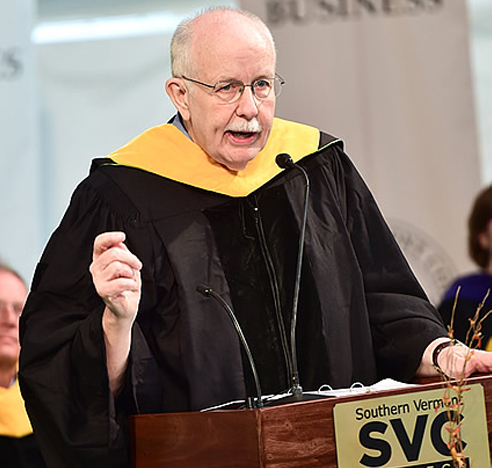
Thales Teixeira gestures during his keynote speech at the opening session Friday, Feb. 24, of the New England Newspaper & Press Association’s 2017 winter convention. Texeira, a Harvard Business School professor, talked about the impact of disruption of businesses, including newspapers.  

Margaret Sullivan, media columnist for The Washington Post, strikes a humble pose as she receives a standing ovation after being presented the Stephen Hamblett First Amendment Award at the New England First Amendment Coalition’s First Amendment awards luncheon. 

Al Getler, former publisher of The Burlington (Vt.) Free Press, shows during a convention session Friday morning, Feb. 24, how to position a smartphone in shooting Facebook Live video.  

2017-New-England-Newspaper-Convention-logo
Share:

Industry News – Feb 2017

Newspaper-industry-news

Mobile/Online News

Social Media News

Legal Briefs

Industry News

Share:

Keep ’em talking and learn more

John Foust Advertising

John Foust, advertising

John Foust has conducted training programs for thousands of newspaper advertising professionals. Many ad departments are using his training videos to save time and get quick results from in-house training.

Email for information: john@johnfoust.com

john-foust-ad-libs

Lori told me about some simple techniques she uses in advertising presentations.

“Once the other person mentions a problem, it’s important to slow down and show some restraint,” she said. “A lot of salespeople are conditioned to pounce on the slightest opening and shift the conversation. They can’t wait to talk about the ways their products can solve the problem. For example, if the prospect says, ‘My advertising is not generating enough traffic on weekends,’ the salesperson is tempted to jump in with a suggestion to run more ads on weekends.

“That’s a bad move,” she said. “Although that kind of instant-answer approach may seem like good idea at the time, it’s too early to propose a solution to the problem. So instead of expressing an opinion, I encourage the other person to continue talking. That keeps them on their train of thought. The more they talk, the more I learn. And as a result, I might find out that their weekday traffic has been declining along with the weekend business. That would call for a different solution.

“To keep them talking, it helps to use a minimum number of words, sometimes just one or two,” she explained. “I’ve learned some techniques from sales seminars and books, but I’ve also picked up ideas by watching good interviewers on television.”

Lori knows the importance of looking below the surface. Here are some phrases that work:

1. Say “that’s terrible” or “that’s awful,” when a problem is mentioned. Say “that’s good,” when the news is positive. These simple phrases can help you get in step with the other person. “When you agree with what they’re saying, they usually keep right on talking,” she said. “You’re sympathizing with their bad news and giving them a verbal high five for their good news.”

2. Repeat their last phrase as a question. This is a well-known technique that has been around for years. When you hear, “We’re not getting enough weekend traffic,” say “You’re not getting enough weekend traffic?” and raise your voice on the last word to emphasize the question. That’s less formal than saying, “That’s an unusual statement. I’d like to know more.”

3. Say “How do you mean?” instead of “What do you mean?” Although your old grammar teacher would scold you for using “how” in place of “what,” “how” is a friendlier way to ask for more information. “What do you mean” can sound abrupt and defensive.

4. Say “Hmm.” “Crazy as it sounds, this is one of the best ways to keep the momentum going,” Lori said. “Think of all the different things you can express with ‘Hmm.’ With different inflection, you can convey agreement, happiness, surprise, sympathy or sadness.

“All of this is intended to help them flesh out problems. As the conversation moves along, you can ask some questions to tighten the focus and help them see the long-term implications of their situation. Then you’ll be in a better position to propose a solution.”

Hmm. That’s good.

Share:

Why your text type matters

Ed Henninger design
Ed Henninger design

Ed Henninger, design

ED HENNINGER is an independent newspaper consultant and the director of Henninger Consulting.

Website: www.henningerconsulting.com
Phone: (803) 327-3322

WANT A FREE evaluation of your newspaper’s design?
Just contact Ed: edh@henningerconsulting.com | (803) 327-3322

IF THIS COLUMN has been helpful, you might be interested in Ed’s books: “Henninger on Design” and “101 Henninger Helpful Hints.” With the help of Ed’s books, you’ll immediately have a better idea how to design for your readers. Find out more about “Henninger on Design” and “101 Henninger Helpful Hints” by visiting Ed’s website: www.henningerconsulting.com

Nimrod is a highly legible text typeface. But it doesn't take much to make it unreadable.

In recent columns, I’ve listed text typefaces to toss and text typefaces I recommend.

Does it matter? Is the right text typeface — used in the right way — really that important?

Yes. It. Is.

Some reasons why:

EIGHTY PERCENT of the information readers glean from your newspaper, they get from reading text. Eighty percent … despite all the color, graphics, photos and other design elements you use throughout your paper.

AGING READERS. No need to go into any detail on this. We all know our readers are mainly elderly. Their greatest complaint about our newspaper’s design? Text that’s too small. Even when it’s way large enough, some will claim that it’s still too small.

READING SPEED. A good text font, used properly, is a plus for reading speed. Take the same good font and use it improperly, and reading speed slows. To put this into context, let’s look at …

LEGIBILITY VS. READABILITY. The two terms are often used to imply the same thing, but they shouldn’t be. The term “legibility” applies to the design of the typeface itself. But “readability” applies more to how the typeface is used. Take a look at the illustration with this column. On the left is Nimrod, a highly legible text typeface that’s top on my list of recommended text type. On the right, the same Nimrod, but so squeezed and so tightly tracked that it’s just not readable. It doesn’t take much to make a good typeface unreadable.

CREDIBILITY. Yes, your text (and often your headline typeface) actually helps make your newspaper more credible. If readers can read your paper comfortably, if it’s a choice and not a chore, they’re going to believe you more readily and depend on you over time.

TEXTURE. The word “text” is actually taken from the word “texture,” implying that there’s an evenness, a color to your text. If it feels too dark, it also feels more difficult to read. Text that’s overly line-spaced can also be more difficult to read.

Take a look at your text type. Is it legible? Is it readable? Is it comfortable to read? If you underestimate the importance of text type, you’re putting the appeal of your newspaper at risk.

Share:

Lessons learned in Ohio

Kevin Slimp technology

Kevin Slimp, technology

Kevin Slimp is director of the Institute of Newspaper Technology.

Email questions to him at
kevin@kevinslimp.com

Convention season is an interesting time in the life of a speaker. Most years, I’ll travel directly from one convention to the next between late January and June. Some years, the travel doesn’t slow until July or August.

I’ve purposely cut my travel this year, to make time for a couple of new projects I’ve begun. That’s a primary reason I’m enjoying convention appearances so much this year.

I just returned from Columbus, Ohio, where I spoke to the Ohio Newspaper Association. Actually, I believe the association officially changed its name a few minutes before I came to the stage. Either way, they are still “ONA.”

After more than 20 years of speaking, you would think I would be past being surprised by audiences. It’s become the norm for groups to add seats at the last minute when I’m speaking about the state of newspapers, but it still surprises me for some reason.

A steady stream of guests lined up to ask for a few moments to visit after my speech. With five hours to kill before my flight home, I offered to find a place near the registration table to meet with folks for a few minutes each.
I attempted to spend as much time as possible answering the questions of each person, while cognizant others were waiting in line for their turns.

I can’t tell you how much it pleases me to meet with publishers and others who see a real future for their newspapers and who attend conferences, classes, read journals and even stand in line to gain insight into ways to improve their operations and products.

What was on the mind of Ohio’s newspaper leaders? The discussions varied, but most centered around ways to improve their newspapers and the methods used to get them out.

“Should we outsource our ad design?”

That came up more than once. At one point, a group of us gathered around a table and discussed options to get the
best results for their small community papers. We discussed the possibility of a joint “co-op,” where small newspapers in adjoining communities might work together, giving them more control over the creative process while sharing in the expenses.

We discussed the best options for outsourcing, for papers that think that that is the best option for them. Should they use designers who are part of a huge national group, a company outside the country, or a smaller group that might offer more personalized attention?

Should we keep everything “in house,” finding ways to combine different areas of pre-press production that benefit our papers?

Like most important questions in life, the quickest answer is often not the best. I reminded publishers to consider long-term effects of their decisions. Are we risking long-term success for the sake of short-term savings?

A new publisher asked advice about several areas, including the design of the paper itself. I suggested taking advantage of as much reading, online training and local training opportunities as possible. The publisher of a community newspaper wears many hats, and it’s easy to become overwhelmed by the sheer amount of added work when the job title changes from editor, or ad manager, to publisher.

Several editors and publishers asked me to look over their papers and make suggestions. I laughed when one said, “Wow! You’re really good at this.”

I told her it was like anything else. After you’ve done it a few thousand times, you get pretty good at it.

What did I take away from my day in Columbus?

Ohio is an interesting place to be in the newspaper business. There are several big cities, meaning there are more metro papers than in most states.

Like most places I visit, large papers are trying to find new ways to attract advertising dollars and readers. When asked, my advice was to remember what readers want, because readers and advertisers go hand in hand.

Smaller papers have their own set of issues. For the past century or more, newspapers in smaller communities have dealt with many of the same issues as their larger counterparts. In addition, competition from nearby metros looking for new readers is increasingly creating more competition between metros and nearby community papers.

I was glad to see fire in the belly of Ohio’s newspaper community. I visited with reporters who are passionate about their calling, editors and ad managers serious about improving their products and service, and publishers who still feel confident about the future.

Convention season always seems to come at the right time. After spending a couple of months working from my office, convention season reminds me our industry is alive and well, and will be for decades to come.

That’s one reason I love my job so much.

Share:

eBulletin Obituaries

Roswell S. Bosworth Jr.

Roswell S. Bosworth Jr., owner and publisher for 25 years of East Bay Newspapers of Bristol, R.I., died Feb. 7 while travelling abroad. He was 90 and lived in Bristol.

Bosworth’s father was editor and publisher of the Bristol Phoenix from 1928 to 1974.

Bosworth Jr. began his career in 1949, carrying out various assignments for East Bay Newspapers, parent company of the Phoenix. When his father retired, Bosworth took the helm of the family business, and expanded it by founding the Barrington Times in 1958, the Warren Times in 1961, the Sakonnet Times of Portsmouth in 1967, and, in 1985, East Bay Classifieds, all in Rhode Island. He also established a Portuguese language page, a staple of his newspapers for more than 25 years.

He was one of the founders of the then-New England Press Association and Suburban Newspapers of America, and was president of each organization.

Bosworth received many honors and awards. After he retired in 1999, he was inducted into the Hall of Fame of both the New England Press Association, now merged into the New England Newspaper and Press Association, and of the Rhode Island Press Association. In 1991, he received the Dean Lesher Award from Suburban Newspapers of America for his contributions to the industry. He was honored with the Horace Greeley Award by the New England Press Association in 1998, which recognized his “excellence, dedication, courage and excellence in serving the public interest.”

In 1969, he was chairman of the commission that created the Bristol Town Charter, which was later adopted by the voters and is still in use. He also was a member of the commission that arranged the purchase of land used to create the Bristol Town Beach and sports complex. He was chairman of the Bristol Harbor Development Commission.

He leaves his wife, Marcia; two children, Peter and Barbara; two stepsons, Matthew and Jonathan; eight grandchildren; a great-grandchild; a sister.

James Alan Hamilton

James Alan Hamilton, 71, of Townsend, Mass., died at home Feb. 13.

He founded and published the former Townsend Common.

James leaves a daughter, Marni; a son, Ross; grandchildren.

H. C. ‘Cal’ Thornton

H.C. “Cal” Thornton, a longtime news industry executive, died Feb. 11 in Charlton Memorial Hospital in Fall River, Mass., after being treated for coronary disease. He was 91, and lived in Westport, Mass.

Thornton began his career in the 1950s as a reporter for the then-United Press.

He later was regional sales executive in Minneapolis for what became United Press International after United Press bought the Hearst company’s International News Service in 1958.

He later went with United Press International to Boston, where he was manager for several years of its Northeast Division, covering New England and New York. He then was manager in Chicago of the Central Division, overseeing the Midwest.

In 1971, he was promoted to UPI’s vice president of sales.

He was named sales director for the former Los Angeles Times-Washington Post News Service in 1977, and 10 months later rose to general manager. He later was promoted to president and editorial director. He extended the news service’s influence across Asia and Europe and in the United States.

Thornton retired from the news service in 1988.

In Thornton’s obituary published in The Washington Post, Bill Ketter, a colleague at UPI in Chicago and New York City, remembered Thornton’s “ineffable knack for spotting unrecognized talent and bringing it to full fruition. He was the type of mentor and coach young journalists yearn for — knowledgeable, caring and collaborative.”

Ketter said Thornton played a role in Ketter’s being named a division manager for UPI in Boston, and then making him vice president of broadcast services in New York. Ketter is now senior vice president for news for Montgomery, Ala.-based Community Newspaper Holdings Inc., which owns 120 newspapers in 23 states, including The Eagle-Tribune of North Andover, Mass., and its sister newspapers in Massachusetts and New Hampshire.

Thornton leaves his wife, Sally; four daughters, Mary, Amy, Jennifer and Kathleen; a son, Peter; nine grandchildren; two great-great-grandchildren; his former wife, Audrey.

Robert James McCullough

Robert James McCullough, 88, of Stamford, Conn., died Feb. 3 at the Ludlowe Rehabilitation Center in Fairfield, Conn.

McCullough was general manager at The Advocate of Stamford, Conn., and Greenwich (Conn.) Time.

He also was general manager at radio station WSTC-AM and WYRS-FM in Stamford.

McCullough leaves his wife, Mary; eight children, Robert, Edmund, Susan, Marianne, William, Jack, Cathi and Maggi; 19 grandchildren.

Frank P. Creane

Frank P. Creane, 78, of Guilford, Conn., died Feb. 4 at The Connecticut Hospice in Branford.

Creane was a reporter for 10 years for The Enterprise of Brockton, Mass.; editor of the Wareham (Mass.) Courier; and a staff writer at the Old Colony Memorial of Plymouth, Mass.

He also had been a publications editor and public information representative for Boston Edison Nuclear Power Station in Plymouth for seven years.

He leaves his wife, Rita Ellen; three children, Kyle, Deirdre and Brett; five grandchildren.

Malcolm Lathrop Johnson

Malcolm Lathrop Johnson, 79, died Feb. 8 at Yale-New Haven (Conn.) Hospital.

His career-long tenure at The Hartford (Conn.) Courant included jobs as an international and national reporter, city editor, Sunday editor, film and theater critic, and editor of the poetry column, Our Singing World.

Johnson also wrote for The Boston Globe and other publications, and published a book, “Yesterday’s Connecticut.”

He leaves three sons, Mark, David and Malcolm Jr., and four daughters, Martha, Cassandra, Angela and Amanda.

Bernard S. Redmont

Bernard S. Redmont, 98, a former longtime resident of Brookline, Mass., died Jan. 23 at Orchard Cove retirement community in Canton, Mass., where he was living.

Redmont had been a veteran foreign correspondent and was dean of Boston University’s College of Communications from 1982 until 1986.

Before coming to Boston University, Redmont had been a foreign correspondent in times of both war and peace. He traveled to 55 countries as a correspondent or news executive.

While at Columbia University for a master’s degree, Redmont received the Pulitzer Traveling Fellowship, allowing him to travel to Mexico and Europe to report before World War II.

When World War II began, Redmont joined the Marine Corps and was a combat correspondent. He was injured in the war and received a Purple Heart. His injuries did not stop him from reporting overseas, as bureau chief in Buenos Aires and Paris for World Report, which later became US News & World Report.

He then was employed at Agence France-Presse, was a radio correspondent for Canadian Broadcasting Co., a correspondent for Westinghouse Broadcasting, and a broadcaster for CBS News in Moscow and Paris.

Redmont had been blacklisted during the McCarthy era after he refused to name a friend as a communist.

He resigned as dean at BU after a dispute with then-BU President John Silber over a controversial program to train Afghan journalists in Pakistan.

Redmont’s reporting helped lead to the Paris peace talks, which ended the Vietnam War. For that work, he was recognized by the Overseas Press Club of America in 1969.

Redmont leaves two children, Dennis and Jane; three grandchildren, Michael, Isabel and Rodrigo; four great-grandchildren.

Nancy Elizabeth Garzieri

Nancy Elizabeth Garzieri, 69, of Longmeadow, Mass., died Feb. 12 at Baystate Medical Center in Springfield, Mass.

Garzieri was advertising manager for the Valley Advocate of Northampton, Mass.

Garzieri leaves a niece, Meghan, and many other relatives and dear friends.

Gary A. Ouellette

Gary A. Ouellette, 65, of Plymouth, Mass., died Feb. 19 at the McCarthy Care Center in Sandwich, Mass.

Ouellette was an account executive and sales manager for 17 years at the former Plymouth-based MPG Newspapers, whose flagship newspaper was the Old Colony Memorial of Plymouth.

He leaves his wife, Donna; a son, Gary Jr.; three grandchildren.

Theodore A. LaBorde

Theodore A. LaBorde, 68, of Easthampton, Mass., died Feb. 5 at Baystate Medical Center in Springfield, Mass.

LaBorde began his career as a reporter for The Hartford (Conn.) Courant. He later joined The Republican of Springfield, Mass., where he was employed for 38 years. After retiring in 2012, LaBorde continued to write for MassLive.com, the Republican’s website, as a special reporter.

He leaves his wife, Linda; three children, Ted, Michelle and Megan; five grandchildren; two brothers.

Robert J. Leddy

Robert J. Leddy, who was born in 1945 and lived in Providence, R.I., died Feb. 4 at his home.

Leddy spent most of his career with The Providence Journal. He began there as a part time wire room and copy editor assistant. He later was brought on full time as a sportswriter.

He was known for covering high school sports, particularly track and field. He retired from the Journal in 2001, but continued to be a correspondent for the Rhode Island Track and Field Foundation. He was recognized for his work by being inducted into the Rhode Island Interscholastic League Hall of Fame in 2016.

Leddy wrote many columns on movie actors and directors for the Journal’s editorial pages.

He leaves three sons, Cyrus, Paul and Christian, and his ex-wife, Judy Ellinwood.

George W. Smith

George W. Smith, 76, of West Hartford, Conn., died Feb. 9 at the Hebrew Home in West Hartford after battling Lewy body dementia and Parkinson’s disease

Smith was a sportswriter at The Hartford (Conn.) Courant for more than 25 years. He traveled with the then-Hartford Whalers hockey team and covered boxing, among other sports. He wrote a popular weekly column, Looking Back.

He also had been employed for a year at the Record-Journal of Meriden, Conn.

After his retirement in 1995, Smith became a boxing judge and was one of the founders of the Connecticut Boxing Hall of Fame, and was honored in 2013 for his contributions to boxing. He authored four military history books, “The Siege at Hue” in 1999, “Carlson’s Raid” in 2000, “The Do-or-Die Men” in 2003, and “MacArthur’s Escape” in 2005..

Smith leaves his wife, Mary Ellen; a daughter, Anna; three grandsons, Henry, Owen and Brendan; four siblings, Jim, Leslie, Lynne and Kathy.

John T. Cunniff

John T. Cunniff, 87, of New York, died Jan. 20 in a nursing home in Valley Cottage, N.Y.

Cunniff was a business writer for The Associated Press. He wrote the Business Mirror column from 1966 until his retirement in December 2001. He wrote nearly 5,600 columns and business analysis pieces. At the column’s peak, hundreds of newspapers published Business Mirror.

He began his journalism career at the AP’s Boston bureau and was employed in the Memphis bureau before moving to the business news department at AP headquarters in New York City. He won the John Hancock Award, two times each as an individual and as a member of AP teams; the Polk Award for National Reporting for covering racial matters in the South; a Distinguished Achievement Award from the Society of American Business Editors and Writers; first prize in the syndicate category of the Media Award in Journalism from Dartmouth University. He was a Poynter Fellow in Journalism at Yale University.

He wrote a book, “Live Within Your Income.”

Stories of his ran in Parade, Reader’s Digest and other magazines. He wrote an annual summary of the U.S. economy for the Encyclopedia Americana Yearbook for 23 years. Cunniff continued writing, in the fiction genre, after he retired.

He leaves several loved ones.

Raymond Saidel

Raymond Saidel, 92, of Manchester, N.H., died Feb. 13 at his home.

In the 1970s, Saidel was a foreign correspondent for the New Hampshire Union Leader of Manchester. He travelled across the Middle East to cover Arab-Israeli conflicts, such as the Yom Kippur War of 1973. He also was an embedded journalist with the Southern Lebanese Army of Maj. Saad Hadad.

He leaves his wife, Simone; two daughters, Joanna and Michelle; three sons, Marc, Benjamin and Alex; seven grandchildren.

John Frederick Watters

John Frederick Watters, 64, of Barnstable Village, Mass., died Feb. 17 in Cape Cod Hospital in Hyannis, Mass.

His was a reporter for The Register of Yarmouth, Mass., and wrote a column, The Watters Edge, for the Barnstable Patriot.

He leaves a son, John; his former wife, Kathleen; two nieces; two nephews.

Michael O’Traynor

Michael O’Traynor, formerly of Littleton, N.H., died Feb. 8 in his home.

He wrote a column, Under the Mountain, for the New Hampshire Sunday News of Manchester, and authored a biography of Maynard Sundman, founder of Littleton Coin & Stamp.

O’Traynor also had been a television host in Ottawa, Canada, for the “Reach for the Top” quiz show and a show titled “Tales from the Ottawa Valley.” O’Traynor also wrote a weekly newspaper column.

O’Traynor leaves his wife, Alice; his father, Richmond; seven children, Kathleen, Aidan, Beth, Sean, Tom, Brennan and Colleen; 15 grandchildren; two sisters.

Howard M. ‘Hobs’ Moyer

Howard M. “Hobs” Moyer, 78, of Palm City, Fla., died Feb. 2 in his home.

Moyer was a contract writer for the New Haven (Conn.) Register, which published more than 350 of his stories.

Moyer leaves his wife, Diane, and a sister, Jacqueline.

Warren L. Parker

Warren L. Parker, 94, of Agawam, Mass., died Feb. 9.

Parker contributed to The Republican of Springfield, Mass. He wrote stories about interviews with people.

He leaves two sons, Douglas and Andrew, and four grandchildren, Christopher, Alinna, Dewey and Gino.

Mary Pat (Kelleher) Furlani

Mary Pat (Kelleher) Furlani, 78, of Holyoke, Mass., died Feb. 3 at Holyoke HealthCare Center.

Furlani was employed with the company that now publishes The Republican of Springfield, Mass. and with The Wall Street Journal.

She leaves a son, Bobby; a daughter, Kathy; two grandchildren, Jeffrey and Katie.

Sheila Mary Mackinnon

Sheila Mary Mackinnon, 85, of Hardwick, Mass., died Feb. 3 at her home after a lengthy battle with pulmonary fibrosis.

Sheila contributed to numerous local newspapers and travel magazines while living in Sudbury, Mass.

She leaves her husband, Norman; two sons, Neil and Craig; a daughter, Celia; seven grandchildren; a great-grandchild.

The obituaries were written, at least in part, from published reports by Bulletin correspondents Ashleane Alabre, Sophie Cannon, Joseph Dussault, Nico Hall, Bailey Knecht, Joshua Leaston, Peyton Luxford, Michael Mattson, Eloni Porcher, Mohammed Razzaque and Thomas Ward, undergraduate students at Northeastern University.

Share: