
 The U.S. and New Hampshire constitutions protect press freedom. Here’s what that means: A news outlet can call out government corruption. A podcast host can share views you like — and abhor. And you can say in a Substack newsletter why you think the president, governor, or any other politician is unfit for office.
The government may not like what it reads and hears, but the U.S. and New Hampshire constitutions say the press, like free speech, can’t be silenced — though government officials have tried. Attorney Greg Sullivan, president of the New England First Amendment Coalition, has represented media outlets in press freedom cases in court for nearly 50 years.
“When members of an organized press are denied access to governmental proceedings, what’s lost is the right of the people to govern themselves,” Sullivan said. “We the people are the government. We own the government. And when that’s not respected, and when governmental activity takes place in darkness, as The Washington Post (motto) points out, democracy dies.”
Think Watergate and the political corruption The Washington Post uncovered within the Nixon administration, leading Nixon to resign the presidency. But also consider the press’ right to expose local city officials who are inflating property values — and the taxes homeowners pay — or awarding friends lucrative contracts in exchange for kickbacks.
The freedom of the press and speech are not absolute. There are limited exceptions prohibiting defamation, false advertising, inciting lawlessness and threats, for example.
Ask Sullivan if he thinks press freedom is under threat and he’ll split his answer into two: At the state level, no. At the federal level, yes.
“I feel like we’re pretty lucky or fortunate here to have the support of the courts,” Sullivan said of New Hampshire, where the state’s superior courts and Supreme Court have consistently upheld press access. “And I’m not sure that’s true everywhere.”
At the national level, Sullivan pointed to President Trump’s recent lawsuits against media outlets for publishing news he does not like. Other presidents have also challenged press freedom in different ways. The Obama administration, for example, seized phone records of Associated Press reporters and used subpoenas to try to force journalists to identify confidential sources.
Trump’s approach has been different — and costly — for outlets at a time when news organizations are struggling financially.
Trump sued the Des Moines Register for its poll predicting he’d lose the 2024 election. When The Wall Street Journal published a story about Trump’s ties to Jeffrey Epstein in July, Trump sued the paper’s owner for $10 billion and banned a Journal reporter from a White House trip. (Trump also banned The Associated Press from White House press briefings for using the “Gulf of Mexico” in stories rather than Trump’s new name, “Gulf of America.”)
He sued CBS News and Paramount for what he considered favorable coverage of Kamala Harris during her 2024 bid for the presidency. And Trump targeted ABC News for saying on air that Trump had been found “liable for rape” in a civil case when the jury had found him “liable for sexual abuse.”
The lawsuits and limits on access are two threats to press freedom — and democracy — said Sullivan. But so are decisions by ABC News, CBS News and Paramount to settle with Trump for a combined $30 million. Sullivan said the “acquiescence” of those media outlets to settle with Trump rather than defend their constitutional right to press freedom can discourage other news organizations from pursuing stories the government may oppose.
“If the major news outlets are doing that, it (sets) an example (that it’s effective),” Sullivan said. “And of course, the smaller outlets don’t have the financial wherewithal to withstand lawsuits, albeit groundless lawsuits. There’s no question in my mind about that. It’s called a chilling effect.”
It’s been a different story in New Hampshire.
In 2022, the state and local police and emergency medical services repeatedly responded to calls for help at the state’s youth detention center in Manchester. It’s the same center where the abuse of children by state workers was covered up for decades.
The Union Leader filed a request with the state for multiple records, including security footage from police body cameras and the center’s surveillance cameras. The state and a superior court judge denied the request, citing the confidentiality of juvenile records.
The newspaper appealed to the state Supreme Court.
“Plagued with crisis after crisis, and chronically understaffed, (the center) was regularly relying on the State Police for the safety of its inhabitants,” the newspaper argued in its appeal. “The public has a right and a duty to know how the State Police handled the situation.”
The Union Leader prevailed in court.
Sullivan said the court’s ruling is not unique. He said New Hampshire’s courts have consistently upheld press freedom and the state’s right-to-know laws in other cases as well. It has granted access to personnel files of police officers who’ve been fired and Nashua city records related to property tax assessments.
This story is part of Know Your News, a NENPA Press Freedom Committee and Granite State News Collaborative initiative on why the First Amendment, press freedom, and local news matter. Don’t just read this. Share it with one person who doesn’t usually follow local news — that’s how we make an impact. Learn more at https://www.nenpa.com/press-freedom-and-local-news-collaborative/.
By Annmarie Timmins, Original Outlet: Granite State News Collaborative

 Today, on Constitution Day (September 17, 2025), NENPA is launching Know Your News: Understanding Press Freedom and the Value of Local News — a project of the NENPA Press Freedom and Local News Committee and the Granite State News Collaborative.






 We’re excited to invite you to be part of the NENPA Press Freedom and Local News Collaborative, launching on Constitution Day, September 17, with our campaign Know Your News: Understanding Press Freedom and the Value of Local News.
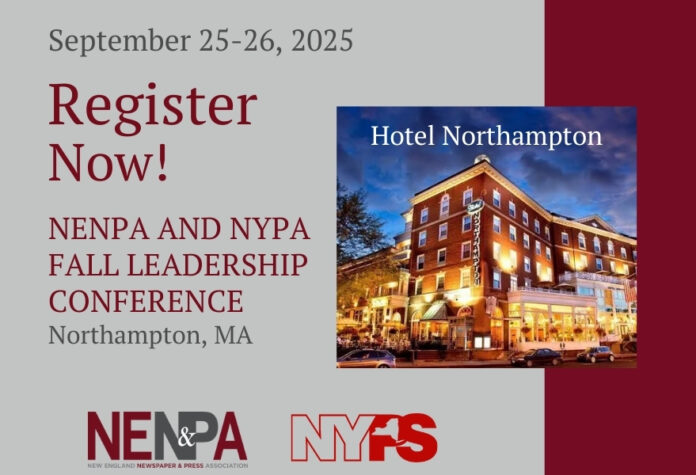
 Looking to recharge your newsroom strategy and celebrate the best in New England journalism? Join us for the 2025 Fall Leadership Conference, September 25–26, at the historic Hotel Northampton. Presented by NENPA and the New York Press Association, this conference brings together publishers, editors, and journalists for training, peer-to-peer insights, and an awards luncheon you won’t want to miss!
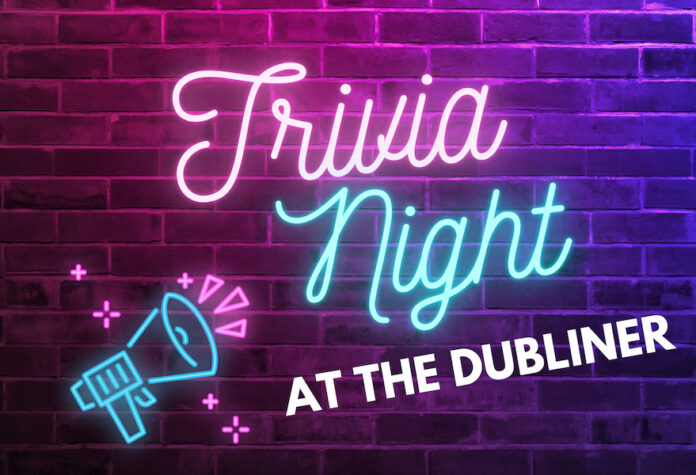
 The journalist meetup series rolls into September with a spirited Trivia Night at The Dubliner—a great chance to unwind after work, swap ideas, and show off your trivia chops with colleagues from across the region.

 Editor & Publisher, in partnership with the Media Job Board and research firm DataJoe, proudly presents the Media Workplace Awards — the only program of its kind dedicated to recognizing the media industry’s best places to work. Whether you’re in print, broadcast, or digital, this is your opportunity to spotlight your company’s culture, attract top talent, and gain third-party validation as an employer of choice.
Defending Democracy Starts at Home: Protecting Local News and Press Freedom
When your town, city or county has a local news outlet, the benefit ripples through the entire community.
You have a defender who cares about where you live and work, from reports about the content of school lunches to the latest proposal to raise taxes or increase your monthly water bill.
There’s a reliable friend who stands ready to help when a natural disaster hits. A dependable neighbor from whom you can learn and with whom you can chat about the events of the day.
Moreover, you have a place to distribute your letter, to amplify your online comment or to just join a group conversation.
In short, whether you like the news media or not – and yes, there is chatter both ways — there is no challenging the value to you of having all of those things with a local focus.
Starting Sept. 17, Constitution Day, the “Know Your News” initiative– a region-wide press freedom and local news education project produced by the Granite State News Collaborative and the New England Newspaper and Press Association–will invite you to explore the local free press you have – or in a few places, are missing.
A 2024 report by the Medill Local News Initiative at Northwestern University said 204 counties across the U.S. are now “new deserts” –not a single local news source. Overall, there were “nearly 55 million people with limited or no access to local news,’ the report said. Only one New England area was named in that report, “Somerset.”
About a year ago – after years of calling for the reinvigoration of local news media – I got an opportunity to put that call to the test. Some 56 years after my first newspaper reporting job, in Indiana, I am now a civics issue writer for The Reston Letter, the local news source for my current hometown, Reston, Va.
As The Letter proclaims each issue, it “seeks to inform the Reston community of local events, highlight local group and individual accomplishments, and, secondarily, to provide a platform for residents to weigh in on local topics relevant to the majority of readers.”
Those are goals most local news operations and journalists strive for each day – even as they are painfully aware that both supporting economic models and public trust have eroded in many places over the last 30 years.
Take the time to read in the Know Your News campaign about your right through Freedom of Information laws to know what the government is doing. Participate when your local news outlets invite you to talk about your concerns about bias, misinformation, or lack of news coverage on something you see as important.
In the Know Your News initiative, explore the differences between news, opinion and “sponsored content” – distinctions made all the fuzzier by the torrent of online data and information that now pours into our homes.
And do not miss the good news as news initiatives of all kinds rescue news operations facing financial death across New England and other areas of the U.S. – staving off new “news deserts.” Print and digital news startups, both traditional and nonprofit, are restoring or replacing some local news starved areas.
Admittedly, most news operations have a way to go to restore the staffing, reach and trust that the free press had just a few decades ago. The 2024 “State of Local News,” a project at Northwestern University, showed that since 2005, newsroom positions – editors and reporters – saw a loss of more than 45,000 jobs, a decline of more than 60%.
“Absence may make the heart grow fonder,” but the lack of a regular, reliable reminder of the value of a local news outlet can result in indifference and distrust.
Still, multiple surveys show strong public support for a free press as a “watchdog on government.” Most journalists are on a mission to ask the questions you would ask if you had time, to attend the long civic meeting that family or work obligations prevent you from attending and, at times, pry loose the information you need from a less-than-transparent government or private entity.
Yes, a free press makes mistakes – or even, in your view or mine, sometimes just has the wrong perspective. Look for items in the Know Your News campaign discussing “why some local communities don’t trust the media – and what local news outlets are doing about it” and other articles on how news decisions are made, how to correct mistakes and how to spot trustworthy news.
New England has a long and historic tradition of civic engagement and self-governance – from town gatherings to protest movements to what is still one of the nation’s most vigorous local news media areas.
The nation’s founders believed that government alone will not give us the full measure of information we need when entering the voting booth – or just surveying the events of the day. So, they made a free press the only occupation protected by name in the Constitution, via the Bill of Rights.
Consider that endorsement and legacy during GSNC and NENPA’s four-week invitation to explore your news media – how it works, what it does and why it is worth using and defending.
This story is part of Know Your News, a NENPA Press Freedom Committee and Granite State News Collaborative initiative on why the First Amendment, press freedom, and local news matter. Don’t just read this. Share it with one person who doesn’t usually follow local news — that’s how we make an impact. Learn more at https://www.nenpa.com/press-freedom-and-local-news-collaborative/.